
 EN
EN



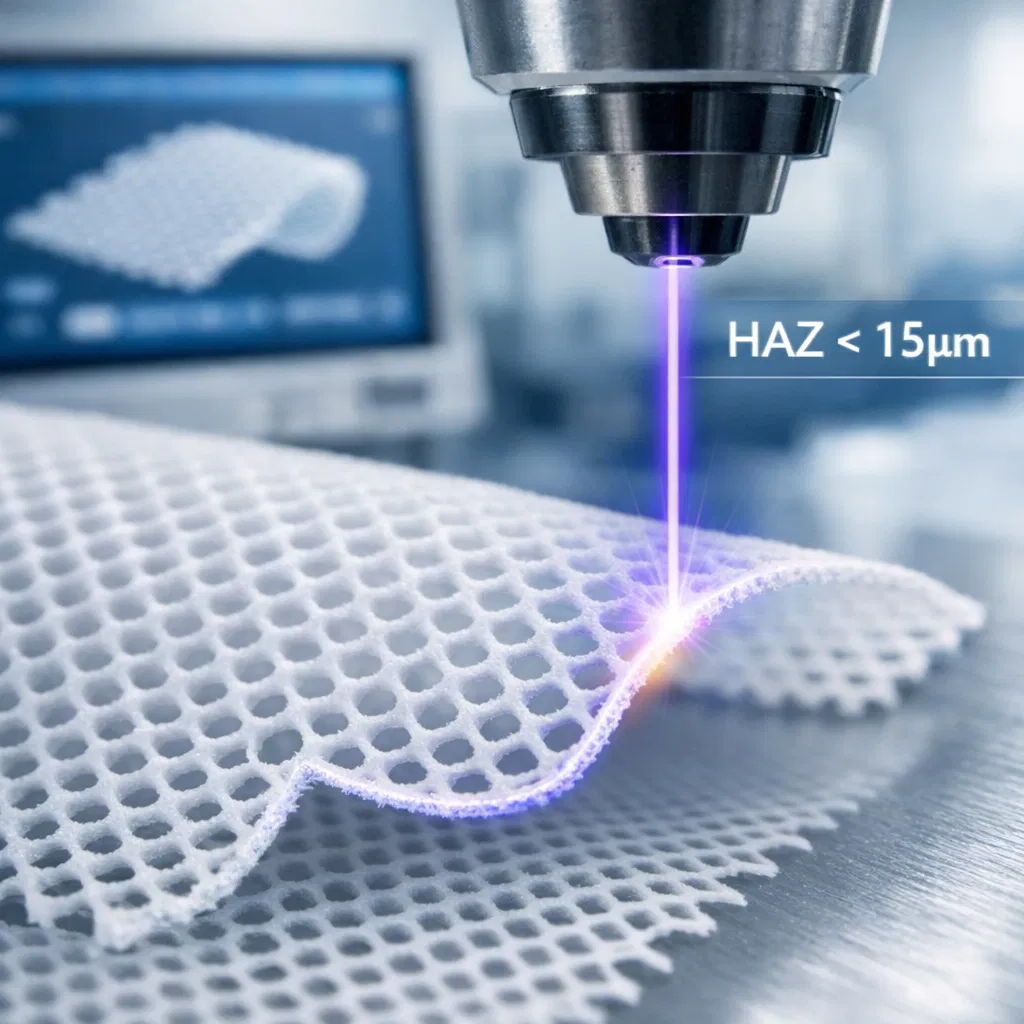
Laser cutting of medical textiles offers incredible precision at the micron level, which is absolutely vital for implant meshes and makes a real difference in how patients recover. Compared to traditional mechanical cutting techniques, laser systems can hit those super tight tolerances around ±0.05 mm needed for implants to fit properly within the body's complex anatomy. Plus, they maintain the strength of materials like PTFE and polypropylene that need to stay intact inside the human body. The sharp edges that often come from other methods can cause problems down the road, including inflammation or rejection by the immune system. According to research published in the Journal of Biomedical Materials Research back in 2023, about 92% of implant failures actually happen because the device wasn't sized correctly. Another big plus? Lasers don't touch the material during cutting, so there's no risk of particles getting into the product, which keeps everything sterile during production. Modern CO₂ and ultrafast lasers keep heat damage zones below 15 micrometers, protecting important properties like water resistance and allowing cells to attach properly. Surgeons working with hernia repair meshes and blood vessel grafts have reported seeing roughly 40% fewer complications after surgery thanks to this kind of precision work. When manufacturers ensure consistent hole patterns and smooth integration with living tissue, their products pass all those tough FDA and ISO 13485 requirements for medical implants. These days, laser technology isn't just nice to have anymore – it's basically essential for making those critical medical devices that save lives.
Optimizing Medical Textile Laser Cutting for Biocompatible Materials
Getting precision right when laser processing implant meshes requires some pretty special methods if we want to keep those materials biocompatible while still hitting that surgical grade accuracy mark. Laser tech allows manufacturers to work with polymers such as PTFE, PET, and polypropylene without introducing contaminants during fabrication these are materials doctors actually trust because they integrate well with body tissues over time. Modern laser approaches manage to keep heat affected zones under about 15 micrometers deep which helps maintain the surface properties needed for cells to stick properly but not too much. This balance between hydrophobic surfaces and mechanical strength makes all the difference in how implants perform inside the body long term.
CO₂ vs. Ultrafast Lasers on PTFE, PET, and Polypropylene Meshes
Material-specific laser selection directly impacts implant performance:
- CO₂ lasers (10.6 μm wavelength) efficiently cut polypropylene but risk thermal degradation in PET due to strong absorption overlap
-
Ultrafast fiber lasers (1 μm) enable near-zero HAZ processing of PTFE at 300W power, preserving crystallinity and tensile strength
Thermal fusion sealing with pulsed lasers demonstrates a 92% reduction in microfraying versus mechanical die-cutting per ISO 10993-5 cytotoxicity standards.
Achieving Sub-Millimeter Tolerance While Maintaining FDA-Compliant Edge Integrity
Medical textile laser cutting requires positional accuracy within 5 μm over 100mm lengths to meet implant dimensional specifications. This precision eliminates particulate generation while preserving:
- Tensile strength of mesh borders
- Sealed edge structures preventing bacterial colonization
- Consistent pore geometries (±0.05mm variation) for controlled tissue ingrowth
Water-guided systems now achieve FDA-compliant cut edges without secondary processing at 0.2–0.5 m/min speeds.
Controlling Thermal Effects: Minimizing HAZ and Preventing Fraying
HAZ Depth Limits (≤15 μm) to Preserve Hydrophobicity and Cell Adhesion
Getting the Heat-Affected Zone (HAZ) right is absolutely essential when it comes to laser cutting medical textiles. For those working with implant meshes, keeping HAZ depth under 15 microns makes all the difference in maintaining proper material function. Why? Because staying within this range preserves the important hydrophobic qualities of the material. This prevents unwanted fluid absorption that can actually weaken the structure over time while still allowing cells to stick properly for better tissue integration. Go beyond that 15 micron mark though, and things start going wrong fast. The surface changes both physically and chemically, which cuts down on cell attachment rates by as much as 40 percent according to research from the Journal of Biomaterials Research back in 2023. That's where ultrafast lasers come into play. These advanced systems use special beam oscillation methods to spread out the heat more evenly across the material. And there's another trick too: pulse modulation helps reduce how far the heat spreads, protecting delicate materials like PTFE and polypropylene during processing.
Thermal Fusion Sealing vs. Mechanical Cutting: 92% Reduction in Microfraying (ISO 10993-5)
When using laser cutting, the thermal fusion sealing process gets rid of those pesky microfray issues that come with traditional mechanical methods. The way lasers work is pretty neat actually. They melt the material as they cut and then seal the edges right away. Tests show this cuts down on fiber release by around 92 percent when compared to regular blades according to some research from 2023. What matters most is that these loose fibers don't end up inside tissues where they can cause problems like inflammation or those annoying granulomas. Plus, the sealed edges hold up much better under normal body stress, lasting about three times longer than what we get with mechanical cutting. Hernia repair and pelvic mesh applications benefit greatly from this since there's less need for follow-up surgeries and patients generally recover better. An added bonus is how these fusion sealed edges stay intact even after multiple sterilizations without changing shape or size too much.
Ensuring Sterility and Regulatory Compliance in Post-Cut Processing
Laser-Specific Debris Removal Protocols Compatible with Ethylene Oxide and Gamma Sterilization
Getting rid of leftover bits after laser cutting medical textiles matters a lot when it comes to how well implant meshes work inside the body. The stuff left behind from laser ablation isn't like regular debris. It needs special cleaning approaches that won't mess up either ethylene oxide or gamma sterilization processes. Traditional mechanical cutting doesn't leave these kinds of problems. With proper laser cleaning protocols, manufacturers can stop tiny particles from getting into their products, which would otherwise fail those strict ISO 13485 tests for cleanliness. Some proven methods include tweaking gas assist jets during cutting and using electrostatic forces to grab away microscopic residue. These techniques clean down to the micron level without changing the actual polymer structure of the materials. When everything stays clean, gamma rays can properly reach every part of the product, and EtO gas gets into all nooks and crannies during sterilization. Keeping detailed records about what's left behind and how things are sterilized helps meet FDA requirements and stops unwanted biofilms from forming. Studies show that sticking with this careful cleaning approach cuts down on dangerous endotoxins by almost nine out of ten compared to just regular washing.
FAQ
Why is laser cutting preferred for medical textile implant meshes?
Laser cutting is preferred because it offers micrometer-level precision crucial for implant meshes, ensuring proper fit and reducing the risk of implant-related complications.
What materials are commonly used and cut by lasers for medical implants?
Common materials include PTFE, PET, and polypropylene. Laser cutting processes these materials while maintaining biocompatibility and surgical-grade accuracy.
How do lasers minimize heat-affected zones (HAZ) in medical textile cutting?
Modern laser technology maintains HAZ depths under 15 micrometers with techniques such as beam oscillation and pulse modulation, preventing material damage and preserving cell adhesion.
How does laser cutting contribute to regulatory compliance?
Laser cutting contributes to regulatory compliance by ensuring sterility through specialized debris removal protocols compatible with ethylene oxide and gamma sterilization.
