
 EN
EN



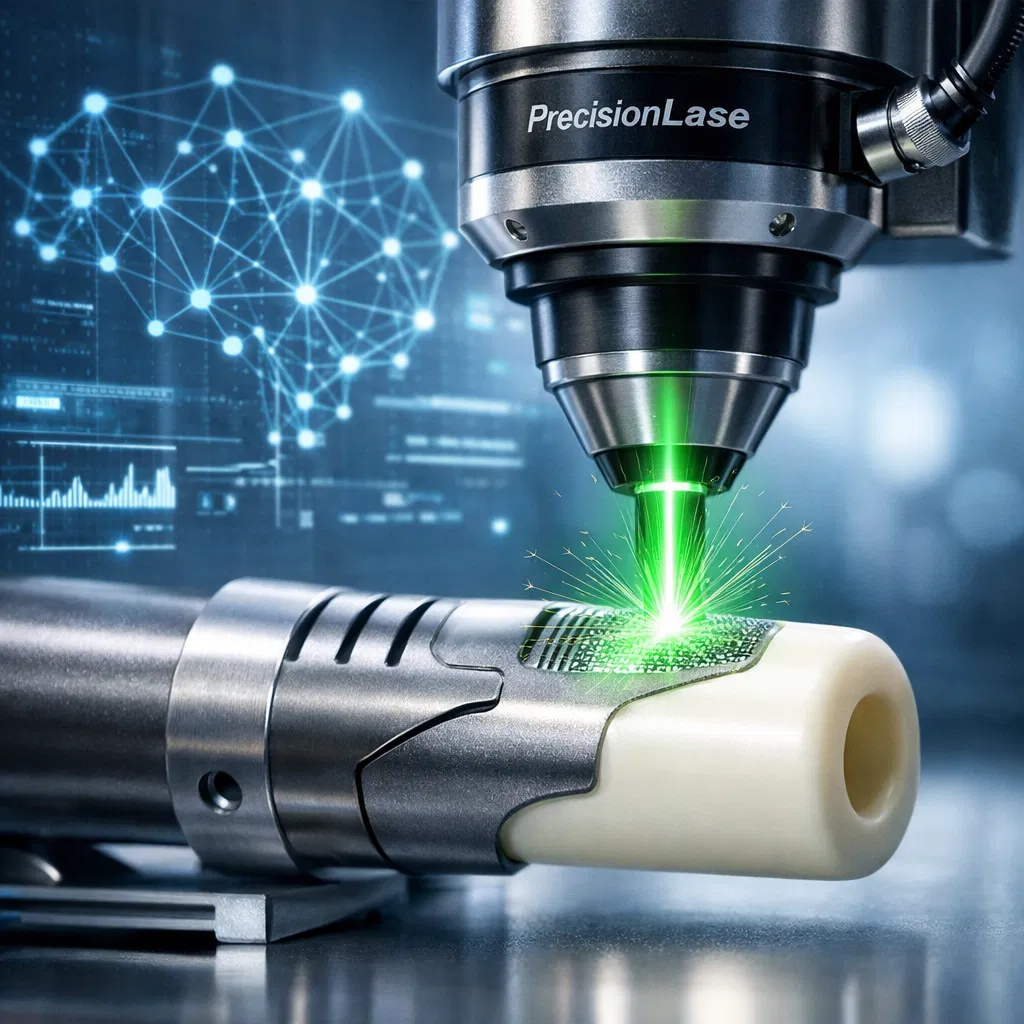
The medical device manufacturing industry is standing at the precipice of a precision revolution. As we move through 2026, the demand for minimally invasive devices, complex geometries, and absolute biocompatibility is driving laser cutting technology beyond traditional boundaries. According to recent industry analysis, the global medical laser processing market is projected to grow by over 15% annually, fueled by the rise of elective procedures and the complexity of modern implant materials.
For manufacturers of stents, catheters, surgical robotics components, and orthopedic implants, the margin for error is shrinking to nearly zero. This article explores the two dominant trends shaping medical laser cutting in 2026—AI-driven precision and multi-material composite machining—and how PrecisionLase is providing the compliant, cutting-edge solutions required to meet these challenges head-on.
Trend 1: The Rise of AI-Driven Micro-Precision
For years, laser cutting quality depended entirely on pre-set parameters and post-production inspection. If a part was out of spec, it was already scrap. In 2026, the paradigm has shifted to real-time, closed-loop control.
AI Visual Correction
The integration of Artificial Intelligence (AI) and machine vision is no longer a luxury; it is a necessity for high-volume medical production. Modern systems now feature AI-driven visual correction that compensates for material stress, thermal deformation, and positioning errors during the cut. This technology enables manufacturers to achieve dynamic accuracies of ±3µm, a threshold critical for neurovascular implants and drug-eluting stent patterns.
Unlike static programming, AI algorithms study the "kerf" (cut width) in real-time. If the laser encounters a slight variation in material density or thickness, the system automatically adjusts the feed rate and focal position to maintain a consistent cut. This "sense-and-respond" capability reduces scrap rates by detecting errors at the point of cutting rather than at final inspection.
Green Lasers and the "Cold Cutting" Imperative
While AI handles the brainwork, the "brawn" of precision is shifting towards specific wavelengths. The trend for 2026 is a decisive move toward Green Lasers (515-532 nm wavelength) for reflective and heat-sensitive materials.
Traditional fiber lasers (approx. 1 µm wavelength) can struggle with highly reflective medical alloys like copper or gold, often causing back-reflection that damages optics. Green lasers, however, are absorbed more efficiently by these materials. This allows for a "cold cutting" effect—significantly reducing the Heat Affected Zone (HAZ). For medical devices, a smaller HAZ means no micro-cracks, no burrs, and preserved material integrity, ensuring the device performs as intended inside the human body.
Trend 2: The Complexity of Composite Machining (PEEK & Titanium)
Modern medical devices rarely consist of a single material. The 2026 trend is toward hybrid devices that combine the strength of metals with the flexibility of polymers. This creates a unique manufacturing challenge: how do you cut radically different materials on the same platform without compromising quality?
Case Study: PEEK Laser Cutting
Polyether ether ketone (PEEK) has become the material of choice for artificial joints and spinal cages due to its radiolucency and similar elasticity to bone. However, machining PEEK with traditional methods is problematic; it causes tool wear and material fraying.
Laser cutting, specifically with PrecisionLase systems, offers a non-contact solution. As detailed in our previous guide, [Why PEEK is the Preferred Material for Artificial Joint Laser Cutting](https://www.precisionlase.com/blog/why-peek-is-the-preferred-material-for-artificial-joint-laser-cutting) , ultraviolet (UV) or specific femtosecond laser sources are required to break the polymer chains cleanly without melting the bulk material. This prevents the formation of a recast layer that could lead to implant rejection.
Titanium Alloy Integration
Simultaneously, titanium alloys (Ti6Al4V) remain the gold standard for load-bearing components. Cutting titanium requires high-power density to manage its reactivity and low thermal conductivity. The 2026 trend points towards systems that can seamlessly switch between processing modes—using high-power infrared for rough titanium cuts and short-pulse green/UV for fine PEEK features—all within the same production cell.
PrecisionLase in Action: Solving the Composite Challenge
At PrecisionLase, we have engineered our medical product lines to address these exact 2026 trends. Our R&D advantage, backed by our 15,000 m² facility in Shenzhen, focuses on "Compliant by Design" engineering.
The Challenge:
A manufacturer of minimally invasive surgical tools needed to produce a new device combining a PEEK handle with a Titanium alloy shaft featuring micro-fluidic channels. Traditional CNC machining was too slow, caused material stress, and required multiple setups, driving costs up by 40%.
The PrecisionLase Solution:
We deployed our integrated laser cutting platform from the Medi product line. Utilizing our proprietary AI vision system, the machine first scanned the raw titanium stock to identify grain orientation and surface irregularities. The cutting path was then optimized in real-time to avoid defects.
Titanium Phase: A high-power fiber laser module cut the titanium shaft with a nitrogen assist gas, producing a dross-free, oxide-free edge ready for assembly.
PEEK Phase: The system automatically switched to a short-pulse UV laser source. The machine utilized the AI vision data to align the PEEK component precisely, then cut intricate interlocking features without melting or discoloration.
The Result:
The client achieved a seamless hybrid component in a single setup. This turnkey approach, validated in our state-of-the-art simulation facilities, reduced their production time by 35% and eliminated secondary finishing operations.
Compliance and Validation: The 2026 Regulatory Landscape
Technology is only half the battle. In 2026, regulatory compliance remains the biggest hurdle to market entry. The European Union Medical Device Regulation (EU MDR) and FDA requirements demand rigorous process validation.
Selecting a laser cutting partner with ISO 13485 certification is critical. It is not enough for the final part to be good; the process that made it must be validated. PrecisionLase systems are designed to support IQ/OQ/PQ (Installation, Operational, and Performance Qualification) protocols.
- Material Traceability: Our software logs every cutting parameter—power, frequency, gas pressure—for each serialized part, creating a digital twin of the manufacturing process.
- Cleanliness: Our systems are designed with smooth surfaces and HEPA filtration options to meet the cleanroom standards required for implantable device manufacturing.
Conclusion: Preparing Your Production Line for Tomorrow
The future of medical device manufacturing lies in flexibility and intelligence. The trends of 2026—AI-driven micro-adjustments and the ability to machine complex material composites—are not passing fads; they are the new baseline for competitiveness. Whether you are cutting intricate cardiovascular stents or durable orthopedic implants, your equipment must offer the precision to handle exotic alloys and the delicacy to process advanced polymers.
As a trusted partner to over 500 customers worldwide, PrecisionLase combines the regulatory expertise (FDA registered, ISO 13485 certified) with the technological innovation (AI, Industry 4.0) to ensure your production lines are future-ready.
Ready to see the future in action?
Stop guessing if your materials can be cut faster or cleaner. Let the experts prove it.
[Contact our team today to schedule a Free Cutting Test] with your PEEK or Titanium samples. Experience the PrecisionLase difference in precision and compliance firsthand.
