
 EN
EN



Why Medical Laser Marking Localization Is Accelerating
U.S./EU Export Controls and Supply Chain Fragmentation as Key Triggers
The recent restrictions placed by the US and EU on exporting advanced laser tech has really messed up global supply chains, forcing medical device makers to bring their marking operations back home. The ongoing geopolitical situation has shown how fragile things are - last year alone, nearly 8 out of 10 manufacturers faced shipping delays stretching past six weeks, which completely wrecked their just-in-time production schedules and made meeting UDI requirements impossible. Now domestic ultrafast lasers are showing off impressive numbers, delivering around five and a half times more throughput compared to those old offshore setups. This means quicker validation processes, shorter wait times for parts, and finally having real control over those permanent device marks. Looking at what's happening in the industry right now, going local isn't just smart business anymore. It's becoming absolutely essential if companies want any hope of building resilient supply chains that can weather these kinds of disruptions.
Strategic Resilience: How Localization Mitigates Regulatory and Geopolitical Risk
Bringing laser marking capabilities in house makes it much easier to follow those tough regulations like the FDA's UDI requirements, EU Medical Device Regulation, and IEC 60601-1 standards. Plus, companies stay protected when things go wrong outside their control. When manufacturers keep these systems onshore instead of relying on overseas vendors, they close about 40% of the validation gaps under FDA 21 CFR Part 11. This means having all the necessary electronic signatures ready for audits, maintaining secure records, and keeping track of every document throughout the process. Local manufacturing centers help avoid problems with fluctuating tariffs and slow customs clearance too. Last year alone, these issues pushed import costs up by around 32% for medical device makers. What's more important though is that controlling operations domestically cuts down risks from international sanctions, intellectual property theft, and sudden changes in trade policies. For this reason, setting up local laser marking facilities isn't just good practice—it's becoming essential for companies wanting to maintain both regulatory compliance and real control over their operations.
Regulatory Drivers of Medical Laser Marking Localization
UDI Compliance, IEC 60601-1, and Real-Time Traceability Requirements
Regulations such as the FDA's UDI requirements and the EU Medical Device Regulation demand that medical equipment have permanent markings that can be read by machines throughout their entire lifecycle. These labels need to stay clear even after going through multiple sterilization processes, coming into contact with harsh chemicals, and lasting for many years in clinical settings. The IEC 60601-1 standard throws another challenge into the mix for manufacturers. According to this guideline, identification marks cannot fade or become unclear no matter how many times they're exposed to autoclave cleaning, ethylene oxide gas sterilization, or gamma radiation treatments. Traditional methods like inkjet printing, dot peening, or thermal transfer simply don't hold up well under these extreme conditions. That's where laser marking stands out as a reliable solution that actually works in practice what many other options promise but fail to deliver when put to the test.
- Delivers 20+ years of legibility under thermal and chemical stress
- Enables direct part marking (DPM) for real-time inventory and recall tracking via automated vision systems
- Reduces offshore validation cycles for mark durability by 35%, accelerating time-to-market
These non-negotiable technical and regulatory requirements make localized laser systems essential—not supplementary—for compliant device manufacturing.
FDA 21 CFR Part 11 Validation Gaps in Offshore Systems
Many offshore laser marking providers simply don't have what it takes to satisfy the strict validation standards set by FDA 21 CFR Part 11. This isn't just about having the right software features either. The regulations actually require concrete evidence that systems work properly from end to end. Think about things like proper electronic signatures that can't be altered, access controls based on job roles, and detailed installation and operational qualification records ready for inspection at any time. Recent industry research shows pretty alarming numbers too. According to a 2023 survey, nearly seven out of ten offshore vendors couldn't even show complete IQ/OQ documentation during audits. That leaves companies exposed to serious compliance risks. With FDA oversight getting tougher all the time and more enforcement actions being taken, many manufacturers are bringing their marking operations back home. Not because they want to save money mind you, but because they need actual control over everything from validation records down to those tiny audit trails, keeping them safely inside their own quality management systems where they belong.
Domestic Capability Build-Up: R&D, Policy, and 2026 Localization Rate Projection
National Key R&D Program Support for Ultrafast Laser Sources (2022–2026)
The Chinese government's National Key R&D Program running from 2022 through 2026 has set its sights specifically on advancing ultrafast laser tech as part of efforts to cut back reliance on foreign imports, particularly within tightly regulated industries such as medical devices. Money is being poured into basic research areas including how to better control pulse durations, improve beam uniformity, and manage heat distribution during processing. These capabilities are pretty much required if manufacturers want to create unique device identifiers without damaging delicate materials like titanium implants or polymer catheters. More than thirty different research organizations, ranging from various Chinese Academy of Sciences institutes to leading national universities, have joined forces to build industrial grade picosecond lasers that actually pass the IEC 60601-1 standard for biomedical compatibility and safety requirements. Initial tests indicate that these homegrown systems can produce marks of similar quality while costing around forty percent less overall compared to what companies typically pay when sourcing from Europe or Japan, which makes sense given the longstanding price advantage those regions have maintained in this market segment.
MIIT’s 2023–2025 Roadmap and 2026 Localization Rate Forecast (Baseline vs. Optimistic Scenarios)
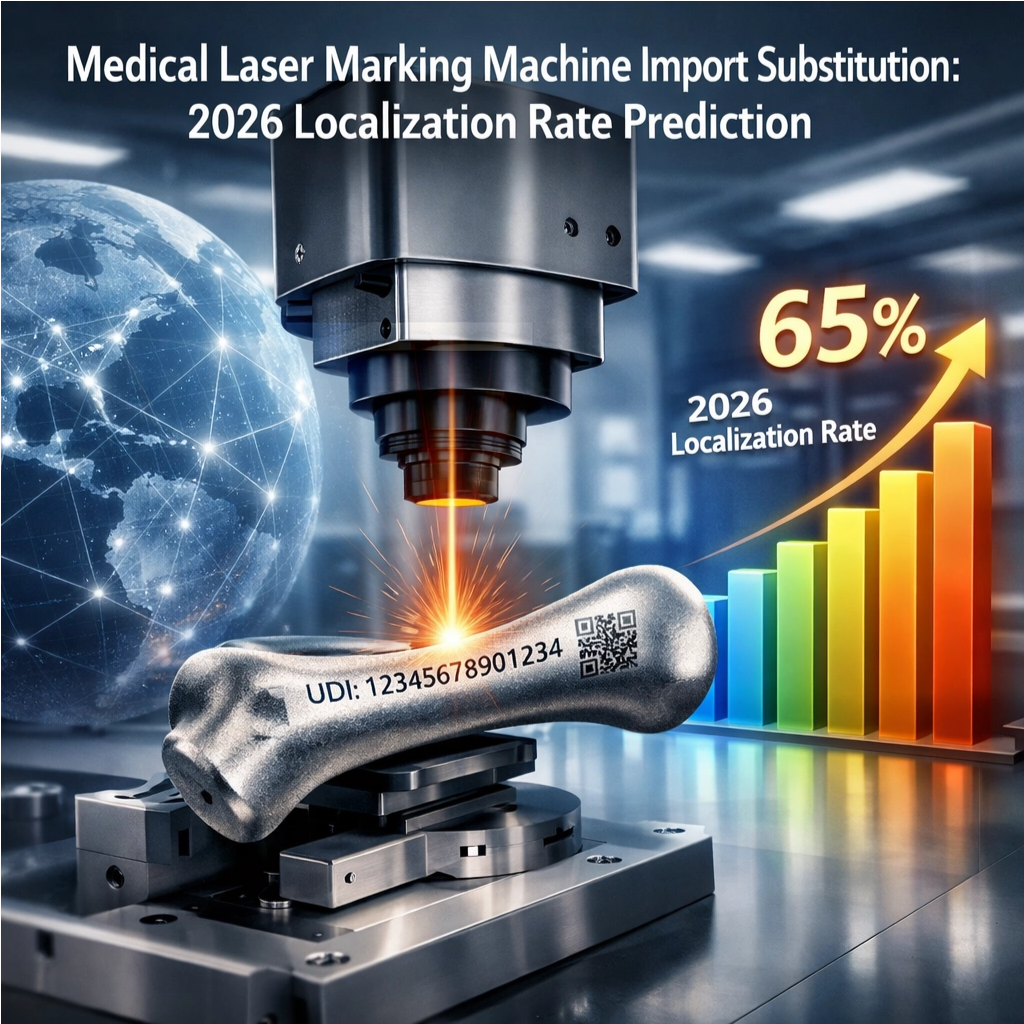
The Ministry of Industry and Information Technology (MIIT) 2023–2025 roadmap prioritizes domestic integration of laser marking systems through targeted manufacturing subsidies, accelerated equipment depreciation allowances, and pilot project grants. Current projections indicate:
| Scenario | 2026 Localization Rate | Primary Growth Drivers |
|---|---|---|
| Baseline | 45% | Current R&D funding levels, moderate policy support |
| Optimistic | 65% | Accelerated tech transfer, supply chain resilience |
We're seeing good movement forward when it comes to getting parts from subsystem suppliers and getting original equipment manufacturers on board. But if we want to reach the best possible outcome, there are three main areas where things need improvement. First, we need better domestic manufacturing capabilities for those special optical components that reflect light well while absorbing very little. Second, the industry really needs software that can monitor marking processes in real time and provide feedback loops for quality checks. And third, there's a big gap in training programs for technicians that actually scale across different facilities while meeting both ISO 13485 standards and what the FDA expects. Fixing all these issues wouldn't just save around $220 million each year in imports according to research from Industrial Technology Research Institute back in 2023. More importantly, it would let Chinese medical device makers compete globally without relying so heavily on imported technologies, which is becoming increasingly difficult as regulations get stricter worldwide.
FAQ
Why is medical laser marking localization accelerating?
The acceleration is due to restrictions on exporting advanced laser technology by the US and EU, which has disrupted global supply chains. Bringing marking operations domestically has become essential to build resilient supply chains and ensures that manufacturers can meet regulatory requirements effectively.
What are the benefits of domestic laser marking capabilities?
Domestic laser marking capabilities help manufacturers comply with regulations like the FDA's UDI and IEC 60601-1 standards. It also mitigates geopolitical risks, lowers validation gaps, reduces import costs, and allows more control over operations.
What regulatory challenges does laser marking localization address?
Localization addresses regulatory challenges such as maintaining permanent and machine-readable markings on medical equipment. This includes compliance with FDA's UDI requirements, the EU Medical Device Regulation, and other standards that demand high durability under thermal and chemical stress.
How is China supporting the development of ultrafast laser technology?
The Chinese government's National Key R&D Program is advancing ultrafast laser technology to reduce reliance on foreign imports in regulated industries, with funding for research on enhancing pulse control, beam uniformity, and heat management. This initiative involves collaboration among research organizations to develop cost-effective, industrial-grade lasers that meet international standards.