
 EN
EN



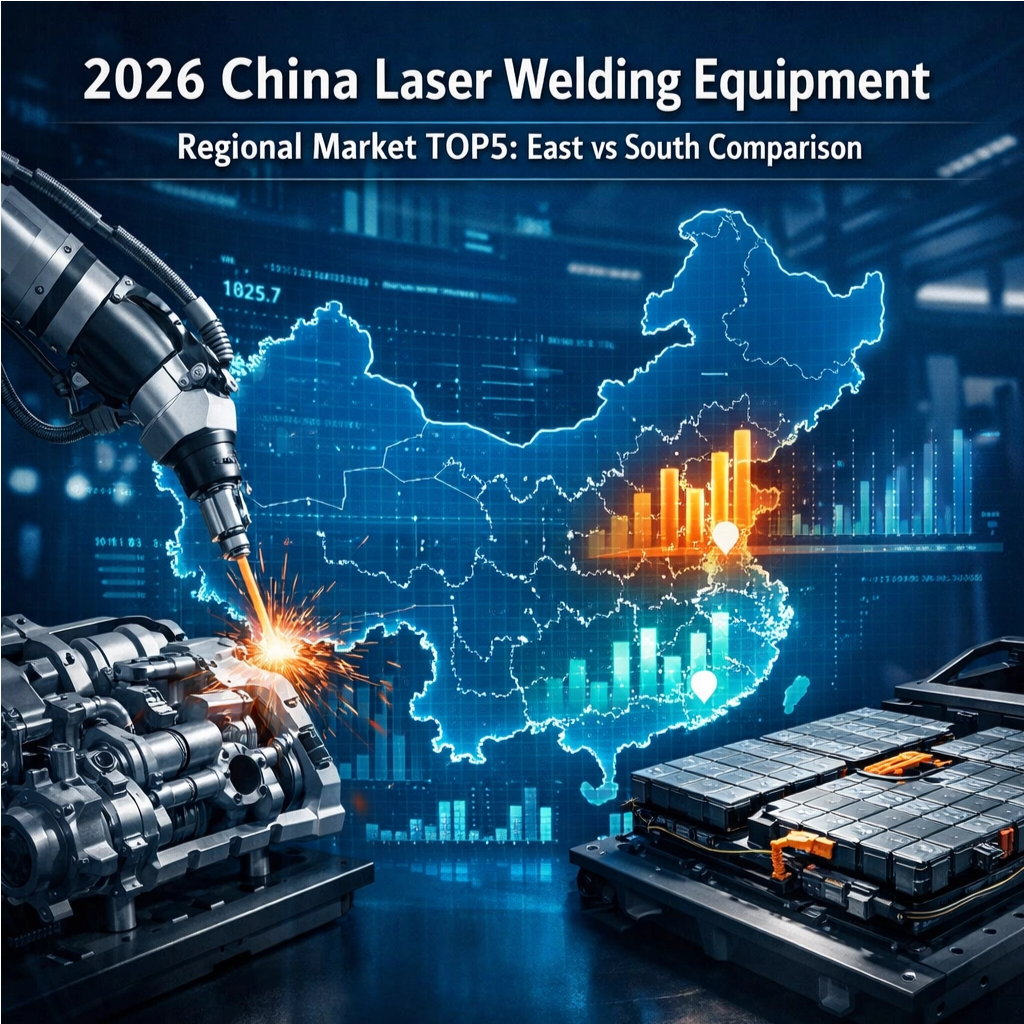
2026 Laser Welding Market: Divergent Growth Drivers in East and South China
East China: Supply Chain Maturity and Industrial Upgrading Policy Support
The 2026 laser welding market looks set to be dominated by East China thanks to its incredibly dense industrial network. The region hosts around two thirds of all Tier-1 automotive suppliers in China, and provinces like Jiangsu have been pushing forward with programs such as their Intelligent Manufacturing 2025 initiative. This particular program hands out about 4.2 billion yuan each year specifically for upgrading factories with automated systems. Because so many suppliers are concentrated here, manufacturers working with laser equipment can get components delivered right when they need them, which cuts down on production wait times by roughly a month to almost six weeks compared to areas further inland. Shanghai's growing semiconductor industry combined with Zhejiang's strong robotics sector means there's increasing demand for extremely precise welding work, especially needed for things like tiny electronic parts and aircraft components where measurements need to be accurate down to less than five micrometers. On top of that, local governments offer tax breaks ranging from 15% to 25% for companies switching to laser welding technology in older industries like ship construction and heavy equipment manufacturing. These incentives are helping speed up the process of replacing traditional arc welding methods across these sectors.
South China: EV-Driven Demand Surge and Smart Manufacturing Incentives
The rapid expansion of laser welding technology in South China owes a lot to the booming electric vehicle industry. Take a look at Guangdong and Fujian provinces - together they house no fewer than 11 massive battery gigafactories. The local governments have been handing out Green Manufacturing Subsidies worth as much as 800,000 yuan per production line for facilities integrating lasers into their operations. Since 2023, this incentive has triggered something remarkable: precision welding equipment orders shot up by over 200% compared to previous years. Local companies are now dominating nearly half (about 47%) of the market for those special fiber lasers needed when welding battery casings and power electronics components. These aren't just any lasers either - they need to create spots as small as 0.1 millimeters! The city of Guangzhou has launched its Robotics Valley project too, which trains around 12 thousand technicians every year specifically for laser-assisted manufacturing tasks. With all these factors working together, the entire EV manufacturing ecosystem creates powerful feedback effects. Some industry analysts predict that just the welding of battery packs could bring in close to 9 billion yuan worth of laser equipment sales across the region by 2026, based on projections from China's Machinery Industry Federation.
Market Performance Metrics: Revenue Share, CAGR, and Application Shifts (2026 Outlook)
East China’s Dominance: 48.2% Revenue Share (€1.92B) Amid Slowing Growth
The East China region expects to hold onto about 48.2 percent of the revenue in the Chinese laser welding market by 2026, which amounts to roughly €1.92 billion according to estimates. Growth rates though are slowing down below 8% per year because many traditional industries such as car manufacturing are reaching their limits. Jiangsu and Zhejiang provinces still benefit from well established supply networks, but manufacturers elsewhere are catching up fast, making it harder for these areas to grow further. Companies across the board are now focusing more on improving existing facilities rather than building new ones from scratch. We see this trend clearly when looking at orders for basic systems dropping off while there's growing interest in retrofitted equipment that integrates better with current operations.
South China’s Acceleration: 22.7% CAGR Driven by Battery Pack & Electronics Precision Welding
The laser welding industry in South China is growing fast right now, hitting around 22.7% year over year growth thanks mostly to electric vehicle batteries and fancy consumer electronics needs. More than half of the new laser welding setups going into Guangdong these days are focused on making battery casings and putting together tiny electronic components where they need to control beams smaller than 0.1mm and manage heat really precisely. The local government has been giving out incentives for smart manufacturing which has sped things up quite a bit. Looking ahead, experts predict that by 2026, applications related to electric vehicles will make up about 45% of all laser welding equipment installed in this region, marking the first time when these newer tech applications will beat out the old fashioned industrial uses that dominated before.
Competitive Landscape: Localization Strategies of Top OEMs in the 2026 Laser Welding Market
Domestic Leader Han's Laser: East-Centric R&D and Tier-1 Auto Supplier Integration
The research and development center for Han's Laser is based in Shanghai and extends into Jiangsu province, right where many of East China's top automotive suppliers cluster together. Working closely with luxury car manufacturers allows them to create complete welding systems for mass production transmission parts that work about 32 percent faster than older arc welding methods. Local government programs under Industry 4.0 are helping fund these custom systems, and their focus on developing proprietary technology for joining aluminum alloys meets the growing need for lighter vehicles across different models. When they station engineers right at customer factories, they can tweak processes as things happen, cutting down defects by nearly 20%. This close working relationship has helped them capture around 40% of the market share from China's leading automobile companies.
Global Players (e.g., IPG): South-Focused JVs with EV Ecosystem Partners (BYD, CATL Suppliers)
Major original equipment manufacturers like IPG Photonics have started forming partnerships in Guangdong province, positioning themselves right within South China's electric vehicle manufacturing ecosystem. These joint ventures work together on developing specialized fiber laser systems tailored specifically for tasks such as battery casings, busbars, and stacking electrodes. The results speak for themselves with nearly flawless welds achieving 99.8% seam consistency when working on pouch cells. Setting up shop close to major players like CATL and BYD suppliers means parts arrive at factories almost half as fast compared to traditional methods. Plus, local governments offer attractive tax breaks covering around a third of the costs associated with automating large scale production facilities. The modular design of these welding stations makes them easy to deploy during production expansions, and their custom-built precision heads keep track of positions within just 5 micrometers accuracy even when moving at impressive speeds of 200 millimeters per second. This combination of speed and precision has helped secure roughly two thirds of all battery equipment contracts in the region so far.
Enabling Ecosystems: Infrastructure, Talent, and Import Dependency by Region
The differences between regions when it comes to infrastructure support, where skilled workers come from, and how resilient their supply chains are really determine who will win in the laser welding market by 2026. Take East China for instance. The area has pretty well developed industrial infrastructure already in place. Think about all those logistics networks that connect everything together, fast train lines running through major cities, and power grids that can handle heavy industrial loads without flickering out on important days. This makes setting up new equipment much smoother than elsewhere. What's more, most of China's best engineering schools are located there too, so companies get access to fresh minds working on things like smart process controls and combining different welding methods. Still, there's one big problem hanging over the region: they rely on imports for around 18% of key parts including those fancy ultrafast lasers and specialized optical components needed for beam delivery systems. This shows there's still room for improvement in making these advanced photonics technologies domestically instead of always relying on foreign suppliers.
South China's electric vehicle boom has been happening so fast that infrastructure just can't keep up, even though places like the Shenzhen-Dongguan Battery Belt are starting to help with some of these problems. The vocational training programs are definitely growing faster than before, but there's still a big gap between what companies need and what local workers actually know how to do. This means many factories still bring in foreign engineers when dealing with really complicated systems. And then there's this other issue too bad situation with imports. About one third of those powerful lasers used in manufacturing come from abroad right now. That creates real headaches when trade policies change unexpectedly. Both car makers and local government officials have realized they need to start developing their own sources for these critical components sooner rather than later.
| Factor | East China | South China |
|---|---|---|
| Infrastructure | Mature logistics, high-speed rail | Expanding ports, EV corridors |
| Talent Pool | 65% of top engineering graduates | Rapid upskilling, vocational hubs |
| Import Dependency | 18% critical components (2025) | 32% laser sources (2025 forecast) |
Frequently Asked Questions
What are the main factors driving growth in the laser welding market in East China?
East China's growth in the laser welding market is driven by its mature supply chain, government incentives for industrial upgrading, and dense concentration of automotive suppliers.
How is South China's laser welding market different in terms of growth drivers?
South China's market is primarily driven by the electric vehicle sector and government subsidies encouraging smart manufacturing, particularly in battery gigafactories.
Why is East China slowing down in growth despite holding a significant revenue share?
Growth in East China is slowing because traditional industries are reaching their limits, and the focus has shifted towards improving existing facilities rather than creating new ones.
What challenges does South China face regarding infrastructure and import dependency?
South China struggles with an infrastructure gap due to rapid EV industry growth and has significant import dependency, particularly for laser sources.
Table of Contents
- 2026 Laser Welding Market: Divergent Growth Drivers in East and South China
- Market Performance Metrics: Revenue Share, CAGR, and Application Shifts (2026 Outlook)
- Competitive Landscape: Localization Strategies of Top OEMs in the 2026 Laser Welding Market
- Enabling Ecosystems: Infrastructure, Talent, and Import Dependency by Region
-
Frequently Asked Questions
- What are the main factors driving growth in the laser welding market in East China?
- How is South China's laser welding market different in terms of growth drivers?
- Why is East China slowing down in growth despite holding a significant revenue share?
- What challenges does South China face regarding infrastructure and import dependency?