 EN
EN



Laser Marking Software Market Overview and Growth Drivers
Laser marking software is booming right now, mainly because so many different industries need it. Automotive manufacturers, aerospace companies, electronic parts makers, and medical device producers are all looking for better ways to mark their products. Why? Well, they need to track where things come from, stop fake products getting into circulation, and meet those tough regulations everyone has to follow these days. The good news is there's software available that can handle complicated designs, serial numbers, and even create barcodes on just about any material out there - metals work great, but plastics and ceramics respond well too. What we're seeing is a real shift in how businesses approach product identification and quality control.
- Automation integration: Industry 4.0 adoption necessitates seamless interoperability with IoT-enabled production lines for real-time quality control and closed-loop feedback.
- Regulatory stringency: Mandates such as FDA UDI, AS9132 (aerospace PPID), and ISO/IEC 15415 drive demand for permanent, auditable marking solutions.
- Sustainability shift: Manufacturers are replacing chemical etching and ink-based systems with zero-waste laser alternatives—supported by software that ensures process repeatability and material compatibility.
- Customization demand: Rising consumer preference for personalized products fuels need for flexible, low-volume marking capabilities in packaging and consumer goods.
Advancements in hybrid laser system support and cloud-native architecture further amplify efficiency, enabling remote monitoring, over-the-air updates, and rapid design iteration. As global manufacturing pivots toward smart factories, laser marking software has become a pivotal enabler of agile, compliant, and scalable production ecosystems.
EZCAD 2.14: Dominance, Architecture, and Laser Marking Software Market Share
Core technical capabilities: galvo/fiber laser compatibility, file handling, and real-time preview
EZCAD 2.14 prioritizes industrial versatility with native support for fiber and galvo laser systems, delivering consistent, high-fidelity marking across metals, polymers, and ceramics. Its core strengths include:
- Multi-format vector/raster file processing (DXF, AI, BMP, PLT)
- Dynamic real-time preview with alignment validation and layer-based simulation
- Closed-loop calibration algorithms that compensate for thermal drift—critical for micron-level accuracy in aerospace and medical device applications
This precision engineering reduces setup errors by up to 40% versus legacy solutions, significantly lowering rework rates in regulated environments where part identification must meet ISO/IEC 15415 or MIL-STD-130 standards.
OEM licensing model, embedded integration strategy, and estimated 38% laser marking software market share (2024)
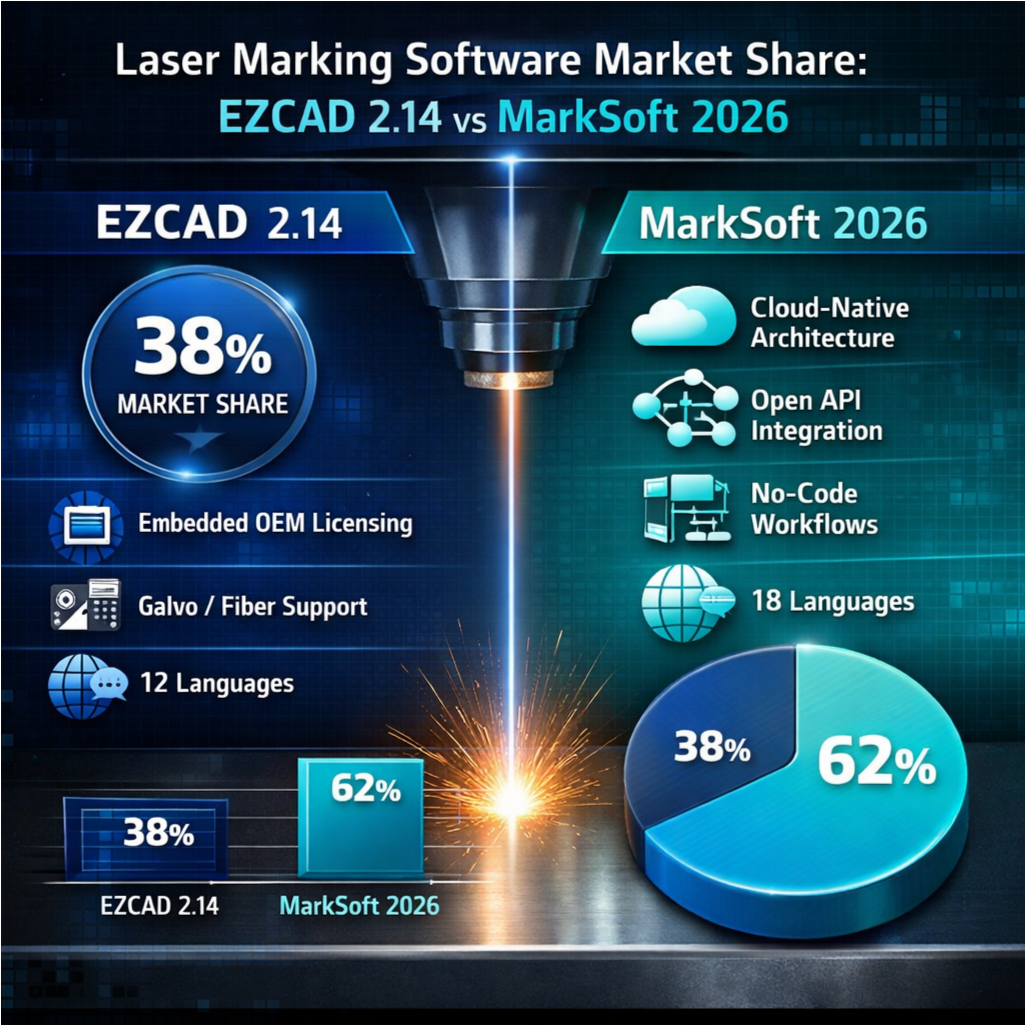
EZCAD 2.14 uses what's called an embedded OEM licensing setup that actually lives inside the laser hardware control systems themselves. This cuts down on those pesky driver conflicts we all hate and gets machines up and running about 70% faster during installation. The company's "software as component" strategy has landed them deals with no fewer than 18 major laser makers including big names like Hans Laser, JPT Opto-electronics, and Raycus. These partnerships create pretty solid vendor loyalty because their software works so seamlessly with the hardware it was designed for. Looking at Industry Analysis numbers from 2024, this business model explains why EZCAD holds around 38% of the worldwide laser marking software market. Their dominance really shines in industries like automotive and electronics manufacturing where production lines need maximum uptime, predictable performance, and don't want to deal with the headaches of managing subscriptions when there are plenty of other things going on.
MarkSoft 2026: Innovation, Ecosystem, and Emerging Market Position
Modular cloud-native architecture and hybrid laser system support
The latest version of MarkSoft, released for 2026, features a modular design that runs natively in the cloud using containerized microservices. This setup allows the system to grow and shrink based on what production demands at any given time. What makes this software stand out is its ability to work with different types of lasers including fiber, CO2, and UV systems through standard interfaces that don't lock users into specific vendors. Companies report saving around 40% on integration expenses when switching from older, all-in-one solutions. Another big plus is flexibility - manufacturers only need to install the components relevant to their operations. Think things like generating GS1 compliant barcodes, creating detailed 3D surface maps, or managing laser power levels. This approach means businesses pay only for what they actually use now, while still being prepared for whatever new technologies come along in the future.
Remote monitoring, API extensibility, and early-adopter traction in high-mix manufacturing
The combination of real time remote monitoring features along with open API capabilities makes MarkSoft increasingly popular among manufacturers dealing with high mix low volume production scenarios. Production managers can now check live dashboards that track things like job throughput rates, where defects tend to cluster, and when laser parameters start drifting outside normal ranges across multiple locations. According to our own internal data, this setup cuts down unexpected downtime by about 25%. What really sets it apart though is the RESTful API architecture which works seamlessly with big name ERP systems like SAP S/4HANA and Oracle Cloud as well as MES platforms from Siemens Opcenter and PTC ThingWorx. This means automatic handling of work orders, better traceability records, and reports ready for audits without extra effort. We've seen this technology gain ground particularly fast in aerospace manufacturing and medical device production areas. These industries need strict compliance with regulations such as FDA 21 CFR Part 11 requirements or AS9100 standards while also needing to switch between different product batches quickly throughout the day.
Head-to-Head Comparison: Functional, Strategic, and Market Implications
Usability, automation depth, and localization maturity across global manufacturing regions
EZCAD 2.14 works really well for standard production runs that need to move quickly through large volumes. Its clean interface makes it popular especially in Asian countries where operators value fast processing speeds and already know how to work with similar equipment. But when it comes to more complicated tasks like setting up conditional marking rules or linking data dynamically across different parts of the system, users have to write code themselves. This manual scripting adds around 15 to 20 percent extra time just to get those special orders ready. On the other hand, MarkSoft 2026 takes a different approach by letting people build entire workflows without any coding at all. With simple drag and drop tools, technicians can arrange their marking sequences visually, which saves roughly 30 percent of the usual programming work needed in facilities handling many different product types. Looking at language support shows another difference between these two systems. While EZCAD handles twelve languages, it doesn't include built-in compliance settings for specific regions. Meanwhile, MarkSoft goes beyond just translation by incorporating actual regulatory templates right into the software. For instance, there are preloaded UID protocol requirements for American defense contracts and complete documentation processes for CE markings. Plus, with eighteen language options available, this makes deploying MarkSoft much faster in European and North American markets where strict regulations apply.
Vendor lock-in risk: proprietary ecosystems (EZCAD) vs open-architecture flexibility (MarkSoft)
The laser marking software market is splitting down two different paths right now - one where companies stick with vertically integrated solutions and another that embraces open interoperability. EZCAD has built a pretty strong position here because their software works so closely with particular laser hardware. This tight connection makes it really hard for customers to switch away, which helps explain why they hold onto about 38% of the market. When businesses want to move from EZCAD though, they face some serious expenses. Getting everything validated again, training new staff members, and upgrading equipment can easily push past $200k at medium to large operations. MarkSoft 2026 takes a different approach altogether with its API first design that lets it work seamlessly with various third party lasers and factory systems. Migration costs drop around 45% with this solution, although companies need to put more effort into managing their IT systems and getting departments to work together better. Still, this kind of flexibility fits well with what most big corporations are aiming for these days as they push forward with digital transformations, particularly those multinational firms trying to set up consistent cloud based infrastructures across all their locations.
Frequently Asked Questions (FAQ)
What are the main industries using laser marking software?
Industries such as automotive, aerospace, electronics, and medical devices primarily use laser marking software to ensure product tracking, regulatory compliance, and prevention of counterfeit goods.
What advantages do cloud-native architectures offer in laser marking software?
Cloud-native architectures offer advantages like remote monitoring, flexible scaling of resources, and the ability to perform over-the-air updates, enhancing the software's efficiency and adaptability.
What is the market share of EZCAD 2.14?
As of 2024, EZCAD 2.14 holds around 38% market share in the global laser marking software market.
How do MarkSoft's open APIs benefit manufacturers?
MarkSoft's open APIs allow seamless integration with ERP and MES platforms, facilitate automatic handling of work orders, improve traceability, and enhance report accuracy without additional effort.
Table of Contents
- Laser Marking Software Market Overview and Growth Drivers
- EZCAD 2.14: Dominance, Architecture, and Laser Marking Software Market Share
- MarkSoft 2026: Innovation, Ecosystem, and Emerging Market Position
- Head-to-Head Comparison: Functional, Strategic, and Market Implications
- Frequently Asked Questions (FAQ)