
 EN
EN



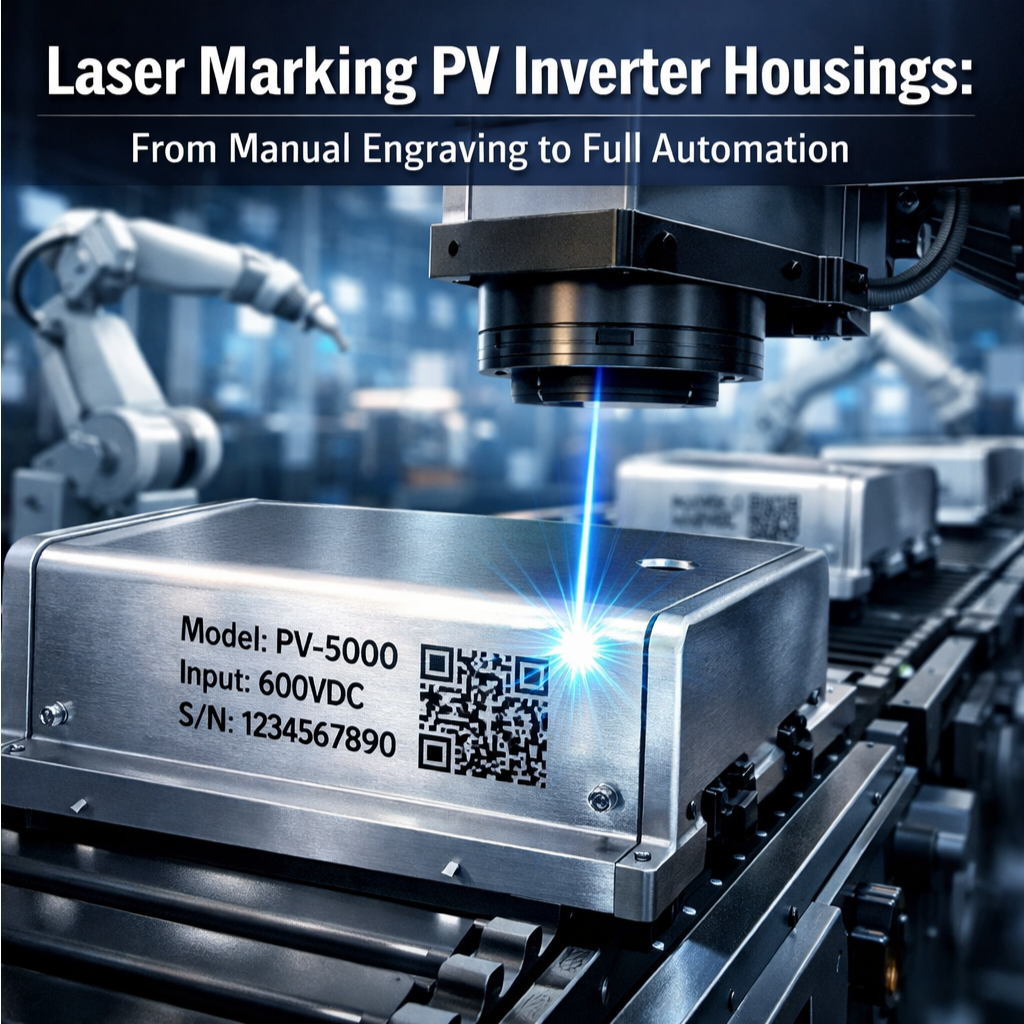
Material-Specific Challenges in PV Inverter Laser Marking
Aluminum and anodized coatings: Absorption dynamics and IEC 62109 compliance
Working with aluminum enclosures brings specific problems when using laser marking technology because of how reflective the material is and how quickly it conducts heat. The anodized coating adds another layer of difficulty since variations in oxide thickness change how much laser energy gets absorbed. This means operators need to constantly adjust power levels during the marking process just to get consistent results. Industry standards like IEC 62109 demand that these marks stay readable even after years outside in harsh conditions, including exposure to sunlight, chemical cleaners, and whatever else Mother Nature throws at them. Fiber lasers solve this problem with subsurface annealing. Instead of burning away material, they create permanent marks below the surface that resist oxidation while still letting the protective anodized layer do its job against corrosion.
Why galvo fiber lasers outperform CO₂ for precision marking on metal enclosures
Fiber lasers driven by galvanometers work best at 1064 nm when marking metallic PV inverter enclosures. These lasers have a much smaller focal spot around 20 microns which makes for really clean QR codes and sharp serial numbers. Compare that to traditional CO2 systems which usually have spots around 150 microns in size. The shorter wavelength interacts well with aluminum's crystal structure, creating high contrast marks even at pretty fast speeds up to 3 meters per second. Because there's less heat involved, these laser systems don't warp thin metal housing materials and keep those important IP65 rated seals intact. Plus, the ability to adjust pulse durations from 10 to 200 nanoseconds helps avoid problems with coatings coming loose after marking, so products can pass UL certifications without needing extra checks after the marking process is done.
Traceability, Compliance, and Quality Assurance with Automated PV Inverter Laser Marking
UDI, CE, and IEC 62109 traceability requirements met through permanent laser marking
Laser marking systems now embed durable, scannable codes right into the housing of photovoltaic inverters, meeting essential specs from IEC 62109 safety standards all the way to EU compliance marks and those FDA-like device identification rules. Traditional stickers or painted labels just don't cut it anymore when we're talking about parts that need to last 25 years under harsh conditions. These laser etched marks resist fading in sunlight, scratches during maintenance, and even aggressive chemical cleaners used in manufacturing plants. The whole supply chain benefits because manufacturers can track each component from warehouse shelves right down to when they finally get decommissioned at the end of their useful life. Plus, since lasers don't touch the surface while marking, there's no risk of compromising the enclosure's weatherproof seal, something absolutely vital for inverters installed outdoors where moisture is always a concern.
Defect reduction: 0.3% laser vs. 4.7% manual stamping (Tier-1 solar OEM benchmark)
Laser marking brings much more consistency compared to old school manual stamping methods. The difference shows up clearly in quality control numbers too defect rates drop dramatically from around 4.7% down to only 0.3%. That's roughly fifteen times better performance according to leading solar equipment manufacturers who have tested this extensively. What does all this mean for production? Less need for fixing mistakes later on, which cuts down warranty issues significantly. Plus there's greater peace of mind when dealing with regulations since everything looks good during inspections. When products come off the line with uniform marking depth, clear contrast, and proper positioning, they pass those automated checks without problems. And these markings stay readable even after years of exposure to tough outdoor environments where visibility matters most for tracking purposes throughout the product lifecycle.
Seamless Integration of PV Inverter Laser Marking into Smart Production Lines
Flying marking vs. stop-and-go: Throughput optimization for high-mix PV inverter lines
The flying marking technique allows lasers to engrave continuously while products move along conveyor belts, which gets rid of those annoying line stoppages that plague traditional stop-and-go systems. When synced properly using encoder feedback from the production line, these systems can actually increase output by around 40 percent in factories making various types of photovoltaic inverters. We've seen this happen firsthand at several top solar panel companies implementing Industry 4.0 technologies. These advanced marking systems handle well over 120 enclosure units every hour, working with all sorts of different shapes and sizes. What's really impressive is how they maintain compliance with UDI standards for traceability marks even during rapid production changes. For manufacturing plants dealing with constant product switching, this kind of flexibility makes all the difference between smooth operations and costly delays.
PLC and robotic synchronization: Real-time communication protocols for zero-downtime marking
Today's laser marking systems fit right into smart production cells thanks to standard industrial Ethernet connections like PROFINET, Ethernet/IP, and OPC UA. What makes these work so well is that they talk back and forth between lasers, PLCs, and robot arms, which means parameters can switch automatically when changing models. The real magic happens in real time data sharing that keeps things like marking depth, field size, and how long the laser stays put in line with IEC 62109 standards, even if the parts being marked have different shapes or materials. Plants that switched to these integrated setups are seeing around 99.2% uptime compared to just 87% with separate systems. Most of this improvement comes from cutting out all those spots where someone had to manually adjust something during production runs.
ROI and Operational Efficiency Gains from Automating PV Inverter Laser Marking
Automating PV inverter laser marking delivers rapid, measurable ROI across labor, consumables, and throughput:
- Labor Optimization: Replaces 2–3 manual engraving positions per line, freeing staff for higher-value tasks like automated optical inspection and process validation
- Consumables Elimination: Removes recurring costs for inks, solvents, stamps, and label stock—saving $12,000–$18,000 annually per assembly line
- Throughput Acceleration: Flying marking supports continuous processing at conveyor speeds up to 30 m/min, increasing daily output by 40% versus stop-and-go methods
These improvements typically yield full ROI within 8–14 months. Crucially, permanent laser marks eliminate traceability failures over the inverter’s 25-year lifespan—reducing recall risk by 67%, per renewable energy manufacturing audit data. With less than two hours of preventive maintenance required monthly, the system sustains peak efficiency without unplanned downtime.
FAQ
What makes fiber lasers more effective for PV inverter laser marking than CO2 lasers?
Fiber lasers have a much smaller focal spot and shorter wavelength, which allows for more precise and high-contrast markings on metal enclosures without the heat warping associated with CO2 lasers.
Why is laser marking preferred over traditional labeling methods for PV inverters?
Laser marking provides durable, scannable codes that withstand harsh environmental conditions and improve traceability, compliance, and quality throughout the product lifecycle.
How does laser marking contribute to defect reduction and quality assurance?
Laser marking greatly reduces defect rates compared to manual stamping, ensuring consistent and uniform markings that pass quality inspections and withstand outdoor conditions, lowering the need for post-production repairs.
What is the benefit of flying marking systems in production lines?
Flying marking systems eliminate line stoppages by engraving continuously as products move on conveyor belts, increasing throughput by approximately 40% in PV inverter manufacturing lines.
How quickly can a company expect ROI from automated PV inverter laser marking systems?
Companies can typically expect to see a full return on investment within 8 to 14 months, thanks to savings on labor, consumables, and increased throughput.
Table of Contents
- Material-Specific Challenges in PV Inverter Laser Marking
- Traceability, Compliance, and Quality Assurance with Automated PV Inverter Laser Marking
- Seamless Integration of PV Inverter Laser Marking into Smart Production Lines
- ROI and Operational Efficiency Gains from Automating PV Inverter Laser Marking
-
FAQ
- What makes fiber lasers more effective for PV inverter laser marking than CO2 lasers?
- Why is laser marking preferred over traditional labeling methods for PV inverters?
- How does laser marking contribute to defect reduction and quality assurance?
- What is the benefit of flying marking systems in production lines?
- How quickly can a company expect ROI from automated PV inverter laser marking systems?