
 EN
EN



Production Bottlenecks Caused by Conventional Cleaning Methods
Downtime and Cross-Contamination in Electrode Coating and Cell Assembly Stages
The traditional wet cleaning approaches used in manufacturing lithium ion batteries really slow things down, especially when it comes to coating electrodes and putting cells together. These operations need precision at the micron level, which just isn't happening with current methods. Most solvent based cleaning requires shutting down machines completely for either manual wiping or chemical flushes. This takes anywhere from 45 minutes to almost two hours each work shift, cutting into overall production time. What makes matters worse is that leftover solvents tend to move around between different areas of the facility. They bring along tiny bits of metal or organic stuff that end up on both anodes and cathodes. When this happens, we see faster growth of those dangerous dendrites and quicker breakdown of separators, which means batteries fail much sooner than they should. In cleanrooms rated at Class 5 standards, even one small contamination incident can ruin whole batches of product, adding extra costs from wasted materials on top of lost production time. The problem is that people simply can't maintain that same level of super clean conditions across all those complicated shapes and sizes consistently. These issues aren't just occasional hiccups but built into how the system works right now.
Quantifying Throughput Loss: 12–17% OEE Reduction Due to Cleaning-Induced Stops
The old school approach to cleaning creates real problems for manufacturing capacity. Industry reports indicate traditional methods cut Overall Equipment Effectiveness (OEE) anywhere from 12 to 17 percent in those massive battery production facilities. Why? Well, there are basically three things slowing everything down. First comes taking apart machinery just to get access for cleaning. Then we wait ages for chemicals to dry properly, sometimes over half an hour. And finally there's all that checking to make sure everything got cleaned properly. A single cleaning run eats up between 7 and 12 percent of actual working hours during shifts, which causes even more delays later on in the production line. When factories aim for that sweet spot of 95% OEE, these losses add up to about 20% less production each year. That translates to losing out on 2 gigawatt-hours worth of batteries annually at a plant producing 10 gigawatt-hours total. As manufacturers push towards making terawatt-hours of batteries, the old ways simply won't keep up with what modern production demands in terms of speed, reliability, and maintaining proper cleanliness standards.
Why Lithium Battery Equipment Demands Sub-Micron Cleanliness
ISO Class 5–7 Cleanroom Standards vs. Real Residue Tolerance on Anode/Cathode Surfaces
ISO Class 5 to 7 cleanrooms typically manage airborne particles at or above 0.5 microns, but lithium ion battery components actually need much cleaner environments. The anodes and cathodes start showing poor performance when there's even 0.3 microns of residue buildup. When particles larger than 0.5 microns get introduced - which happens frequently after solvent based cleaning processes - they cause serious problems like dendrite formation, unstable interfaces between cathodes and electrolytes, and can lead to over 15% loss in battery capacity within just 100 charge cycles. Research published in the Journal of Power Sources back in 2023 revealed something startling: nearly 8 out of 10 separator failures in mass production settings came from those tiny sub micron contaminants nobody saw coming from standard wet cleaning methods. Laser cleaning technology stands apart because it reaches down to 0.1 to 0.2 micron precision levels, below what would trigger dangerous thermal events from metal bits or oxide deposits. Considering how tight the tolerance specs are for anode uniformity in 18650 cells (measured in actual micrometers), manufacturers simply cannot rely solely on cleanroom classifications anymore. Their cleaning approaches need to match the realities of nanoscale electrochemical interactions happening inside these batteries.
Laser Cleaning Lithium Battery Equipment: Precision, Consistency, and Integration
How Laser Parameters Enable Selective Oxide Removal Without Substrate Damage
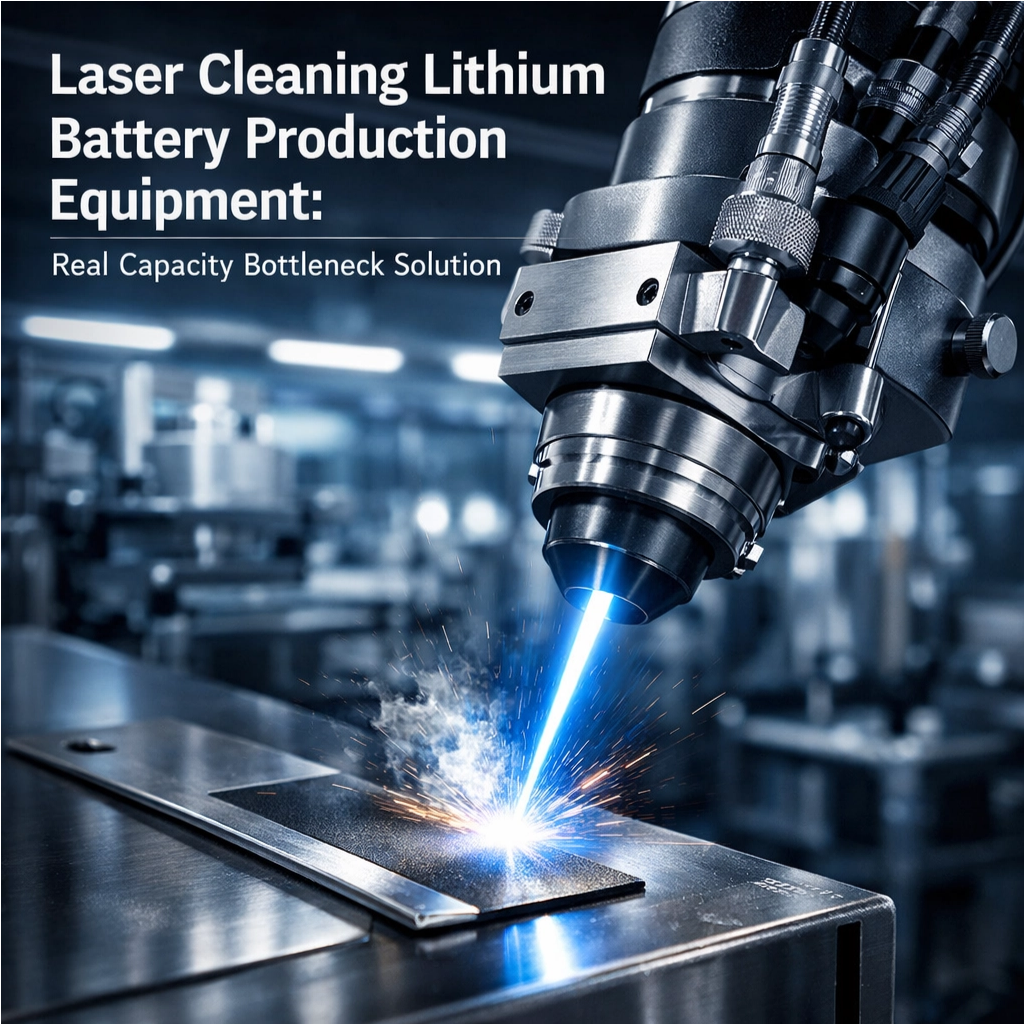
The laser cleaning process achieves incredible precision at sub-micron levels thanks to carefully managed settings. For instance, when using a 1064 nm fiber laser, the wavelength gets absorbed specifically by oxide layers but bounces right off copper or aluminum surfaces. With pulses lasting just nanoseconds, these lasers create power densities over 1 gigawatt per square centimeter, which allows for instant removal of material without transferring heat to surrounding areas. Energy levels between 1 and 5 joules per square centimeter are set to surpass what's needed to remove oxides (which typically requires 0.5 to 1.5 J/cm²) while still keeping well within safe limits for the actual metal underneath. What does this mean in practice? Battery manufacturers can strip away nickel oxide from tab connections in less than half a second per spot, all while maintaining the structural integrity of the base metals. Advanced monitoring systems continuously tweak the laser intensity based on real time feedback from the surface being cleaned. This ensures consistently clean results even after thousands upon thousands of repetitions in automated electrode stacking machines used throughout production lines.
Case Study: 92% Reduction in Weld Defects After In-Line Laser Cleaning Pre-Weld
A gigafactory deployed an inline fiber laser system upstream of welding stations to resolve chronic weld porosity caused by aluminum oxide layers. Operating at 300 W and 20 ns pulse duration, the system processed 120 cells/minute and removed 0.3–1.2 μm oxide layers from terminal surfaces. Post-implementation results showed:
| Metric | Pre-Implementation | Post-Implementation | Improvement |
|---|---|---|---|
| Weld defect rate | 12.7% | 1.0% | 92% reduction |
| Mean rework time | 38 min/hour | 3 min/hour | 92% decrease |
| Scrap rate | 5.2% | 0.4% | 92% reduction |
The system eliminated 230 liters/week of solvent use and cut welding station downtime by 91%. Weld tensile strength increased by 31%, per ISO 14329 testing—demonstrating how laser cleaning resolves quality bottlenecks at scale.
Sustainability and TCO Advantages of Dry Laser Cleaning for Lithium Battery Equipment
Eliminating VOCs, Solvent Waste, and Rework Costs Across Drying and Encapsulation Lines
Laser cleaning gets rid of those pesky VOCs and leftover solvents which is really important for drying and encapsulation lines since chemicals can ruin capacity forever. Getting rid of all those wet processes saves manufacturers around $740,000 each year on buying solvents and getting rid of dangerous waste according to research from the Ponemon Institute last year. The benefits go further too. Cathode drying sees about 92% less need for fixing things over again because the electrolyte doesn't interact with residue anymore. And there's something else worth mentioning here. Since there are no extra materials needed and nothing gets thrown away after cleaning, the overall cost to own this equipment plummets by roughly 40% within just three years. Why? Maintenance bills drop, energy consumption goes way down from 850 MWh per year to only 120 MWh, and companies spend less time dealing with complicated regulations.
| Cost Factor | Traditional Cleaning | Laser Cleaning |
|---|---|---|
| Annual Waste Disposal | $220k | $12k |
| Rework Rate | 15% | 1.2% |
| Energy Consumption | 850 MWh/year | 120 MWh/year |
FAQs
What problems do conventional cleaning methods cause in lithium battery production?
Conventional cleaning methods can lead to production bottlenecks, cross-contamination between anodes and cathodes, increased downtime due to manual wiping or chemical flushes, and can cause battery failures due to the rapid formation of dendrites.
How much does traditional cleaning affect the overall equipment effectiveness (OEE)?
Traditional cleaning methods can cut OEE by 12-17%, significantly reducing manufacturing capacity and causing an annual loss equivalent to 20% of production.
What are the benefits of using laser cleaning in lithium battery production?
Laser cleaning offers precision cleaning with sub-micron accuracy, reduces cross-contamination, eliminates VOCs and solvent waste, decreases rework costs, and dramatically lowers energy consumption compared to traditional methods.
How does laser cleaning improve weld quality?
Laser cleaning reduces weld defects by removing oxide layers from terminal surfaces, leading to a 92% reduction in weld defects, a decrease in rework time, and an increase in weld tensile strength.