
 EN
EN



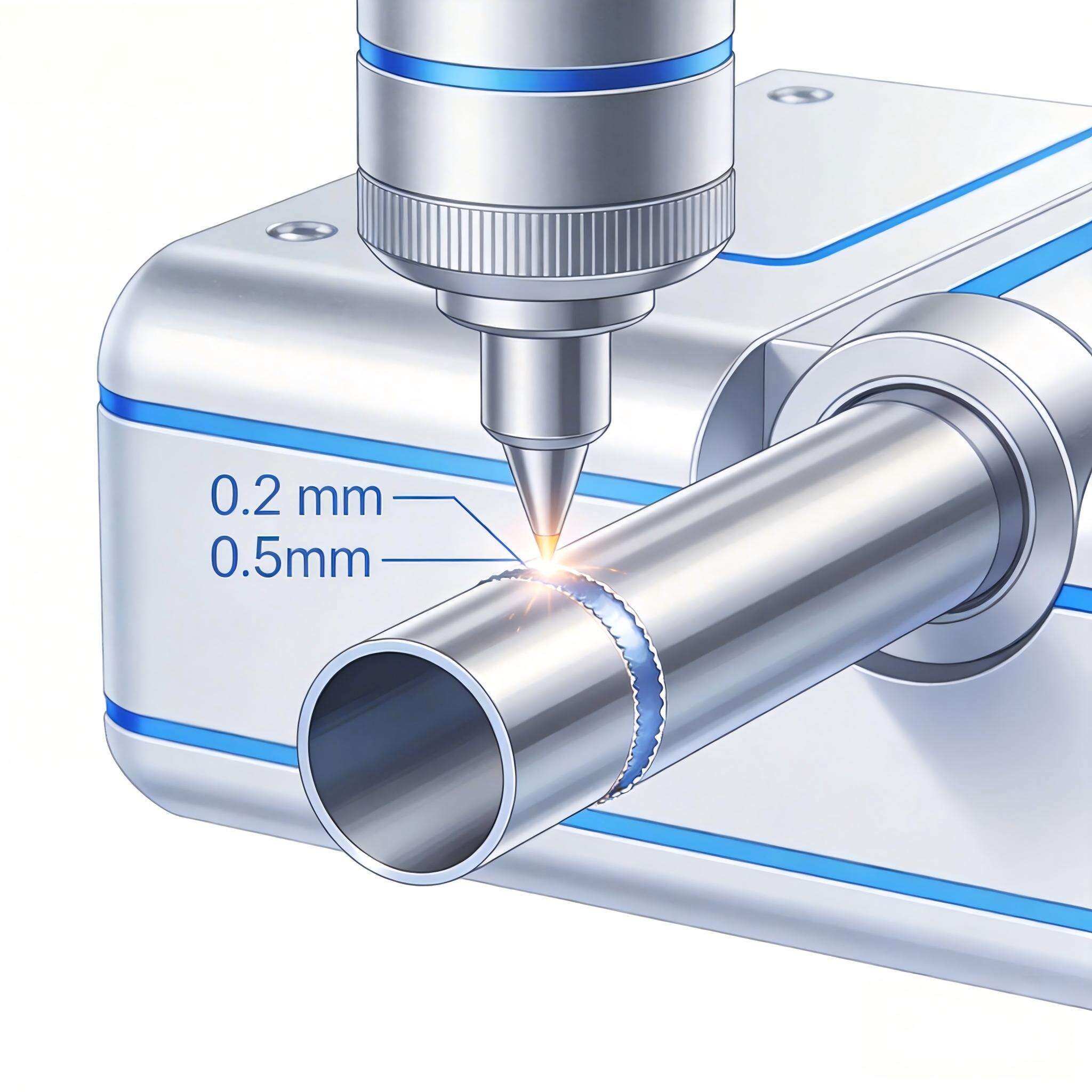
The Critical Role of Titanium in Cardiac Implants
Pacemakers and implantable cardioverter defibrillators (ICDs) save lives every day, but their success hinges on one often-overlooked component: the titanium housing. This thin-walled enclosure must hermetically seal sensitive electronics while enduring decades of flexing, temperature swings, and corrosive body fluids — all in a space smaller than a matchbox.
The manufacturing challenge? Cutting precise geometries without introducing residual stress, microcracks, or surface contamination that could compromise weldability or long-term integrity. Mechanical methods like milling or EDM often fall short here, leaving heat-affected edges prone to failure under fatigue.
GuangYao Laser's PrecisionLase MediCut Tube System and compatible medical workstations address this directly, using controlled ultrafast laser ablation to produce clean, stress-minimized cuts on titanium tubing and sheet — optimized for the demanding requirements of cardiac device OEMs worldwide.
Titanium Grade Selection and Machining Realities
Medical implants typically use commercially pure titanium (Grade 1-4) or Ti-6Al-4V (Grade 5). Grade 2 offers the best balance of ductility and strength for housings, while Grade 5 provides higher rigidity for smaller devices. Both form a natural oxide layer for biocompatibility, but their low thermal conductivity (~22 W/m·K) makes heat management during cutting essential.
Common pitfalls in titanium processing include:
- Localized overheating leading to alpha-case formation (embrittlement).
- Oxide discoloration affecting weld aesthetics and hermeticity.
- Edge burrs that disrupt laser welding or diffusion bonding.
Ultrafast lasers sidestep these by delivering energy in such short bursts that material vaporizes before heat can diffuse. This keeps the heat-affected zone (HAZ) to just a few microns, preserving the alloy's microstructure and mechanical properties. GuangYao Laser's systems fine-tune this through adjustable pulse parameters and inert gas shielding.
Optimized Cutting Parameters for Titanium Housings
Here's a practical reference for titanium housing cuts, drawn from established medical laser processing guidelines:
|
Parameter |
Typical Range |
Engineering Impact |
|
Laser Wavelength |
1064 nm (fiber) or 1030 nm (Yb) |
Matches Ti absorption peak |
|
Pulse Duration |
10-30 picoseconds |
Minimizes thermal effects |
|
Peak Power Density |
1-3 GW/cm² |
Ensures clean ablation without melting |
|
Repetition Rate |
200-600 kHz |
Controls throughput vs. edge quality |
|
Spot Size |
15-25 µm |
Defines slot precision and corner radii |
|
Assist Gas Pressure |
2-5 bar (Argon/N₂) |
Prevents plasma shielding and oxidation |
|
Resulting Edge HAZ |
<5 µm |
Supports direct welding without rework |
These settings yield kerf widths of 20-40 µm with surface roughness (Ra) around 0.3 µm — ready for sealing without extensive post-processing. GuangYao Laser workstations allow real-time adjustment, so engineers can dial in based on wall thickness (typically 0.2-0.5 mm) or contour complexity.
Stress Control: From Cut to Weld-Ready
Residual stress is the silent killer in titanium implants. Even minor tensile stresses near the cut edge can propagate cracks during lid welding or accelerate fatigue in vivo. Laser cutting mitigates this through:
- Cold ablation: Pulse durations short enough to avoid melting pools.
- Scan strategy: Overlapping passes with controlled overlap (20-30%) for uniform energy distribution.
- Post-scan cooling: Inert gas flow prevents thermal gradients.
Validation often involves X-ray diffraction (XRD) for stress mapping or micro-Raman spectroscopy. Cuts from GuangYao systems typically show compressive surface stresses — beneficial for fatigue resistance — rather than the tensile stresses from mechanical methods.
Inline monitoring adds another layer: vision systems check edge straightness (±3 µm tolerance), while acoustic emission sensors flag anomalies like partial penetration. This closed-loop approach keeps every housing batch consistent.
Durability Testing: Simulating Implant Lifetimes
Pacemaker housings must survive 10-15 years of implantation, equating to billions of cardiac cycles. Accelerated testing protocols include:
- Fatigue under pulsatile load: 107-108 cycles at 5-20% strain.
- Thermal cycling: -40°C to +85°C, 1000+ cycles.
- Corrosion exposure: Simulated body fluid (pH 7.4) for 6+ months.
- Helium leak rate: <10^-9 atm·cc/s per MIL-STD-202.
Laser-cut titanium from optimized processes excels here. Edges maintain integrity without crack initiation, and the passive oxide layer remains stable. GuangYao Laser's application support often includes guidance on these tests, helping customers correlate cut quality with test outcomes for regulatory dossiers.
Case Insight: Scaling Cardiac Device Production
Consider a mid-sized OEM transitioning from EDM to laser for ICD housings. Initial mechanical cuts showed 15-20 µm edge distortion, causing weld voids in 8% of units. After adopting a GuangYao Laser workstation setup:
- Edge straightness improved to <5 µm over 50 mm lengths.
- Weld reject rate dropped below 1%.
- Cycle time per housing fell from 8 to 4 minutes.
The key was parameter mapping for their specific Grade 2 tubing (0.3 mm wall). Now running multi-shift, they handle 2,000+ units weekly — with full traceability from cut data to finished device serialization.
Welding Integration and Hermetic Sealing
Laser-cut edges pair naturally with laser welding for lid attachment. The clean, HAZ-minimal profiles ensure consistent melt pools and void-free seams. Common setups use galvo scanners for contour following or fiber delivery for deep penetration.
Surface prep is minimal: ultrasonic clean in DI water, followed by IPA wipe. No aggressive etching needed, preserving the oxide for corrosion protection. This streamlined flow supports lean manufacturing in ISO 13485-certified lines.
Production Economics and Cleanroom Fit
Beyond quality, laser cutting brings practical wins:
- No tool wear — endless "bit life" unlike milling.
- Dry process — zero cutting fluids or swarf handling.
- Compact footprint — fits Class 7/8 cleanrooms easily.
GuangYao Laser's modular workstations integrate exhaust, interlocks, and data logging out of the box, easing validation. For high-volume cardiac producers (5,000-20,000 units/month), per-part costs stabilize under $2, including amortization.
Frequently Asked Questions
Q: How does laser cutting compare to waterjet for titanium housings?
Waterjet avoids heat but leaves taper and requires extensive deburring. Laser delivers straighter edges with better weld prep, though it demands precise parameter control.
Q: Can PrecisionLase systems handle mixed titanium grades?
Yes — Grade 1-5 and custom alloys. Pulse energy scales with hardness and reflectivity for consistent results across materials.
Q: What post-cut finishing is typically needed?
Often just cleaning and inspection. Electropolish if aesthetics demand mirror finish, but weld-ready edges are standard.
Q: How do you validate cut quality for regulatory submission?
Cross-sections via SEM/FIB, stress via XRD, leak tests per ASTM F2096. GuangYao provides process data to support your IQ/OQ/PQ protocols.
Future-Proofing Cardiac Manufacturing
As devices shrink toward leadless pacemakers and bioresorbable hybrids, tolerances tighten to sub-10 µm. Adaptive laser systems — with AI path optimization and multi-wavelength sources — will lead this shift.
GuangYao Laser's PrecisionLase platforms position manufacturers at the forefront: stress-free titanium processing that scales from prototype to production, ensuring every heartbeat monitor starts with an edge you can trust.
Table of Contents
- The Critical Role of Titanium in Cardiac Implants
- Titanium Grade Selection and Machining Realities
- Optimized Cutting Parameters for Titanium Housings
- Stress Control: From Cut to Weld-Ready
- Durability Testing: Simulating Implant Lifetimes
- Case Insight: Scaling Cardiac Device Production
- Welding Integration and Hermetic Sealing
- Production Economics and Cleanroom Fit
- Frequently Asked Questions
- Future-Proofing Cardiac Manufacturing
