
 EN
EN



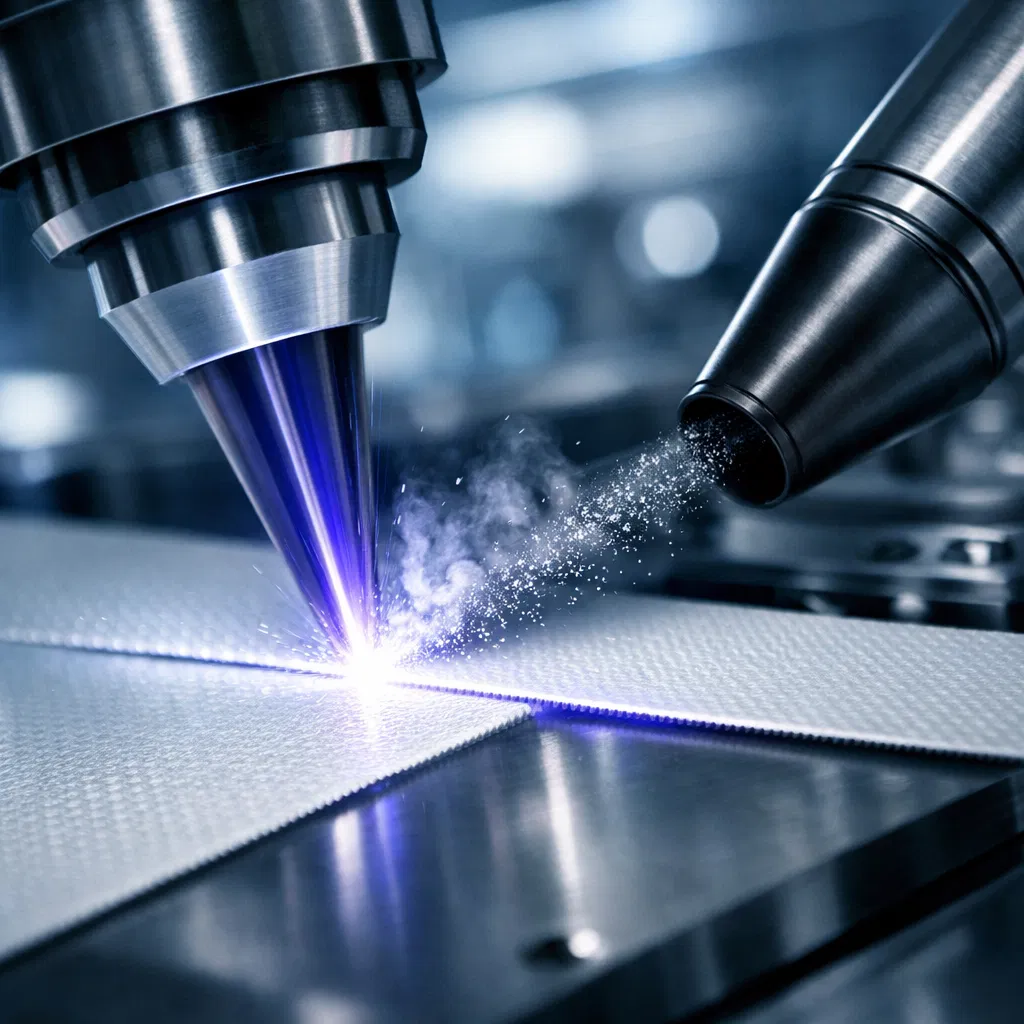
How precision laser cutting enables burr-free EV battery separator processing with zero particulate contamination, 50μm feature resolution, and compatibility with Class 100 cleanroom requirements. Learn about ultrafast laser selection, process optimization, and real production results.
The Hidden Challenge in Battery Safety
The EV battery industry has made remarkable strides in energy density, charging speed, and cycle life. Yet one component remains a persistent source of quality risk: the separator.
This thin, porous membrane—typically 9–25μm thick—sits between the anode and cathode, preventing physical contact while allowing lithium ions to pass through. If the separator fails, the result is internal short circuit, thermal runaway, and potentially catastrophic battery failure. For this reason, separator quality is quite literally a life-safety issue.
The challenge intensifies during cutting and shaping. Separator materials—polyethylene (PE), polypropylene (PP), and ceramic-coated composites—are mechanically fragile and thermally sensitive. Traditional die-cutting creates compressive stress that can deform the porous structure. Mechanical blades generate particulates that become contamination sources. Even minor burrs or edge defects can nucleate cracks that propagate during battery cycling.
For production managers and process engineers, the goal is clear: cut separators with zero burrs, zero particulate generation, and zero thermal damage, while maintaining throughput sufficient for high-volume battery production. This combination of requirements has driven the industry toward an unlikely solution: lasers.
Why Separator Cutting Demands a New Approach
The Limits of Mechanical Methods
Conventional separator cutting relies on steel rule dies or rotary blades. These methods have served the industry for decades but reach fundamental limits as battery formats evolve:
- Burr formation: Mechanical cutting inevitably produces microscopic burrs along the cut edge. These burrs can break loose during battery assembly or cycling, becoming contamination that pierces the separator elsewhere.
- Edge deformation: Compressive forces from dies crush the separator's porous structure at the cut edge, creating a dense region that impedes ion flow and concentrates stress.
- Particulate generation: Blade wear releases metal particles that embed in the separator, creating potential failure sites.
- Tool wear: Sharp blades dull quickly when cutting ceramic-coated separators, requiring frequent replacement and requalification.
The Laser Advantage
Laser cutting addresses each of these limitations through fundamentally different physics. A focused laser beam vaporizes material along a programmed path without physical contact, eliminating tool wear and compressive forces. When properly tuned, the process creates cut edges that match or exceed the base material's integrity.
For battery separators specifically, laser cutting offers:
- Zero mechanical stress: No compression means the porous structure remains intact to the cut edge
- Burr-free edges: Material removal occurs via vaporization, not tearing
- Minimal heat affected zone: Ultrafast pulses confine thermal effects to sub-micron scales
- Particulate control: Vaporized material is captured by integrated exhaust, preventing re-deposition
- Flexibility: Cut any shape without tooling changes—ideal for prototype and high-mix production
Matching Laser Technology to Separator Materials
Not all lasers cut separators equally. The choice of wavelength, pulse duration, and power determines whether the process yields pristine edges or thermal damage.
Ultrafast Lasers: The Gold Standard
For demanding separator applications—particularly ceramic-coated and ultra-thin (<12μm) membranes—picosecond and femtosecond lasers deliver the best results. These ultrafast systems operate in the cold ablation regime: pulse durations are shorter than the time required for heat to diffuse into the surrounding material.
A picosecond laser (typically 10–50ps) at 355nm or 532nm wavelength removes material via multiphoton absorption and direct bond breaking. The heat affected zone is effectively zero—typically <1μm. This means the separator's porous structure remains unchanged right up to the cut edge, preserving mechanical properties and ionic conductivity.
Production data from a leading Asian battery manufacturer shows the impact: switching from nanosecond fiber lasers to picosecond UV sources for ceramic-coated separator cutting reduced edge defects by 94% and eliminated thermal shrinkage issues that had caused intermittent short circuits during cell cycling.
UV Nanosecond Lasers: The Practical Workhorse
For standard PE and PP separators without ceramic coatings, UV nanosecond lasers (355nm) offer an excellent balance of cut quality and throughput. The short wavelength is strongly absorbed by polymers, confining energy to a shallow surface layer. Pulse durations of 10–30ns create a small but manageable heat affected zone—typically 5–15μm.
Modern UV nanosecond systems achieve cut speeds of 500–1000mm/s on 20μm separators, with edge quality meeting most EV battery requirements. The capital cost is significantly lower than ultrafast alternatives, making this the preferred choice for high-volume production of cylindrical and prismatic cells.
What to Avoid
Infrared fiber lasers (1064nm) are generally unsuitable for separator cutting. Polymers are transparent or weakly absorbing at this wavelength, so energy penetrates deeply before absorption occurs. The result is melting, carbonization, and large heat affected zones that compromise separator integrity. Some manufacturers attempt IR cutting with absorbent additives, but this introduces process complexity and potential contamination.
Real-World Applications in Battery Production
Case Study: Prismatic Cell Separator for EV Application
A European battery manufacturer supplying a major automotive OEM needed to cut ceramic-coated separators (16μm base PE with 4μm ceramic layer on each side) for large-format prismatic cells. Their mechanical die process produced acceptable edges initially, but blade wear after 10,000 cycles caused burr formation that contaminated downstream winding.
They implemented a dual-head picosecond UV laser cutting system (PowerSep-PS) with the following specifications:
- Wavelength: 355nm
- Pulse duration: 12ps
- Power: 30W per head
- Cut speed: 400mm/s
- Positioning accuracy: ±5μm
Results after six months of production:
- Zero burr-related defects in 500,000+ cells produced
- Cut edge quality: SEM inspection showed clean edges with <2μm heat affected zone
- Throughput: 80 separators per minute (dual-head operation)
- Uptime: 96.5% including scheduled preventive maintenance
- Tooling cost elimination: $80,000 annual savings from die replacement and requalification
The manufacturer's quality director noted: "We were initially skeptical that laser cutting could match die-cutting throughput. The dual-head system actually exceeds our previous line speed while delivering consistently higher quality."
Case Study: High-Volume Cylindrical Cell Production
A Chinese battery manufacturer producing 21700 cells for electric vehicles faced a different challenge: cutting uncoated 12μm PE separator at extremely high volume (2 million cells per day). Their rotary die system created acceptable edges but generated polyethylene dust that accumulated in downstream equipment, requiring weekly cleaning shutdowns.
They transitioned to UV nanosecond laser cutting (PowerSep-UV) with integrated vacuum capture:
- Wavelength: 355nm
- Pulse duration: 25ns
- Power: 50W
- Cut speed: 800mm/s
- Particulate capture: >99% via integrated exhaust
Results:
- Particulate reduction: 97% reduction in airborne particles compared to die-cutting
- Maintenance interval: Extended from weekly to monthly
- Edge quality: Consistent <10μm heat affected zone
- Yield: Improved from 98.2% to 99.1% due to elimination of die-induced edge defects
The production manager reported that the laser system paid for itself in nine months through reduced maintenance downtime and yield improvement alone.
Case Study: Research-Scale Prototyping
A North American battery research institute needed flexibility to cut dozens of separator types—different materials, thicknesses, coatings, and shapes—without tooling changes. They installed a picosecond UV laser workstation (PowerSep-PS-R) with programmable stage and vision alignment.
The system's ability to recall stored recipes for each material eliminated setup time between experiments. Cut quality remained consistent across PE, PP, PTFE, and ceramic-coated samples, enabling direct comparison of material performance without confounding variables from different cutting methods.
Cleanroom Compatibility and Contamination Control
Battery manufacturing increasingly occurs in controlled environments, with dry rooms and cleanrooms essential for electrode and cell assembly. Laser cutting systems must operate within these environments without becoming contamination sources.
Integrated Fume Extraction
Modern separator laser cutters include closed-loop exhaust systems that capture vaporized material at the cut zone. High-efficiency particulate air (HEPA) filtration ensures that only clean air returns to the cleanroom. The PowerSep series achieves >99.97% particulate capture at 0.3μm particle size—meeting ISO Class 5 (Class 100) cleanroom requirements.
Material Compatibility
All components exposed to the process area—cabling, motion stages, enclosures—use low-outgassing materials compatible with dry room environments (dew point < -40°C). Stainless steel surfaces and sealed linear guides prevent moisture absorption and particulate generation.
Validation Documentation
For manufacturers requiring cleanroom certification, laser systems ship with comprehensive documentation: material certifications, surface particle testing results, and recommended cleaning procedures. This documentation accelerates validation and ensures compliance with customer audits.
Key Process Parameters for Optimal Cut Quality
Focus Control
Separator thickness variations of just a few microns can affect cut quality. Autofocus systems maintain optimal focus by measuring the material surface before each cut and adjusting Z-height accordingly. This is particularly important for coated separators where surface topography varies.
Gas Assist
A precisely directed gas jet—typically clean, dry air or nitrogen—serves multiple functions:
- Removes vaporized material from the cut zone
- Cools the cut edge to minimize heat affected zone
- Protects optics from contamination
Gas pressure must be carefully optimized: too low and debris accumulates; too high and the thin separator may flutter or tear.
Cut Path Optimization
For complex shapes like tab notches or winding start features, cut path strategy affects edge quality. Starting and stopping within the part can create defect sites. Modern laser systems use continuous cut paths that begin and end in scrap areas, ensuring that any start/stop artifacts are discarded.
Vision Alignment
As cell formats diversify, accurate cut placement becomes critical. Vision systems locate fiducial marks on the separator web and adjust cut position in real time, maintaining ±10μm registration even as the web shifts during unwinding.
PrecisionLase: Your Partner in Battery Separator Processing
Behind every high-performance EV battery lies a separator that has been processed with extraordinary care. PrecisionLase, powered by GuangYao Laser's decade of industrial laser experience, brings that level of precision to battery manufacturers worldwide.
Since 2015, GuangYao Laser has invested 15% of annual revenue into core laser source and application research—including dedicated battery process development. Our 15,000 m² Shenzhen R&D and manufacturing campus houses over 200 employees, with 40 engineers focused on laser-material interactions for energy storage applications. This investment has resulted in separator cutting systems that now process millions of cells daily across Asia, Europe, and North America.
Our battery separator laser portfolio includes:
- PowerSep-UV series: UV nanosecond lasers (355nm) for high-volume PE/PP separator cutting, achieving cut speeds to 1000mm/s with <15μm heat affected zone
- PowerSep-PS series: Picosecond UV lasers (355nm, <15ps) for ceramic-coated and ultra-thin separators, delivering zero-burr edges with <2μm heat affected zone
- PowerSep-DH series: Dual-head configurations that double throughput without compromising quality, ideal for high-volume production lines
Every system ships with comprehensive process documentation and IQ/OQ validation protocols, helping customers accelerate ramp-up and maintain quality control. Our global service network—with hubs in Shenzhen, the USA, and Germany—provides 24/7 technical support, remote diagnostics, and on-site service within 48 hours for most locations.
Conclusion: Laser Precision for Battery Safety
As EV batteries push toward higher energy densities and faster charging, the margin for error shrinks. Separators that once performed adequately with die-cut edges now demand the consistency and quality that only laser processing can deliver.
The choice of laser technology depends on your specific materials and production requirements:
- For uncoated PE/PP separators in high volume, UV nanosecond lasers offer the best combination of quality and throughput
- For ceramic-coated or ultra-thin separators where zero thermal damage is essential, picosecond UV lasers deliver unmatched edge quality
- For R&D and pilot lines requiring maximum flexibility, programmable laser workstations eliminate tooling lead times and enable rapid iteration
Whichever path your production requires, the right laser partner brings not only hardware but also process expertise, contamination control strategies, and validation support. PrecisionLase offers exactly that partnership—proven across hundreds of battery production lines worldwide.
Ready to optimize your battery separator cutting? Contact PrecisionLase for free line analysis, sample processing on your materials, and consultation with engineers who have solved these challenges for leading EV manufacturers globally.