
 EN
EN



How Laser Cutting Assist Gas Impacts Operational Efficiency and Cost
Effect of gas type on cut speed, edge quality, and consumable lifespan
What kind of assist gas we use in laser cutting makes all the difference when it comes to how efficient our production runs are. There are basically three things that matter most: how fast we can cut, the quality of those edges, and how long our equipment lasts before needing replacement parts. When working with stainless steel or aluminum, nitrogen gives us clean cuts without oxidation problems, which means we spend way less time doing finish work after the fact maybe around 40% less than what we'd see with oxygen-based cutting methods. Sure, compressed air might seem cheaper initially, but look at what happens with nitrogen assisted cutting on 10 mm thick stainless steel at 15 kW power levels we're talking about cutting speeds reaching 12 meters per minute. That's pretty impressive compared to systems running at lower power outputs according to SME.org data. The reason nitrogen performs so well isn't just because of the extra power either. Its inert nature actually helps protect our optical components and nozzles from heat damage over time, making them last longer than they would with reactive gases such as oxygen.
Purity, pressure, and flow rate: quantifying their role in cost per meter cut
Optimizing assist gas parameters transforms variable operational expenses into predictable, controllable inputs:
- Gas purity: >99.5% nitrogen purity prevents slag formation and oxide layers, avoiding $18/meter in secondary grinding costs
- Pressure calibration: Maintaining 16–20 bar ensures stable kerf width and dross-free cuts while reducing gas consumption by 22%
- Flow management: Halving nozzle diameter quadruples flow velocity, slashing nitrogen usage by 35% without compromising edge finish
Together, these settings determine true cost per meter cut—where suboptimal configurations can inflate expenses by 50% through rework, scrap, and inconsistent throughput.
Nitrogen vs Compressed Air: Total Cost of Ownership Breakdown
Upfront investment: nitrogen generators versus air compressor upgrades and filtration
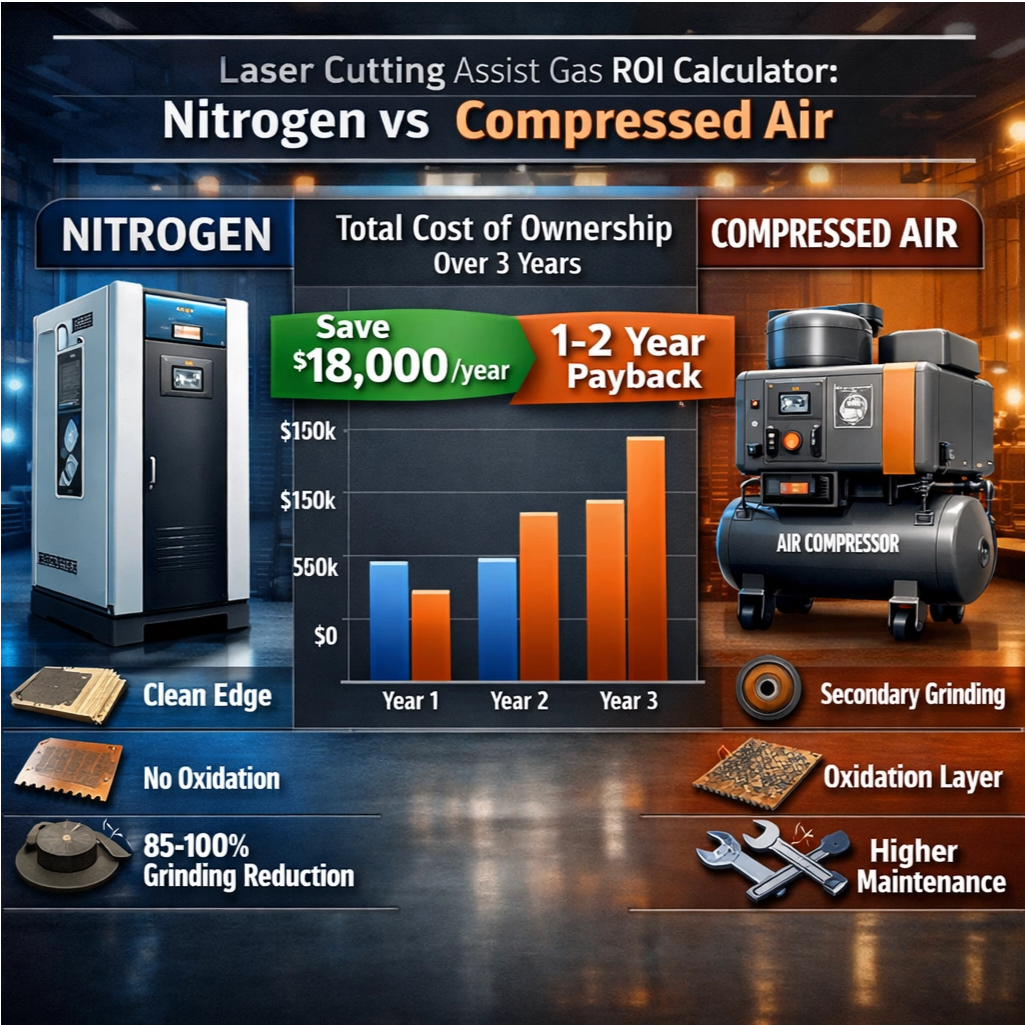
At first glance, compressed air systems look like a budget friendly option, but getting that laser clean quality requires serious investment in filters, dryers, and oil removal equipment which can tack on anywhere from five to fifteen thousand dollars for retrofits. On the flip side, nitrogen generators come with a bigger upfront price tag ranging between twenty and one hundred thousand bucks, but they completely remove the headache of dealing with gas cylinders and all their associated supply chain issues. Facilities that operate around the clock across multiple shifts often find that nitrogen generators start paying for themselves pretty quickly, usually within a year or two when factoring in all those saved dollars on cylinder rentals, delivery costs, and the administrative hassle of managing inventory.
Ongoing operational costs – energy, maintenance, and supply chain logistics
When looking at what really eats into money spent over time, energy takes center stage. The U.S. Department of Energy reports that energy alone makes up about three quarters of all expenses for compressed air systems. Switching to nitrogen generation cuts down on these costs because it provides gas exactly when needed at just the right pressure and purity levels. This means less wasted energy from things like over compressing or leaks happening in the system. Systems that rely on filters need maintenance way more often than those using nitrogen, maybe around half as much actually. And since the gas stays consistently good quality, there's simply less waste material going to the scrap pile. When we factor in how much money gets saved on labor costs thanks to less post processing work and not having to replace parts so frequently, most shops find they're saving somewhere north of eighteen thousand dollars every year just by running their laser cutters with nitrogen instead of regular compressed air.
Hidden Savings and Quality Benefits of Nitrogen as a Laser Cutting Assist Gas
Reduced post-processing: eliminating grinding, cleaning, and rework for precision parts
Because nitrogen doesn't react with other substances, it stops oxidation from happening during the cutting process. This results in cleaner cuts with fewer burrs, so most parts don't need any extra finishing work afterward. For manufacturers, this means saving around 30 minutes on each part that would otherwise be spent grinding or polishing manually. These time savings really add up when dealing with lots of different products made in small batches. Another benefit comes from nitrogen's cooling properties. When working with thin materials, the heat generated can warp things badly. But nitrogen helps reduce this problem significantly compared to methods that use oxygen assistance. Some studies show warpage issues drop by more than 40 percent when switching to nitrogen based systems.
Aerospace, medical device, and electronics companies know that surface quality really matters for how parts actually work. The improvements we see translate to quicker delivery times, fewer rejected products, and better results on the first try. Looking at the big picture costs, the quality benefits of using nitrogen often make up for what it costs more upfront. This puts nitrogen in a whole different category than regular consumables. It's becoming an essential tool for making precision parts, not something companies just throw away after use.
| Post-Processing Step | Nitrogen Reduction | Cost Impact |
|---|---|---|
| Grinding/Polishing | 85–100% | $18–$22/hr labor savings |
| Deburring | 70–90% | 15% lower tooling costs |
| Rework/Scrap | 40–60% | 12–18% material waste reduction |
Building a Practical ROI Calculator for Laser Cutting Assist Gas Selection
Getting a clear picture of the money side when comparing nitrogen to compressed air means looking at all the costs, not just what's obvious. Start by checking out the initial spendings first. How much does a nitrogen generator really cost compared to upgrading an existing air system? That includes things like better filters, drying equipment, and stuff to stabilize pressure levels. Once those numbers are on paper, think about day-to-day operations. What's the energy bill for each cubic meter produced? When do maintenance checks happen? What happens during system downtime? And don't forget about gas purity either since this affects how much gets used and whether cuts stay consistent over time. All these factors matter when making the right choice for long term savings.
The main money saving points come from cutting down on material waste. Some research indicates that switching to nitrogen instead of regular air can slash waste by around 15% when working with stainless steel. Plus there's all the time saved on post processing work that just disappears. When building a good return on investment calculator, it's important to factor in how much gas costs per meter we cut, along with those quality improvements. Look at the drop in rework needed and how much longer consumables last with high purity gases. Nozzles and lenses tend to stay in better condition for longer periods. Taking this broader view changes how we think about assist gas choices completely. What was once just another line item on the expense sheet becomes something worth investing in strategically for overall shop efficiency.
Frequently Asked Questions
What is assist gas in laser cutting?
Assist gas is used to enhance the cutting process in laser cutting machines. It helps to remove molten material and cool the cutting area, impacting quality and efficiency.
Why is nitrogen preferred over compressed air or oxygen in laser cutting?
Nitrogen prevents oxidation and protects optical components from heat damage, offering cleaner cuts and longer equipment lifespan than reactive gases like oxygen.
How does gas purity affect laser cutting costs?
High gas purity (e.g., >99.5% nitrogen) reduces secondary grinding costs and prevents slag formation, impacting overall cutting expenses positively.
What are the main benefits of using nitrogen as an assist gas?
Nitrogen reduces post-processing needs, stops oxidation, and improves surface quality, leading to faster delivery and lower costs on precision parts.
How can a ROI calculator help in selecting assist gas?
A ROI calculator allows businesses to analyze costs and savings associated with different assist gases, helping in making strategic investment decisions based on comprehensive data.
Table of Contents
- How Laser Cutting Assist Gas Impacts Operational Efficiency and Cost
- Nitrogen vs Compressed Air: Total Cost of Ownership Breakdown
- Hidden Savings and Quality Benefits of Nitrogen as a Laser Cutting Assist Gas
- Building a Practical ROI Calculator for Laser Cutting Assist Gas Selection
- Frequently Asked Questions