 EN
EN



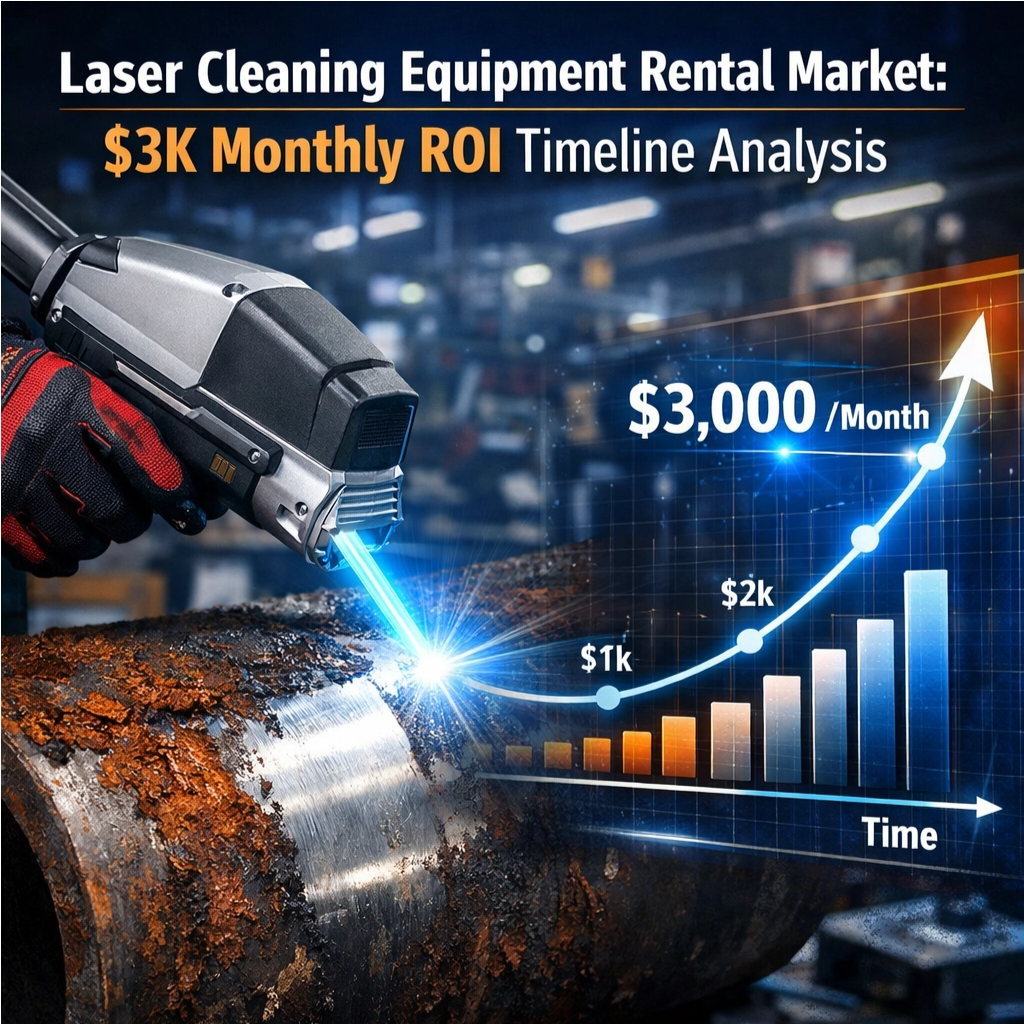
Understanding the $3K/Month ROI Benchmark in Laser Cleaning Equipment Rental
Why $3K/month has emerged as the market’s realistic, repeatable rental revenue threshold
Getting to around $3,000 per month in revenue marks a pretty important turning point for anyone renting out laser cleaning equipment. That figure basically covers all the necessary expenses like financing payments, regular maintenance work, and day-to-day overhead costs, while still leaving room for profit margins above 20% in most local markets where competition exists. Looking at actual field data shows why this number matters so much. Most operators hit this mark when their portable systems stay busy about 60 to 70 percent of the time they're supposed to be working. We've seen this happen repeatedly in places like auto repair shops, airplane part manufacturers, and factories doing general maintenance jobs. What makes lasers stand out compared to old school methods like sandblasting or using chemicals? For starters, there are no ongoing material costs since the equipment doesn't consume anything during operation. Plus, clients tend to pay higher rates per hour because they know laser tech meets stricter environmental standards these days. All these advantages together explain why businesses keep switching to laser solutions faster than expected. And with today's newer portable models on the market, many service providers actually reach this $3k monthly goal somewhere between eight and nine months after starting operations.
Key performance indicators driving this benchmark: utilization rate, billing discipline, and job mix
Three KPIs directly determine whether operators hit the $3K/month target:
- Utilization Rate: Sustained operation of 50+ billable hours per month—achievable through short-term rentals to contractors and responsive scheduling
- Billing Discipline: Tiered pricing models (e.g., $95/hour for under 4 hours vs. $75/hour for full-day rentals) protect margin integrity and discourage scope creep
- Job Mix Optimization: Balancing high-rate, low-duration jobs (e.g., mold cleaning) with longer-duration, lower-rate restoration work (e.g., aerospace component refurbishment) smooths cash flow and reduces volatility
| KPI | Target Range | Impact on $3K Benchmark |
|---|---|---|
| Utilization | 60–70% | Every 10% increase = $450+/month incremental revenue |
| Billable Efficiency | >90% | 5% leakage = $150 monthly loss |
| Premium Job Ratio | ≥30% | High-margin work accelerates ROI timeline by up to 35% |
Operators who rigorously track and act on these metrics reach breakeven significantly faster—demonstrating that disciplined execution, not just equipment capability, defines success.
Timeline to Breakeven: From Deployment to Sustainable ROI
Typical breakeven progression: 12–14 months (2021) – 8–9 months (2024), driven by portable system adoption
The breakeven period for renting laser cleaning equipment has gotten much shorter lately, dropping around 40% since 2021. What used to take about 12 to 14 months now happens within just 8 or 9 months. Why? Portable laser systems are taking over the market. These mobile units get deployed roughly 70% quicker than older models, cut down on shipping expenses, and work great for all sorts of jobs. We're seeing them used everywhere from fixing up infrastructure right at the site to restoring precision tools in workshops. Looking at actual field performance, portable lasers stay busy about 85% of the time compared to only 60% for those big fixed industrial systems. This means businesses reach their $3,000 per month sustainable operation goal much faster when they go portable instead of traditional setups.
| Year | Breakeven Period | Primary Driver |
|---|---|---|
| 2021 | 12–14 months | Fixed industrial deployments |
| 2024 | 8–9 months | Portable system adoption |
How tiered pricing models and preventive maintenance bundles compress the ROI timeline
Offering different rental options for day, week, and month periods boosts income potential around 25% while keeping equipment busy instead of sitting idle. Most businesses are now including maintenance packages in their contracts too, about 78% actually according to recent industry reports. These packages help avoid those unexpected breakdowns and costly repairs that nobody wants. Take one company in the Midwest as an example they managed to save roughly $18,000 each month on downtime costs after signing up for these service bundles. The return started showing pretty quickly too about $3,000 profit per month within just seven months. What this means for companies considering laser cleaning technology is that what was once seen as a big financial gamble has become something much more manageable and straightforward to budget for.
Strategic Investment Models for Laser Cleaning Equipment Rental Operators
Capital-intensive ownership vs. asset-light leasing partnerships: risk, scalability, and margin trade-offs
Business owners need to pick between buying equipment outright or going the leasing route, and each option comes with different risks and rewards when it comes to scaling operations and making money. Buying industrial systems costs around $200,000 or more upfront, which is no small sum. But if these machines get used at least 60% of the time, they can generate gross margins somewhere between 40 to 50%. That happens because companies build direct relationships with clients and accumulate asset value over time. This path works best for those who want predictable monthly income streams of about $3,000 and believe there will be steady demand for their services. On the other hand, leasing arrangements let businesses share the financial burden with partners through revenue splits. This approach allows quicker entry into new markets while protecting against technology becoming outdated too fast. The downside? Profit margins drop to roughly 25-35% after paying partner fees. Still, many find this model appealing since it keeps cash flowing and gives more freedom to adapt when market conditions change unexpectedly. At the end of the day, whether someone chooses ownership or leasing really depends on how aggressive they want to grow their business. Buying creates lasting assets, while leasing offers more flexibility to respond quickly to changing circumstances.
Validated ROI Pathway: A Midwest Contracting Firm Case Study
An industrial contractor based in the Midwest hit breakeven within just 8 and a half months, which beats the 2021 industry benchmark by about 30%, thanks to their smart move of renting out portable laser cleaning gear. What made them successful? They stuck to three main strategies. First, they set different price levels depending on how complicated the surface treatment needed to be. Second, they made sure every service contract included regular maintenance checks. And third, they spread their business across multiple sectors including infrastructure projects, manufacturing plants, and even some aerospace work. These tactics helped keep money coming in steadily while making better use of their resources. Plus, it cut down on those extra costs that come with owning expensive equipment. So contrary to what many think, achieving return on investment within 8 to 9 months isn't just something written in theory books anymore. Real businesses are doing it right now when they stick with these methods consistently over time.
FAQ
What is the significance of the $3,000 per month benchmark?
The $3,000 per month benchmark in laser cleaning equipment rental is significant because it covers all necessary expenses such as financing, maintenance, and overhead costs, while maintaining profit margins above 20% in competitive markets. This benchmark is often reached when portable systems operate at 60% to 70% capacity.
How can operators achieve the $3K/month revenue target?
Operators can achieve the $3K/month revenue target by focusing on KPIs such as utilization rate, billing discipline, and job mix optimization. Sustained utilization above 50 billable hours, tiered pricing models, and a balanced job mix help in reaching this target.
Why has the breakeven period for laser cleaning equipment rentals reduced over the years?
The breakeven period has decreased from 12-14 months in 2021 to 8-9 months in 2024 due to the adoption of portable laser systems. Portable systems deploy faster, are cost-effective, and increase utilization rates significantly compared to traditional fixed systems.
What are the differences between ownership and leasing of laser cleaning equipment?
Ownership involves a larger upfront cost but offers higher gross margins and asset accumulation. Leasing minimizes initial financial burden and offers flexibility but generally yields lower margins due to partner fees.