
 EN
EN



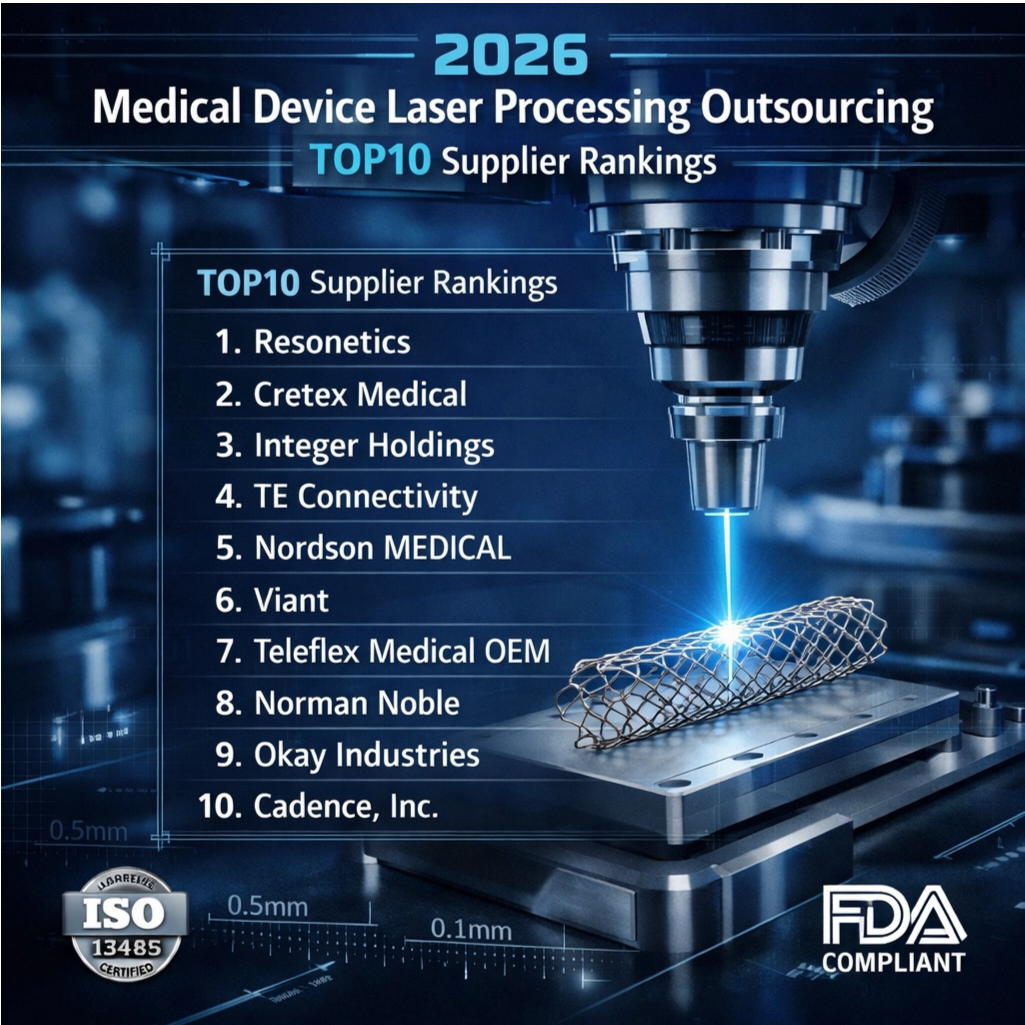
Why Medical Laser Processing Outsourcing Is Critical for 2026 Device Innovation
Regulatory Gatekeepers: How ISO 13485, FDA 21 CFR Part 820, and MDR Compliance Define Eligibility
For medical device makers, sticking to regulations isn't optional it's essential. ISO 13485 basically proves that a company has solid quality control systems in place. Then there's the FDA's 21 CFR Part 820 which sets out what manufacturers must follow to get their products into the US market. Things got even tougher with the EU's new Medical Device Regulation (MDR). This regulation demands better clinical data, keeps a closer eye on devices after they're sold, and wants much better tracking throughout the supply chain. When companies fail to meet these requirements, the costs pile up fast. According to Ponemon Institute research from last year, recalls typically cost around $740,000. And getting caught up in regulatory reviews can delay product launches anywhere from six months to almost two years. That's why many manufacturers turn to specialized partners who already have laser processes like micro welding, surface texturing, and hermetic sealing validated under all these different regulatory frameworks. These partnerships can cut down qualification problems by as much as 80%, saving both time and money during development.
OEM Pressure Points: Cost, Speed-to-Market, and Design Complexity Driving Outsourcing Adoption
Three interlocking pressures are accelerating adoption of medical laser processing outsourcing:
- Cost containment: In-house laser systems demand $2M+ in capital investment and 15–20% annual maintenance—costs that scale poorly with low-volume, high-mix production.
- Speed-to-market: Outsourcing cuts development cycles by up to 40% through shared process libraries, concurrent validation, and regulatory-ready infrastructure.
- Geometric complexity: Next-gen neurostimulators, microfluidic diagnostics, and miniaturized sensors require <5μm feature resolution—precision unattainable without dedicated fiber lasers, galvo optics, and real-time thermal compensation.
The pandemic underscored this advantage: ventilator components outsourced to pre-certified partners moved from concept to full-scale production in just eight weeks—compressing what would have been a 12-month timeline.
What Separates Top-Tier Medical Laser Processing Outsourcing Providers in 2026
Precision Engineering Capabilities: Micron-Level Tolerance Control and Process Validation Rigor
The best manufacturers can hit around ±5 microns for positional accuracy and get sub-micron repeatability thanks to their high bandwidth galvanometer scanners, some pretty smart adaptive optics systems, and those closed loop thermal monitoring setups. When it comes down to actual medical results, this kind of precision matters a lot. Take cardiovascular stents as just one example these need cuts narrower than 20 microns otherwise there's a real risk of thrombogenic edge effects that could complicate things for patients. These companies go way beyond what ISO 13485 demands too. Every single production batch leaves behind a full digital paper trail complete with all sorts of details like beam parameters, environmental conditions during manufacturing, plus measurements taken after processing is done. The AI systems they use for spotting anomalies have been trained on literally thousands of successful welds and ablation cases already. According to research published in the Journal of Medical Device Regulation last year, this approach cuts down particulate contamination risks by about two thirds compared to when people do inspections manually. All this attention to detail makes it possible to manufacture those delicate neural implants reliably since even small deviations in beam angles greater than 0.1 degree can cause problems.
Laser Brazing and Hermetic Sealing Services: High-Value Differentiators for Implantables and Diagnostics
Pulsed laser brazing creates hermetic seals with helium leak rates under 10^-9 atm·cc per second, which is absolutely critical for things like implantable neurostimulators, pacemakers, and cochlear implants. The top manufacturers have developed specific absorption strategies for different wavelengths. Take the 515nm green lasers used with copper-nickel alloys, for instance. These help reduce the heat affected area and keep sensitive components nearby safe from damage. What's great about this approach is that it cuts out the need for extra epoxy sealing steps, shaving around eight weeks off the development timeline. When looking at diagnostic equipment, fiber laser welding produces FDA approved seals free of voids even on those tiny microfluidic channels measuring just 50 microns wide. Accelerated aging studies published in Medical Materials Research last year showed devices made with these techniques had 42% fewer failures overall. That kind of reliability makes all the difference when trying to scale production of Class III medical implants.
Global vs. Regional Medical Laser Processing Outsourcing Strategies: Risk, Resilience, and Responsiveness
Geopolitical Realities and Dual-Sourcing Trends: Balancing Cost, Lead Time, and Supply Chain Security
Global sourcing offers cost advantages but introduces significant exposure: geopolitical instability, extended logistics windows, and fragmented regulatory oversight. Supply chain disruptions typically inflate operating expenses by 3–5% and reduce revenue by ~7%—risks magnified for life-critical devices. Nearshoring improves responsiveness and audit accessibility, though labor costs run 15–20% higher than offshore alternatives.
Smart OEMs are increasingly adopting dual sourcing strategies where they spread production capacity between different regions. They take advantage of lower costs in Asia for standard parts while keeping specialized manufacturing hubs in Europe and North America for complex components that require closer oversight. This approach cuts down on risks from relying on one supplier location, helps companies stay compliant with various free trade agreements, and makes it easier to respond when regulatory bodies like the FDA or Health Canada update their requirements. What works best really depends on several factors though. How essential is the component to device function? What kind of political instability exists in the region where it's made? And most importantly, what happens to patients if there's a sudden stoppage in supply? These questions guide manufacturers toward the right sourcing decisions.
How to Evaluate and Select a Medical Laser Processing Outsourcing Partner in 2026
Choosing the right partner demands disciplined evaluation across four interdependent dimensions:
- Technical readiness: Confirm documented micron-level tolerance control (e.g., ±5μm Cpk ≥1.33), full process validation records, and proven expertise in ISO 13485 and FDA 21 CFR Part 820—not just certification, but embedded compliance culture.
- Operational scalability: Assess flexibility for low-volume, high-mix runs; availability of cleanroom-capable laser cells; and tested contingency plans for material shortages or regulatory audits.
- Financial and technological commitment: Review R&D spend, recent investments in next-generation ultrafast and green-wavelength lasers, and ownership of in-house metrology labs (e.g., white-light interferometry, SEM cross-sectioning).
- Cultural alignment and responsiveness: Validate communication protocols, escalation paths, and problem-solving agility through pilot projects—not just SLAs, but real-world responsiveness under pressure.
Leading innovators now apply weighted scorecards across these pillars, assigning higher priority to validation depth and regulatory fluency over raw capacity. This approach de-risks partnerships while actively accelerating innovation cycles for Class III implantables and integrated diagnostic systems.
FAQ
What are the main regulations impacting medical laser processing?
The main regulations are ISO 13485, FDA 21 CFR Part 820, and the EU's Medical Device Regulation (MDR), which require strict compliance for market access and help ensure product safety and effectiveness.
Why is outsourcing medical laser processing advantageous?
Outsourcing offers cost savings, faster time-to-market, and the ability to handle complex designs thanks to shared resources and regulatory-ready infrastructure.
How can quality be ensured when outsourcing medical laser processing?
By selecting top-tier partners with proven precision engineering capabilities, documented compliance, and robust process validation techniques, companies can ensure quality and reliability in outsourced medical laser processing.
What is the importance of dual sourcing strategies?
Dual sourcing helps balance cost, lead time, and supply chain security, reducing risks associated with relying on a single supplier and allowing flexible responses to geopolitical changes.
Table of Contents
- Why Medical Laser Processing Outsourcing Is Critical for 2026 Device Innovation
- What Separates Top-Tier Medical Laser Processing Outsourcing Providers in 2026
- Global vs. Regional Medical Laser Processing Outsourcing Strategies: Risk, Resilience, and Responsiveness
- How to Evaluate and Select a Medical Laser Processing Outsourcing Partner in 2026
- FAQ