 EN
EN



Why Laser Marking Is the Compliance-Driven Choice for Medical Device UDI Traceability
Meeting FDA UDI and EU MDR mandates with permanent, machine-readable identifiers
Manufacturers of medical devices face tough traceability demands from both the FDA's Unique Device Identification rule and the EU Medical Device Regulation. These regulations require permanent, machine readable markers usually in the form of Data Matrix codes directly applied to things like implants, surgical tools, and other essential equipment. Laser marking is the go to solution for meeting these requirements because it creates marks that won't fade or wear off even after countless sterilizations including those intense autoclave cycles at 121 degrees Celsius. And these codes stay legible for years during actual clinical usage. Traditional methods like adhesive labels or inkjet printing simply can't hold up against harsh chemicals, physical wear, or extreme temperatures without deteriorating over time. Most importantly, laser etched identifiers maintain excellent scannability rates according to industry standards. For hospitals and clinics, having access to accurate information about each device throughout its entire life cycle isn't just good practice it's absolutely necessary for audits and avoiding expensive regulatory problems. We've seen cases where recalls cost around $740,000 on average according to recent studies by Ponemon Institute in 2023, so getting this right makes all the difference.
How laser marking eliminates compliance risks from ink-based or mechanical marking failures
Old school marking techniques leave companies exposed to serious regulatory risks. Inkjet labels tend to run or disappear when exposed to sterilization processes, while dot peening creates tiny cracks that not only affect biocompatibility but also become breeding grounds for harmful bacteria. Laser marking offers a different approach entirely. It works without touching the surface, changes the material at a microscopic level, and keeps surfaces intact while providing markings that stand up to harsh sterilization conditions. Fiber lasers have been cleared by the FDA for use on Class III medical devices, producing consistently sharp 2D codes with less than 0.1% variation in contrast across batches. This meets all the requirements set out in 21 CFR Part 830 regulations. Facilities switching to laser marking report cutting down on UDI compliance issues by almost 92%. And recent research published last year found that ink-based systems failed 38% of the time after undergoing gamma irradiation tests. These numbers clearly show why laser marking has become the go-to solution for manufacturers concerned about both compliance and product safety.
Data Matrix Excellence: High-Contrast, Sterilization-Resistant Markings for Audit-Ready Traceability
Designing ISO/IEC-Compliant Data Matrix Codes That Survive Autoclaving, Etching, and Coating
Laser marking makes medical devices ready for audits because it creates Data Matrix codes that can survive even the toughest conditions during manufacturing and cleaning processes. When using methods such as laser annealing, particularly on materials like stainless steel and titanium, the surface gets changed chemically instead of being damaged mechanically or burned. This means the device keeps its strength and works properly. Tests show these laser marks still have over 30% visibility after going through thousands of autoclave cycles. They stay readable even after various treatments including etching, passivation, and different coatings. These results meet important industry standards like ISO/IEC 15415 and ISO/AIM DPM-1-2006. A lot of problems come up during FDA inspections when device markings fade or become unreadable. About one out of every four audit issues relates directly to poor UDI marking quality. Laser marking helps prevent these problems right from the start. There are several things manufacturers need to consider when implementing this technology:
- Material-Specific Parameters: Precise control of wavelength, pulse duration, and power prevents damage to sensitive substrates like PEEK or titanium
- Contrast Optimization: High-resolution galvo systems deliver >0.5 DPI accuracy—even on surfaces under 2mm²
- Post-Processing Validation: Integrated vision systems automatically grade codes (A–F) before release, ensuring only compliant units proceed
The result is scalable, zero-defect traceability—eliminating relabeling costs averaging $740k annually (Ponemon Institute, 2023) while guaranteeing 100% scannability over device lifetime.
Seamless Integration at Scale: Embedding Laser Marking into High-Volume Production Lines
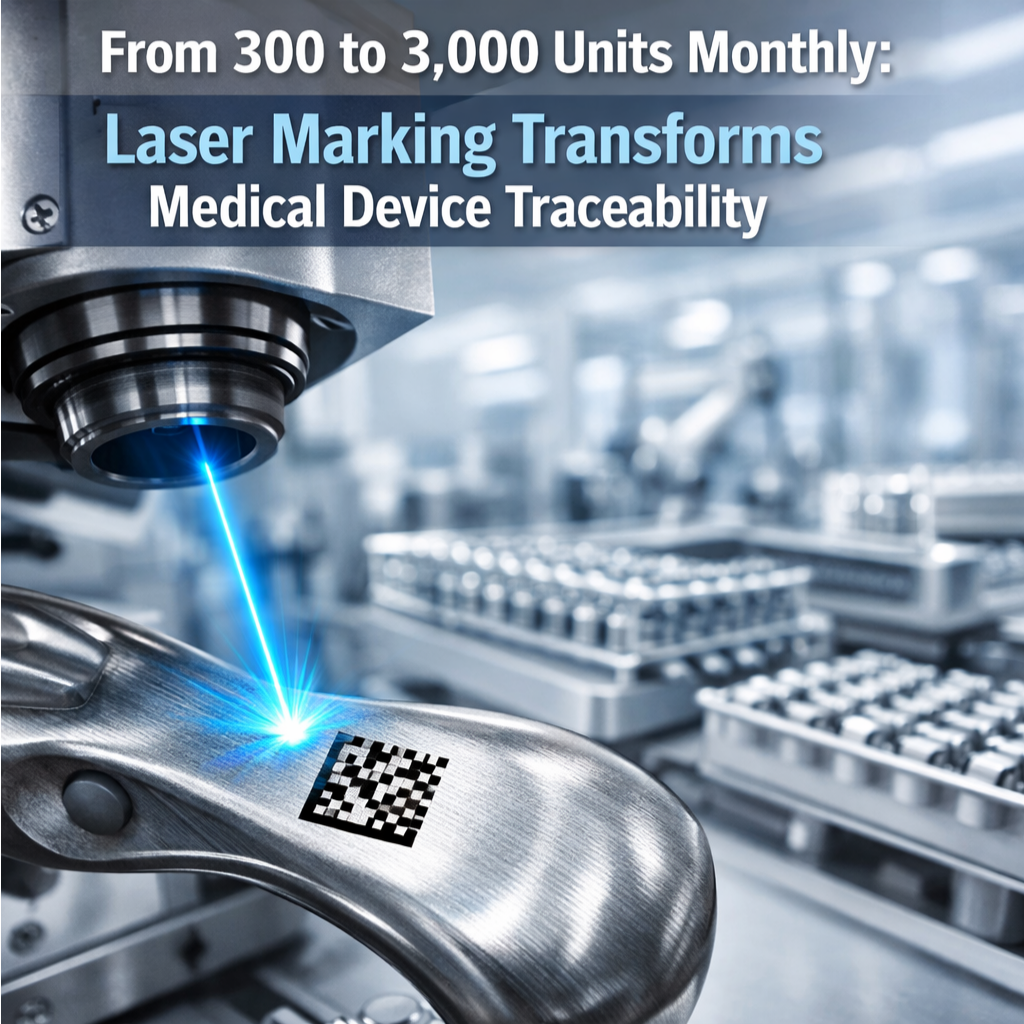
Case-driven workflow optimization: scaling traceability from 300 to 3,000 units/month without cycle-time penalty
Laser marking gives manufacturers solid traceability capabilities that let them scale production way up without losing speed, quality, or meeting regulations. Fiber laser systems work right alongside automated assembly lines these days, which cuts out all that manual handling stuff and brings down cycle times to just under three seconds for each item. There are basically no consumables needed here, tools don't wear out fast, and there's absolutely no waiting around for chemicals to dry. This means factories can run nonstop even when producing large volumes. Many companies have seen their monthly output jump from around 300 units to as many as 3,000 without having to reconfigure their production floor or schedule extra shifts. Some automotive parts makers have done exactly this kind of scaling recently.
When it comes to manufacturing operations, robotic positioning systems work hand in glove with industrial communication standards like PROFINET and Ethernet/IP to create smooth integration between production floors and enterprise software platforms such as MES and ERP. This connection allows for live serialization tracking, accurate data collection without errors, and complete visibility into UDI records throughout the supply chain. One major advantage is the non-contact approach which keeps sensitive parts safe even at top speeds during marking processes. Plus, those ISO certified codes stay legible after sterilization procedures too. According to research from Ponemon Institute back in 2023, this kind of system can cut down compliance risks by almost 92%. For manufacturers looking at return on investment, these systems offer substantial cost savings while maintaining regulatory requirements across multiple production lines simultaneously.
- 70% reduction in manual handling time via automated part positioning
- Elimination of ink, solvents, and label supply chain dependencies
- Direct ERP integration enabling real-time, audit-ready serialization logs
Medical Device Laser Marking Case Study: Real-World ROI and Regulatory Validation
A company making orthopedic implants swapped out old ink marking methods for a fiber laser system, which boosted their monthly output from around 300 to over 3,000 units without compromising FDA compliance standards. This switch cut down on ongoing material expenses completely and slashed rework rates by nearly all for those tricky titanium parts that need such exact machining. Plus, they now get these Data Matrix codes that stay clear and readable at the highest ISO/IEC 15415 rating level even after going through more than 200 sterilization cycles in an autoclave. The results speak for themselves when it comes to both efficiency gains and quality maintenance in medical device manufacturing.
The company managed to sidestep those hefty $740k recall fines from the Ponemon Institute study back in 2023 while slashing marking costs per unit by around 40% over just 18 months. They integrated full UDI serialization right into their regular production process without slowing things down, needing any equipment changes, or relying on workers to do extra steps manually. Getting rid of all those chemical solvents was another big plus for their green initiatives too. What we see here is basically how laser marking turns what could be just another box to check for regulations into something much more valuable strategically. The system provides lasting marks that stand up during audits, makes operations more robust when problems arise, and saves money in ways that have been tested out in actual factory conditions rather than just theory.
FAQ
Q1: Why is laser marking preferred over traditional methods for medical device UDI traceability?
A1: Laser marking is favored because it provides permanent, high-contrast markings that resist wear and sterilization processes, ensuring traceability and compliance with FDA and EU regulations.
Q2: How does laser marking enhance compliance and reduce risks?
A2: Laser marking eliminates compliance risks from ink-based or mechanical marking failures because it does not deteriorate under harsh conditions and maintains excellent scannability.
Q3: What are the benefits of integrating laser marking into production lines?
A3: The integration offers scalable traceability, reduced manual handling time, elimination of consumables, and enables direct ERP integration for real-time audit-ready logs.
Q4: What kind of ROI can be expected from adopting laser marking?
A4: Companies can expect substantial cost savings, reduced rework and recall risks, and enhanced compliance, all contributing to a solid return on investment.