
 EN
EN



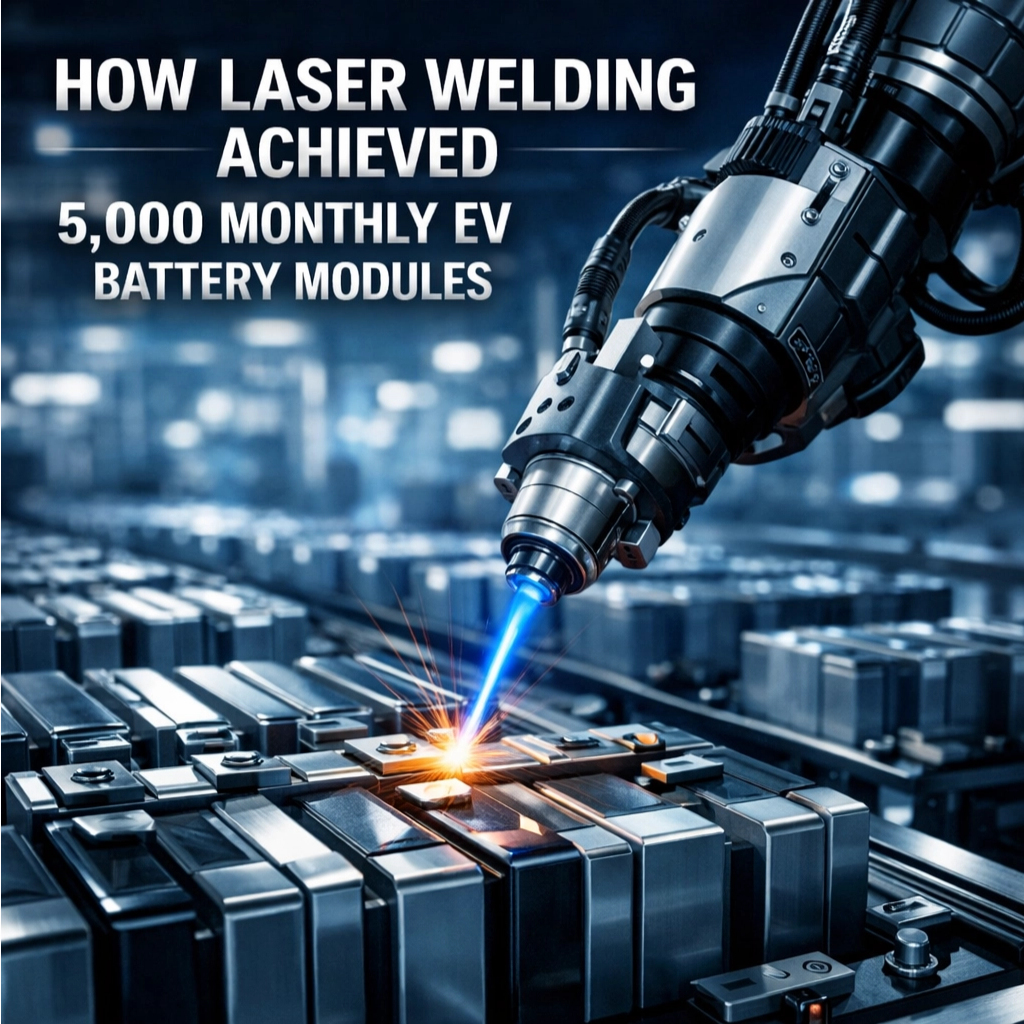
From Lab Precision to High-Volume Production: Scaling Laser Welding for EV Battery Modules
Industrial implementation roadmap: Bridging R&D validation to Tier-2 production line integration
Moving laser welding technology from lab tests to mass production needs a step-by-step approach that follows industry standards. When Tier-2 suppliers get started, they copy the research parameters like pulse energy settings, how focused the laser beam is, and the flow rate of shielding gases during pilot runs. They check if the welds hold up using destructive tests and looking at microstructures according to ISO 13919-1 and AWS F2.2 standards. Before bringing everything together on the production line, manufacturers fix problems related to heat control, how materials are handled, and ensuring parts fit properly together. The actual production systems use modular galvanometer scanners that can adjust their focus dynamically. This setup lets factories switch between different battery cell shapes (cylindrical, prismatic, pouch) quickly without having to completely retool the machinery. A case study from a recent Tier-2 implementation confirmed by UL Solutions shows that following these structured steps cut down the time needed to reach full production volume by about two thirds, all while maintaining over 99.5 percent good products on the first try.
Engineering the 5,000-module/month milestone: Cycle time, uptime, and changeover optimization
Achieving sustained output of 5,000 modules per month hinges on optimizing three interdependent levers:
- Cycle time compression: High-speed galvanometers deliver consistent 0.8-second welds per connection, enabled by parallel processing stations and synchronized fixturing
- Uptime maximization: Predictive maintenance—leveraging OEM-provided fiber laser health analytics and chiller performance telemetry—keeps unplanned downtime below 2%
- Changeover agility: Interchangeable, kinematically aligned modular fixturing enables full battery format transitions (e.g., 21700 → 4680) in under 10 minutes
This integrated approach lifted overall equipment effectiveness (OEE) by 45% for a second-tier automaker—without new capital investment—while maintaining stable energy density via real-time power monitoring and closed-loop cooling during 24/7 operation.
Process Optimization for Zero-Defect EV Battery Module Laser Welding
Parameter tuning and closed-loop control to achieve >99.999% weld yield at one-module-per-minute throughput
Getting zero defects in welding while producing modules at a rate of one per minute needs much more than just cranking up automation. It requires precise parameter adjustments working hand in hand with closed loop controls. The laser power settings, how long each pulse lasts, and where the focus point sits all get matched up with live images of the molten pool plus data from plasma spectroscopy analysis. These inputs feed into smart algorithms that tweak parameters within fractions of a second. When everything works together at this level, we see weld yields above 99.999% most of the time, cutting down defects by around 70% compared to older methods that relied on manual tuning or basic feedback loops. What makes this really important? The system keeps thermal input stable enough to avoid problems like electrode peeling or separator damage, issues that were highlighted as major trouble spots in the National Renewable Energy Lab's report last year on battery manufacturing reliability. Beyond just making more good parts, this approach actually improves how well joints conduct electricity, maintains consistent production cycles, and delivers better than 95% equipment availability throughout those long production runs that stretch across multiple shifts.
Dissimilar metal joining: Copper–aluminum laser welding with <2 μm thermal distortion and no intermetallic cracking
When joining copper and aluminum, getting the thermal control just right is essential to stop those pesky brittle intermetallic compounds (IMCs) from forming, which are actually one of the main reasons why busbar connections fail in real world applications. By fine tuning laser settings such as using pulses shorter than 50 microseconds, adjusting beam shapes like rings or multiple spots, and employing a mix of helium and argon gas during the process, manufacturers can keep the heat affected area narrow while keeping interface temperatures low enough to avoid triggering CuAl2 formation. What does this mean in practice? Thermal distortion stays below 2 micrometers, and there's no sign of IMC cracks when looking at samples under scanning electron microscopes following standard testing procedures. The resulting joint strength regularly hits over 90% of what pure metals can handle, plus residual stress levels drop by more than half compared to traditional welding methods. A large European manufacturer that makes battery packs reported seeing their thermal distortion cut down by around 85%, and they haven't had any product returns related to metal compatibility issues in their welding over the past year and a half of mass production.
Adaptive Automation and Real-Time Monitoring: Replacing Manual Inspection in EV Battery Module Laser Welding
SCARA-based dynamic clamping + large-FOV vision systems for sub-50 μm cell positioning accuracy
Getting cell positioning down to under 50 microns matters a lot for keeping things thermally consistent and achieving those low resistance welds we all want. We accomplish this using SCARA robots working hand in hand with wide field of view vision systems. There's a 20 megapixel camera that's been properly calibrated to capture the entire cell geometry in less than 15 milliseconds. These corrected position coordinates then get sent straight to the robot controller. Meanwhile, our dynamic clamping system keeps adjusting pressure on the fly to handle any size differences in electrode stacks as they come through. Static fixtures just can't keep up with these kinds of variations from batch to batch. Our approach stays aligned even when materials change slightly, which means no need for workers to step in and make adjustments manually. This lets us hit that impressive rate of one complete module every single minute without sacrificing position accuracy at all. When tested against VDI/VDE 2634 Part 2 standards, our system shows repeatable performance within plus or minus 12 microns (that's 3 sigma), way better than the 50 micron requirement needed for strong weld seams in prismatic modules.
In-process weld quality analytics: Correlating plasma emission signatures with microstructural integrity
Real-time plasma spectroscopy is changing how we look at weld quality control by linking what happens during welding with the final material structure. During the process, sensors pick up light emissions between 200 and 900 nanometers while the metal is being joined together. These readings feed into machine learning systems that have been trained on literally thousands of weld samples checked against actual metal structures under microscope analysis. The models spot early signs of problems like tiny cracks forming, air pockets getting trapped, or areas where the metals didn't properly fuse together with nearly perfect accuracy rate of 99.97%. When something goes wrong, the system kicks in almost instantly, adjusting the laser parameters within just five milliseconds before defects even start to spread. This smart feedback loop has completely replaced traditional manual inspections at two major manufacturing facilities that follow strict IATF 16949 standards. As a result, these plants now see their scrap materials drop by around 40%, production speeds go up by about 18%, all without compromising on the zero tolerance for defects demanded by car manufacturers for their battery warranty programs.
FAQ
What is the significance of laser welding in EV battery production?
Laser welding in EV battery production allows for high precision and consistent quality in joining battery components, which is vital for maintaining battery integrity, safety, and performance.
How does closed-loop control enhance weld quality?
Closed-loop control systems monitor welding parameters in real-time and make immediate adjustments, resulting in higher accuracy, reduced defects, and increased overall weld quality.
What challenges are faced when welding dissimilar metals like copper and aluminum?
When welding dissimilar metals such as copper and aluminum, challenges include managing heat to prevent the formation of brittle intermetallic compounds, controlling thermal distortion, and ensuring strong joint integrity.
How do SCARA robots contribute to the welding process in EV battery modules?
SCARA robots provide high precision in positioning battery cells, contributing to consistent weld quality and reduced need for manual adjustments, thereby streamlining the production process.