 EN
EN



Understanding EV Pack Laser Weld Cost Drivers
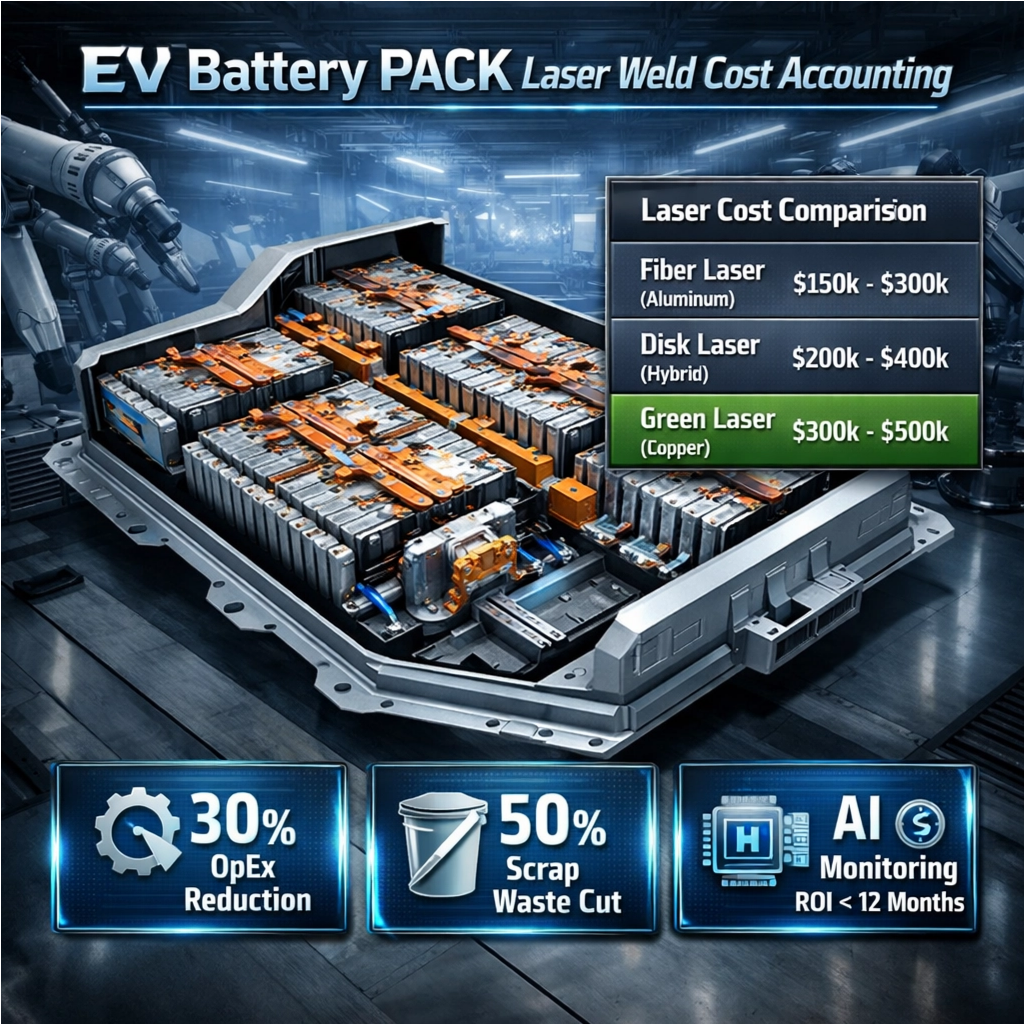
The cost of laser welding for electric vehicle battery packs comes down to several main areas: buying the equipment, running costs, how efficiently materials are used, and getting things done quickly enough. Fiber lasers are commonly used for connecting aluminum parts, though they come with a hefty price tag ranging from around $120,000 to as much as $500,000. Green lasers work better with copper because copper reflects light so much, but manufacturers end up paying about 20 to 30 percent extra for them. Running these systems isn't cheap either. A typical 1000 watt system will eat up somewhere between $3,000 and $6,000 each year just for electricity alone, plus there's regular maintenance needed on the optical components. What makes all this worthwhile is that laser welding creates far fewer problems during manufacturing. The precision means less distortion and fewer mistakes, saving about 20% on materials and cutting scrap waste by half compared to older techniques. When companies implement automated beam scanning technology, they actually get more bang for their buck since production volumes go up without having to spend proportionally more money on fixed costs. Looking at all these connected elements, equipment specs, power consumption, how many good products come out versus bad ones, and how fast everything moves through the factory helps manufacturers cut down on laser welding costs for EV batteries without sacrificing the quality requirements needed when making thousands upon thousands of units every month.
Laser Technology Selection and Its Impact on EV Pack Weld Cost
Fiber vs. Disk vs. Green Laser Sources for Aluminum and Copper
When it comes to welding aluminum, fiber lasers have really taken over because they cut operating costs down by around 30% compared to older techniques. They can also reach impressive speeds of about 10 meters per minute when working with 3mm thick alloy sheets. For deeper penetration needs, especially when dealing with those tricky hybrid aluminum-copper joints, disk lasers shine thanks to their better beam quality. And then there's the green laser option at 532nm wavelength which tackles copper's notorious infrared reflectivity problem head on. These lasers manage to knock down that reflectivity by roughly 70%, so welders get clean, stable results without all the mess and hassle of spatter. Plus, no need for any special surface preparation beforehand. This means factories can skip nearly 90% of those time consuming pre-processing steps, making these more expensive systems actually pay off in the long run for companies doing large scale production runs.
| Laser Type | Material Suitability | Cost Range | Efficiency |
|---|---|---|---|
| Fiber | Aluminum alloys | $150k–$300k | 35–40% wall-plug |
| Disk | Aluminum/copper hybrids | $200k–$400k | 30–35% wall-plug |
| Green | Pure copper | $300k–$500k | 15–20% wall-plug |
Beam Delivery, Scanning Speed, and Process Efficiency Trade-offs
Galvanometer scanners running at high speeds can slash cycle times thanks to their ability to position at 5 meters per second, which brings down the cost of laser welding for EV packs by around 15 to 25 percent. The catch? These systems typically come with an extra $50,000 to $100,000 investment compared to traditional setups. Fixed optics offer a cheaper alternative upfront, cutting initial costs by about 40%, but manufacturers often find themselves limited when it comes to production volume. When looking at process parameters, there's always trade-offs to consider. For instance, doubling the scanning speed from 4 meters per minute to 8 meters per minute saves on labor expenses by roughly 35%, though this might lead to increased porosity issues somewhere between 8 and 12%. Smaller spot sizes at 100 microns definitely boost joint accuracy, but they also add about 20% more time to each cycle compared to the larger 300 micron spots. Dynamic power modulation is another game changer, cutting down spatter problems by nearly two thirds, which makes the whole process more consistent and means fewer parts need reworking. Adding AI monitoring to the mix will set back around $20k-$40k per station, but most plants see a return on investment within just 12 months once they hit annual production numbers above 50 thousand units. And let's not forget about adaptive weld path planning, which continues to drive down costs per pack simply by making smarter decisions about how much welding actually needs to happen.
Design-for-Manufacturing Strategies to Lower EV Pack Laser Weld Cost
Optimizing joint geometry and material preparation delivers measurable cost reductions in high-volume EV pack manufacturing—without compromising structural integrity or safety compliance.
Joint Geometry Optimization and Tolerance Management
Material Preparation and Surface Conditioning Best Practices
Laser cleaning systems get rid of oxides and those pesky hydrocarbon residues right before the welding starts, which leads to almost no porosity issues and cuts down scrap materials by around 25% when compared with old fashioned manual methods. When surfaces have just the right roughness level, somewhere between Ra 0.4 and Ra 0.8 microns, the lasers work much better together with the material. This means each weld requires about 15 to 20 percent less energy overall. Most manufacturers find these techniques fit nicely within their standard OEM validation processes. Plus, staying compliant with IATF 16949 quality standards becomes much easier since everything stays so consistent across different production runs.
Process Automation, Monitoring, and Yield Improvement
Real-Time Weld Quality Monitoring with AI-Powered Vision Systems
Vision systems powered by artificial intelligence can check weld seams as fast as production moves along, thanks to detailed images captured at high resolution and smart algorithms that spot issues like porosity, cracks, undercutting, or poor penetration instantly. This is a big difference from traditional inspections done after the fact. With real-time analysis, operators can tweak parameters on the fly which cuts down scrap rates by around 30 percent in facilities running high volumes. Better first pass yields mean lower costs for electric vehicle battery packs since there's less need for rework. Labor hours drop, energy consumption goes down, and wasted materials become fewer when dealing with faulty parts. When connected to closed loop controls, these systems actually help predict equipment failures before they happen and keep refining processes over time. This makes factories more resilient against disruptions while staying compliant with those strict automotive safety standards outlined in ISO 26262.
FAQ
What are the main cost drivers of laser welding for EV battery packs?
The main cost drivers include the purchase of equipment, operational running costs, material efficiency, and production speed. Equipment types like fiber, disk, and green lasers significantly affect costs depending on the materials being welded.
Why are fiber lasers popular for aluminum?
Fiber lasers are popular for aluminum due to their efficiency and speed, cutting operating costs by about 30% compared to older methods. They provide a reliable and fast solution for welding aluminum alloys.
What impact does AI monitoring have on laser welding costs?
AI monitoring systems enhance weld quality by allowing real-time parameter adjustments, reducing scrap rates by around 30%, and improving first pass yields, effectively lowering overall costs in high-volume production.
How do design-for-manufacturing strategies reduce costs?
Design-for-manufacturing strategies involve optimizing joint geometry and improving material preparation, leading to cost reductions without sacrificing structural integrity or safety compliance.