Posted on March 02, 2026
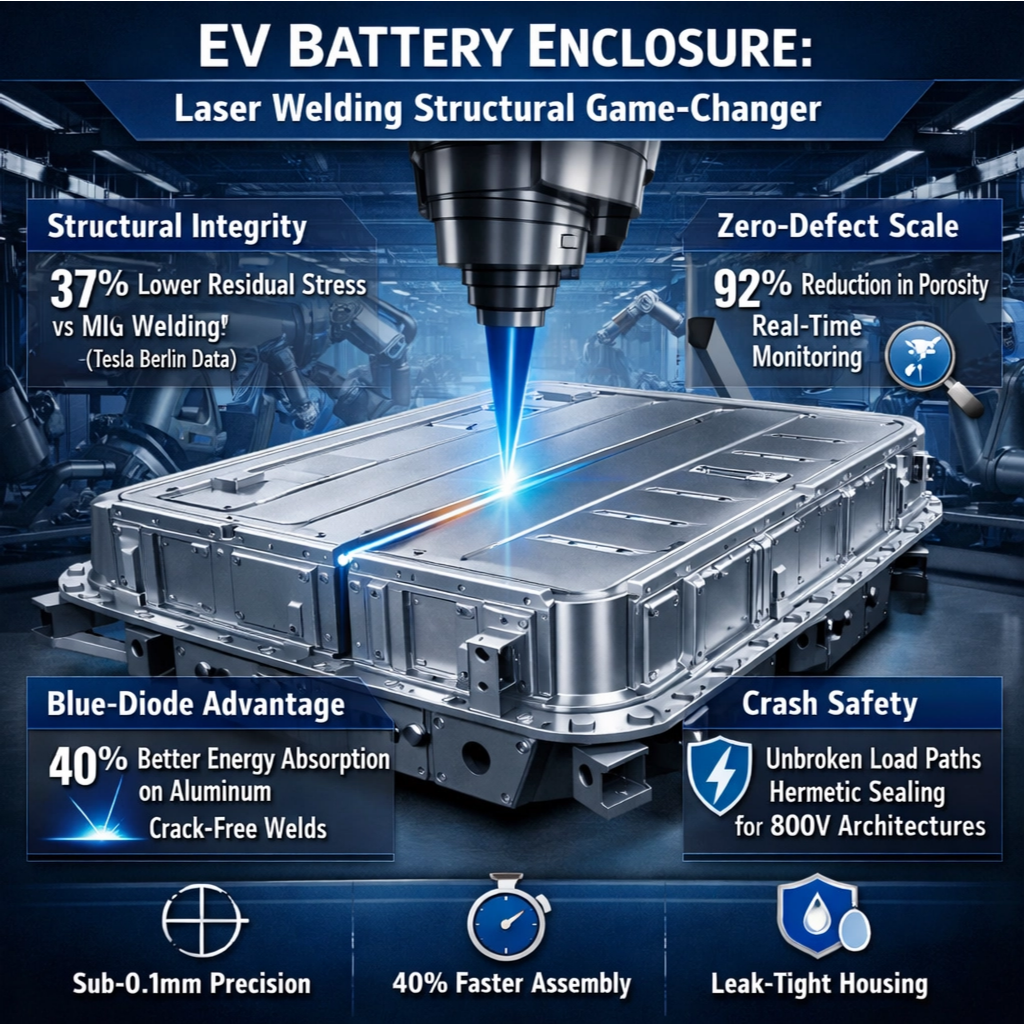
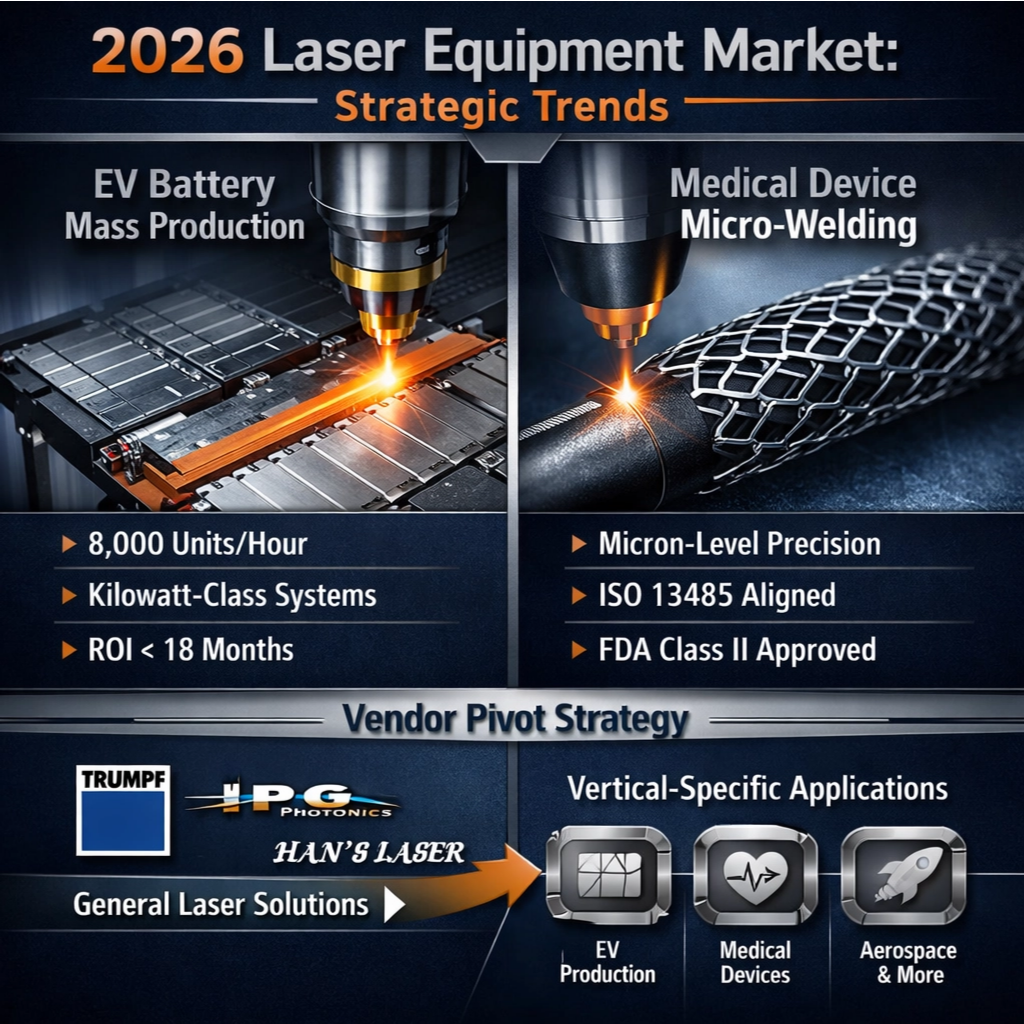
Laser welding sets the standard for large scale EV battery manufacturing in gigafactories these days. The incredible precision at the micron level when connecting electrodes helps extend battery life by reducing those heat affected areas where dendrites tend to form. When it comes to speed, laser systems outperform older techniques hands down. They can handle copper aluminum tab joints at around 1.5 meters per minute, which beats the old ultrasonic method's max of just 0.4 m/min by three times over. What really matters though is how solid these connections actually are. Laser welding cuts down on failures caused by pores inside the welds by about 98% compared to traditional resistance welding methods. This happens because lasers give much better control over how different metals bond together at their interfaces. And here's something else manufacturers love: modern OCT technology lets them check every single weld without destroying anything or slowing down production. Legacy systems couldn't do this kind of full inspection without taking samples apart first.
Laser welding isn't just something companies hope will happen anymore—it has become a fundamental part of how things work in the industry. Nearly all the big new gigafactories starting construction after 2025 are building their production lines with lasers at the forefront. This shift makes sense when looking at what manufacturers really need these days: getting products out faster and maintaining near perfect quality standards. Back when ultrasonic welding was good enough for simple pouch cells, the newer 800V battery designs require absolutely perfect connections throughout complex prismatic modules containing over 200 weld points each. The numbers tell the story too. Factories equipped with laser technology typically cut down their startup times by about two thirds compared to traditional methods, all while keeping defects below 50 parts per million during early operations. Major car makers have started requiring batteries made with laser welding specifically to prevent dangerous overheating issues, which means suppliers using older ultrasonic techniques find themselves excluded from qualification processes. With so many factors lining up technically, operationally, and legally, it seems clear that laser welding has established itself as the standard approach for making electric vehicle batteries on a large scale.
Leading manufacturers have proven laser welding delivers both speed and reliability at scale. Tesla Giga Berlin and CATL Ningde Phase IV now achieve ≥120 modules welded per minute, maintaining near-zero defect rates through fully integrated inline quality control—setting a new throughput benchmark for high-volume EV battery manufacturing.
These manufacturing sites now rely on real time monitoring systems that spot any issues with weld depth variations around plus or minus 0.05 mm and problems with seam porosity as they happen on the production line. The introduction of optical coherence tomography technology has slashed the need for inspections after production by about 90 percent. What's more, it keeps things aligned to within roughly 20 microns. That's actually about threefold better precision compared to what most traditional approaches can achieve. Older methods generally handle somewhere between 40 and 60 parts per million accuracy when relying on manual checks, so this represents a significant leap forward in quality control standards across the industry.
Gigafactories now deploy modular laser workcells designed for rapid reconfiguration—not incremental upgrades. Key enablers include:
This architecture reduces line reconfiguration time from weeks to hours—directly supporting faster new product introductions. Manufacturers report a 30% acceleration in NPI timelines versus fixed-configuration lines. As annual production volumes double, the ability to scale welding capacity without full process requalification has become essential—not optional.
Welding aluminum and copper tabs together continues to be a real challenge in battery manufacturing because of their different thermal properties and those stubborn oxide layers that keep forming. Green lasers at 515nm and blue ones around 450nm have proven effective though. They focus energy specifically on the copper side without warping the aluminum too much. A study published last year in the Journal of Laser Applications showed these laser wavelengths cut down on brittle compounds between metals by about two thirds compared to regular infrared lasers. To make sure joints stay strong even with very thin materials under 100 microns thick, manufacturers often combine these lasers with other tricks like covering the weld area with inert gases or doing quick cleaning pulses before welding. And there's also real time monitoring systems that spot any problems with the weld seam as they happen, which helps maintain strength through thousands upon thousands of cycles during testing.
The IPG YLR-1000QC quasi continuous laser marks a real turning point in making EV battery welding viable for mass production. We're talking about UL certified porosity rates under 0.8% when running at 1.2 meters per minute speeds. That hits both the speed targets and quality standards needed to keep those massive gigafactories humming along. What makes this system stand out is how it handles those tricky dissimilar metal joints without creating micro cracks. Even better, it keeps around 99.3% of the original electrical conductivity, which matters a lot for battery performance. The adaptive optics feature adjusts focus on the fly during tabbing operations, smoothing out surfaces that have imperfections smaller than what most people would notice looking at their own hair strands. With this kind of consistent output, manufacturers can now integrate these lasers directly into their high volume production lines without major retooling. Looking ahead to 2026, laser welding isn't just another experimental technique anymore; it's becoming the standard approach across the EV battery sector.
Laser welding provides superior precision, speed, and connectivity compared to traditional methods, leading to higher quality and reliability in EV batteries.
Laser technology reduces startup times significantly and maintains low defect levels, which is essential for the efficient and quality manufacturing of complex battery modules.
Modern lasers use specific wavelengths to focus energy effectively while minimizing warping, along with techniques like oxide suppression to maintain the integrity of joints.
The IPG YLR-1000QC offers UL-certified low porosity rates and maintains electrical conductivity, essential for high-performance battery manufacturing.
Explore more insights to inform your business decisions
 EN
EN