
 EN
EN



Biomechanical compatibility: Matching cortical bone modulus to minimize stress shielding
The elastic modulus of PEEK ranges between 2 and 6 GPa, which sits pretty close to the 12-18 GPa range found in human cortical bone. This similarity means there's much less stress shielding when compared with those stiff titanium implants that patients often get. From a biomechanical standpoint, this alignment allows for better load distribution across the implant site. What does that mean practically? Well, it helps maintain bone density around the implant area and prevents excessive bone loss over time. Looking at clinical studies, doctors have noticed about a 40% drop in revision surgeries for joints that bear weight when PEEK materials are involved. Most experts believe this comes down to how well these implants integrate mechanically with the body and their ability to keep things stable long term. Another big plus point for PEEK is its radiolucency property. Unlike metal implants that create all sorts of imaging problems, PEEK doesn't interfere with CT or MRI scans after surgery, making follow-up assessments much easier for medical teams.
Regulatory compliance: ASTM F2026 certification, lot traceability, and cleanroom-grade processing requirements
For medical grade PEEK fabrication, production needs to happen in facilities certified under ISO 13485 standards, specifically within Class 7 cleanrooms where particle count stays below 10,000 per cubic foot. This setup is essential for satisfying both FDA regulations and EU MDR guidelines when manufacturing permanent implants. When it comes to laser cutting operations, complete traceability of materials becomes mandatory through proper UDI documentation. The ASTM F2026 standard serves as proof of biocompatibility after running tests for cytotoxic effects, genetic damage potential, and presence of endotoxins. After processing, validation checks include measuring particulates at levels beneath ISO 5 standards while keeping surface carbonization extremely low (less than 0.1% according to thermal analysis). These controls help create surfaces that work well with bone cells and minimize any risk of inflammation in patients.
Laser Cutting Physics and Process Optimization for PEEK Artificial Joints
Precision in artificial joint laser cutting hinges on meticulous control of laser-material interactions. For PEEK implants, wavelength selection and thermal management directly determine structural fidelity, surface bioactivity, and clinical performance.
UV laser ablation (355 nm) vs. fiber lasers: Achieving ±5 μm tolerance on thin-walled PEEK structures
When it comes to cutting PEEK materials with high precision, UV lasers at 355 nanometers actually beat out traditional fiber lasers operating at 1064 nm wavelengths. The reason? They work through what's called photolytic ablation, which basically breaks those polymer bonds directly instead of just heating things up until they melt away. This approach gives us around plus or minus 5 micrometers of accuracy when working on delicate parts such as hip cup liner walls, something that maintains the important structural features needed for proper function. Because there's so little heat involved during this process, we avoid getting those tiny cracks that can form from excessive thermal exposure. That means these medical components stay strong enough to handle all the repeated movements and pressures they'll face once implanted inside the body.
Thermal management: Preventing carbonization above 300°C to preserve surface bioactivity and cell adhesion
When PEEK goes past its carbonization limit at around 300 degrees Celsius, both the surface chemistry and nano-roughness start to break down, which makes it harder for osteoblasts to stick properly. Using laser pulses shorter than 20 microseconds along with helium as an assist gas keeps those peak temperatures somewhere between 120 and 160 degrees Celsius. That's way below where damage happens, and still manages to maintain a surface roughness (Ra) under 4 micrometers. Laboratory tests have shown something pretty significant too: when surfaces get carbonized, cell adhesion drops off by about three quarters because proteins just don't attach right anymore. This matters a lot for things like spinal fusion cages since poor osseointegration can really impact how well they work in practice.
Real-World Applications of Artificial Joint Laser Cutting in Orthopedic Implants
Spinal interbody cages: UV-laser-cut porous topographies (Ra = 3.2 μm) driving 47% higher osteointegration in preclinical models
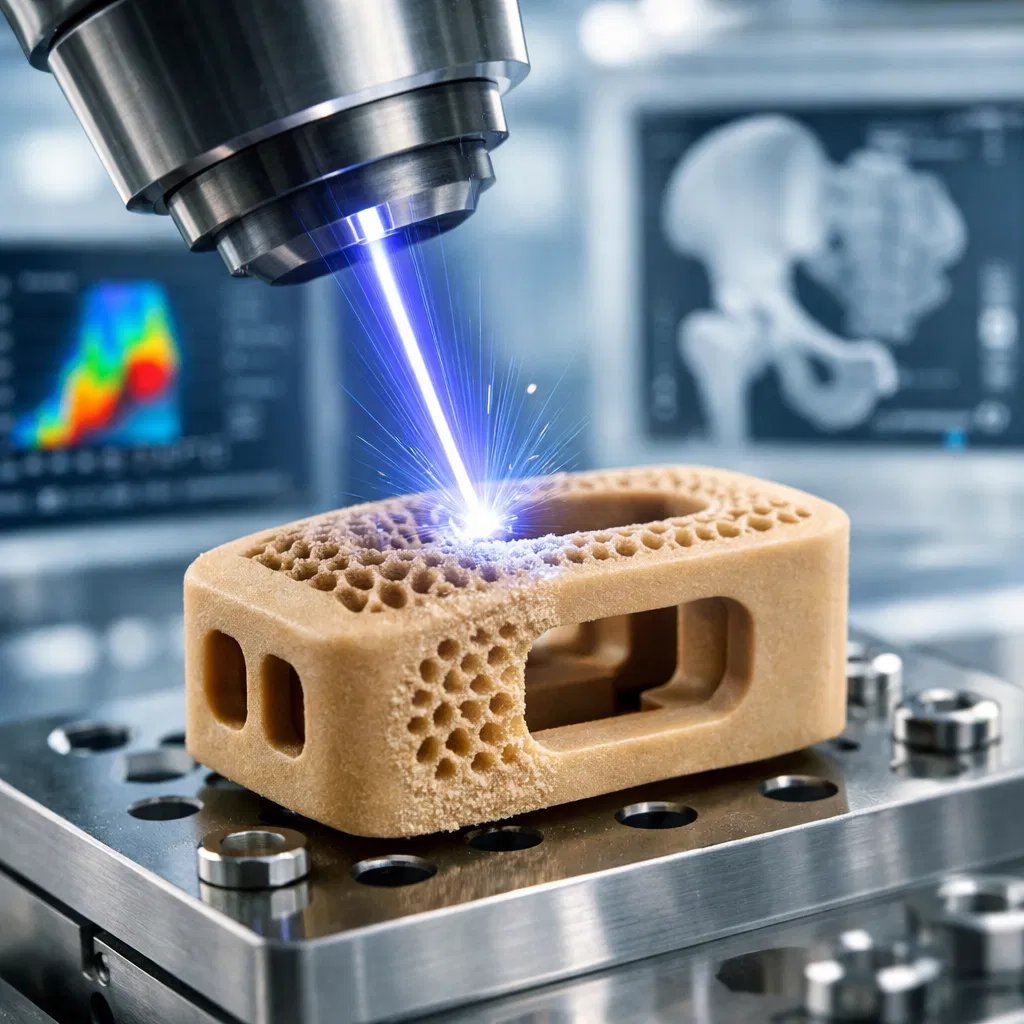
The use of UV lasers allows creation of micro porous surfaces on PEEK spinal cages that closely match the texture of real bone, reaching around 3.2 microns roughness average. This kind of surface actually helps cells stick better and promotes faster bone growth into the implant. According to recent research published in the Journal of Orthopedic Research last year, there was about a 47 percent boost in how well bone integrates with these laser treated surfaces compared to regular machining methods. Another big plus is that since it's a non contact technique, there's no risk of warping those fragile thin walled cage designs during manufacturing. Plus, dimensions stay accurate within just plus or minus 5 microns throughout production runs.
Hip and knee component liners: Edge definition, kerf control, and zero burr requirements for articulating surfaces
Laser cutting can produce kerf widths below 30 micrometers with virtually no burrs on those flexible PEEK liners used in joints. This matters because it helps cut down on wear debris when the joint moves around. Without those tiny tool marks or micro fractures from traditional methods, the surface stays smoother overall. And smoother surfaces mean fewer particles get shed, which lowers inflammation risks. Testing according to ASTM F2026 standards shows implants made this way experience about 60 percent less wear after five years of simulation. That translates to implants lasting longer before needing replacement surgery.
Artificial Joint Laser Cutting vs. Traditional Machining: A Clinical and Economic Comparison
When it comes to making artificial joints, laser cutting has some real benefits compared to old school CNC machining for those PEEK implants. These laser systems can cut with incredible accuracy down to about 5 microns, and they don't mess up the material too much thermally, which keeps all that important bioactivity intact on the surface of the PEEK. Traditional machining methods tell a different story though. They tend to create tiny fractures in the material, leave behind residual stresses, and produce edges that aren't consistent at all. This matters because these issues make it harder for bone cells to stick properly and actually speed up how fast the implant wears down over time.
Laser processing cuts down on wasted materials by about 30 to maybe even 50 percent thanks to those smart nesting algorithms, plus it gets rid of all those extra deburring steps that eat into productivity. The upfront cost for these systems typically runs between two hundred thousand and half a million dollars, but most shops see their money back within eighteen to twenty-four months once things settle in. Why? Lower scrap levels, fewer problems during sterilization checks, and production times that just keep getting better by around forty percent compared to traditional methods. No need for expensive tooling either, and there's none of that annoying downtime when tools start wearing out. Sure, conventional machining might look cheaper at first glance, but lasers deliver better yields overall, maintain consistent quality across batches, and help meet those tough regulatory requirements without breaking a sweat.
FAQ
What is PEEK and why is it used in artificial joint laser cutting?
PEEK, or polyether ether ketone, is a thermoplastic polymer known for its mechanical properties and biocompatibility. Its similarity in modulus to human cortical bone helps in reducing stress shielding in implants, making it ideal for artificial joint use.
How does laser cutting benefit PEEK implant production compared to traditional machining?
Laser cutting provides superior precision while maintaining the bioactivity of PEEK surfaces, unlike traditional machining which can cause fractures, residual stress, and inconsistent edges.
Why are UV lasers preferred over fiber lasers for PEEK cutting?
UV lasers operate through photolytic ablation, directly breaking polymer bonds and allowing for high precision without thermal damage, preserving the strength and integrity of delicate parts.
What are the regulatory compliance requirements for PEEK fabrication?
PEEK fabrication involves ASTM F2026 certification, ISO 13485 standards in Class 7 cleanrooms, and UDI documentation for traceability, ensuring safety and compliance with FDA and EU MDR guidelines.
