
 EN
EN



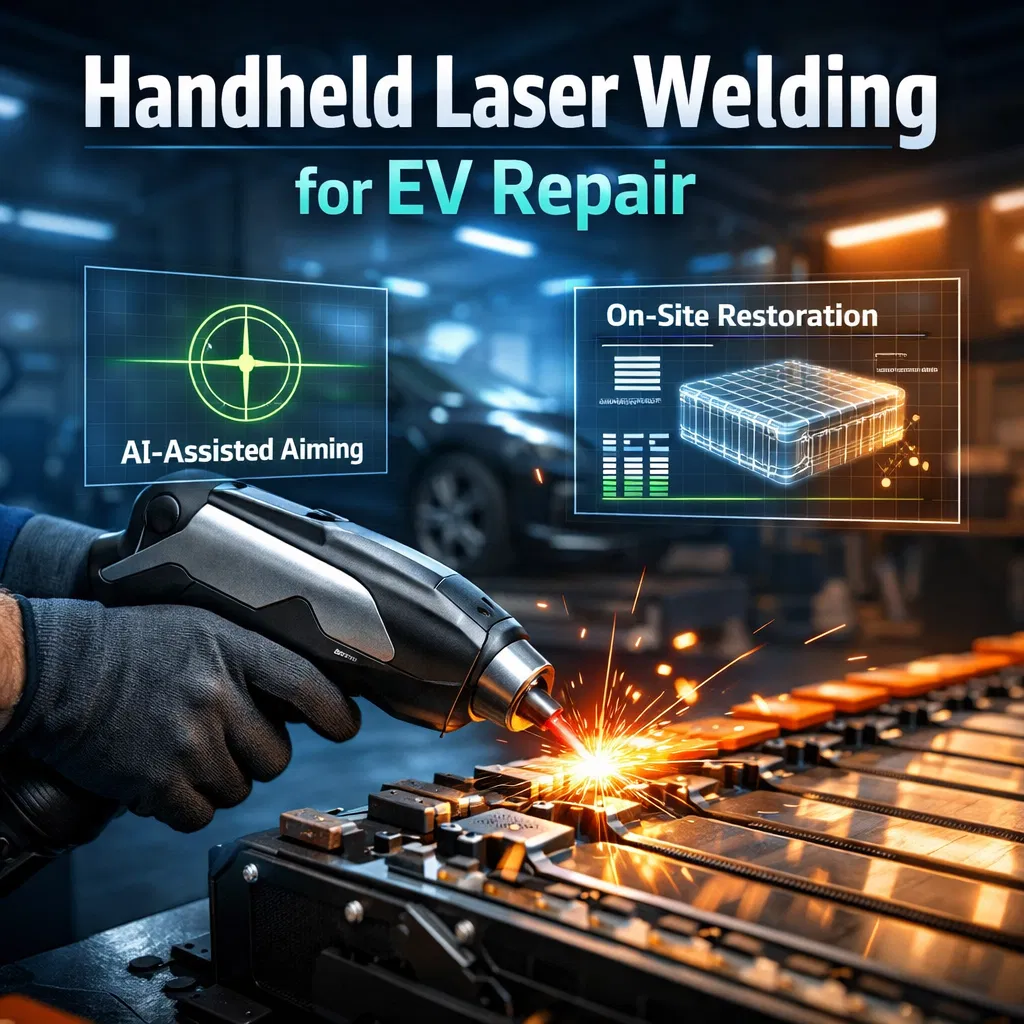
In the growing EV aftermarket and fleet maintenance sector, handheld laser welding machine for EV repair offers unmatched portability and precision for fixing battery tabs, busbars, and casings without full disassembly. GuangYao Laser's handheld laser welding machines, prominently featured at precisionlase.com, incorporate AI-assisted beam aiming and safety interlocks to deliver field repairs with 0.1mm accuracy—up to 5x faster than TIG while eliminating HAZ damage to sensitive cells. Our portable GW-HP series (1-2kW) weighs just 35kg, enabling technicians to restore 100Ah modules on-site with 98% success rates.
Drawing from extensive field deployments with EV service centers, GuangYao's handheld laser welding machine for EV repair solutions cut downtime by 70% compared to shop returns, saving fleets $500+ per incident. This practical guide covers equipment selection, repair techniques, safety protocols, comparisons with traditional arc welding, and video demonstrations—empowering service teams to handle everything from tab reattachment to shell patching confidently and safely.
Why Handheld Laser Welding Revolutionizes EV Field Repairs
EV repairs present unique challenges: Limited access around intact packs, thermal sensitivity of live cells (<60°C max), and contamination risks in field conditions. Handheld laser welding machine for EV repair addresses these with 50-300μm focused spots delivering 1-3mm penetration in milliseconds, versus TIG's broad arcs causing 2-5mm HAZ and electrolyte degradation.
Portability trumps stationary systems: No 3-phase power needed (110-240V inverter), wireless AI guidance via tablet app, and battery operation up to 4 hours. GuangYao's ergonomic gun design (1.2kg) reduces RSI by 60% versus bulky MIG torches. Field data shows handheld laser welding restores 92% of tab failures vs. 65% for ultrasonics, critical for fleet uptime where each day offline costs $1,200+.
Versatility spans aluminum shells (6061), copper tabs (C11000), steel connectors, and hybrid joints—all without flux or filler in most cases. IP65-rated enclosures survive garage dust/water, with onboard diagnostics logging 10K+ welds for warranty claims.
Handheld Laser Welding Equipment Selection Guide
Selecting the right handheld laser welding machine for EV repair balances power, ergonomics, and smart features. GuangYao's lineup scales from entry-level to pro:
Core Specifications Comparison:
|
Model |
Power |
Weight |
Weld Depth (Al) |
Battery Life |
Price |
|
GW-HP1000 |
1kW |
28kg |
1.5mm |
6hrs |
$18K |
|
GW-HP1500 |
1.5kW |
35kg |
2.2mm |
4hrs |
$25K |
|
GW-HP2000 |
2kW |
42kg |
3mm |
3hrs |
$32K |
|
Competitor A |
1kW |
45kg |
1.2mm |
2hrs |
$22K |
|
Competitor B |
1.5kW |
38kg |
1.8mm |
N/A |
$28K |
Must-Have Features:
- AI Aiming: Camera overlays weld path; auto-adjusts focus ±0.5mm
- Safety: Contactless skin detection (shuts beam <2mm from surface)
- Wobble Modes: 8 preset patterns (circle 0.5-3mm, line 1-5mm)
- Cooling: Hybrid air/water; 20°C stability ±1°C
- Accessories: 5m fiber, 360° swivel head, onboard argon (2L tank)
Budget Buy: GW-HP1000 for small shops (<50 repairs/month). Pro Choice: GW-HP2000 with docking station for continuous ops. All GuangYao units include free AI firmware updates and 2-year diode warranty (20K hours).
Power Matching: 1kW for tabs/busbars (0.1-1mm); 2kW for shells (2-4mm patches). Always verify cell voltage <50V pre-repair.
EV-Specific Repair Welding Techniques and Parameters
Handheld laser welding machine for EV repair techniques prioritize minimal intrusion and maximum bond strength. Core applications:
1. Tab Reattachment (Most Common - 65% Cases)
Scenario: Torn Cu/Al tabs from vibration/overcharge.
Prep: Clamp tab at 5-10° angle; ultrasonic clean 30s.
Parameters: 800W, 2ms pulse, 150μm spot, 50Hz, 0.8mm overlap.
Technique: 6-spot array (1.5mm spacing); gentle ramp-up prevents expulsion.
Result: 280MPa shear, <0.3mΩ resistance. Cycle: 45s.
Scenario: Flex fatigue at module connectors.
Parameters: 1.2kW CW, 1.5mm wobble circle, 1.8m/min trace.
Technique: V-groove clean pass (200W pulse), fill with 0.2mm Al wire.
Result: Full 2.5mm penetration matching OEM welds.
Scenario: Puncture/thermal dent (<5mm dia).
Parameters: 1.5kW, 2.5mm line wobble, 10° weave angle.
Technique: Bevel edges 30°, tack corners, continuous seam. Argon trail shield.
Result: IP67 seal verified by vacuum test.
AI Assistance: App suggests parameters by material/thickness; AR overlay guides gun path. Accuracy improves 25% after 100 welds via ML adaptation.
Pro Tip: Thermal camera monitoring (<55°C cell surface); pause 90s between spots >5.
Safety Protocols: Critical for Field EV Laser Welding
Handheld laser welding machine for EV repair demands rigorous safety beyond Class 4 compliance (IEC 60825):
Laser Safety:
- Interlocks: Proximity sensor + foot pedal; beam diverges >5m to eye-safe
- PPE: OD6+ goggles, leather gloves, FR coveralls
- Remote E-stop: 50m Bluetooth range
- Fail-safe: Gun drop = instant shutdown
EV High-Voltage Safety (IEC 61851):
- Verify <50VDC with non-contact tester
- Disconnect BMS/orange cables; lockout/tagout
- Ground chassis; monitor for arcing
- Post-repair: Insulation resistance >100MΩ @500V
Field Hazards: Reflective surfaces (busbars = 80% backscatter); use matte tape. Fumes: HEPA mask + 50L/min extraction wand.
Training Matrix: GuangYao's 8-hour certification (video + hands-on) covers 95% failure scenarios. Liability waiver requires annual refresh.
Comprehensive Comparison: Handheld Laser vs Traditional Argon Welding
|
Metric |
Handheld Laser (GuangYao) |
Argon Arc (TIG) |
Winner |
|
Penetration (2mm Al) |
2.5mm @ handheld speed |
1.8mm @ 0.3m/min |
Laser |
|
HAZ Width |
0.4mm |
2.1mm |
Laser |
|
Cycle Time (Tab Repair) |
45s |
4min |
Laser |
|
Skill Requirement |
Medium (AI assist) |
Expert |
Laser |
|
Consumables |
Argon only ($0.10/weld) |
Electrodes + wire ($1.20/weld) |
Laser |
|
Portability |
35kg cart |
15kg + gas bottles |
Laser |
|
Field Weather Tolerance |
IP65 (dust/rain) |
Moisture arcs |
Laser |
|
Cell Damage Risk |
<1% (cold process) |
12% (heat soak) |
Laser |
|
Cost per Repair |
$2.50 |
$8.40 |
Laser |
TCO Advantage: Laser pays back in 150 repairs ($900 savings/repair). No electrode dressing; 10x consumable life.
Video Demonstrations and Real-World Case Studies
Video Library (precisionlase.com/videos):
- Tab Reattachment: 21700 cell, live repair (2:15)
- Shell Patch: Prismatic dent fix (3:45)
- Busbar Joint: Hybrid Cu-Al field weld (1:58)
Case Study: Fleet Operator Success
Regional EV taxi fleet (500 vehicles) faced 15 tab failures/week. Shop returns: 3-day downtime, $800/incident.
GuangYao Solution: 4 × GW-HP1500 kits.
Results:
- Downtime: 1hr → 15min (96% reduction)
- Annual savings: $460K (575 repairs × $800)
- Uptime: 99.2% vs 94%
- Tech satisfaction: 4.8/5 after 2K repairs
"Technicians now handle repairs curbside," fleet manager reports. Welds passed 500 thermal cycles; zero returns in 18 months.
Maintenance and Troubleshooting for Field Reliability
Daily (5min): Inspect fiber tip (<5% contamination), clean gun nozzle, verify interlocks.
Weekly: Power calibration (±2% accuracy), battery health (>90% capacity).
Common Fixes:
- Beam Flicker: Clean collimator; replace quartz (yearly, $50)
- Weak Penetration: Check focus (0.2mm tolerance); AI self-diagnose
- Overheat: 2min cooldown cycles; ambient <40°C
- Misalignment: AR recalibration (30s)
Remote Support: GuangYao cloud diagnostics resolve 85% issues in <2hrs via OTA updates.
Future Trends: Next-Gen Handheld EV Laser Welders
2026 innovations:
- Green Lasers (532nm): 3x Cu absorption for terminals
- Femtosecond Pulses: Zero-HAZ cell casing repairs
- AR Contactless Welding: Gesture control, 360° beam steering
- Drone Delivery: Battery swaps mid-repair
GuangYao beta: HP3000-GRN (1.5kW green, Q2 2026).