
 EN
EN



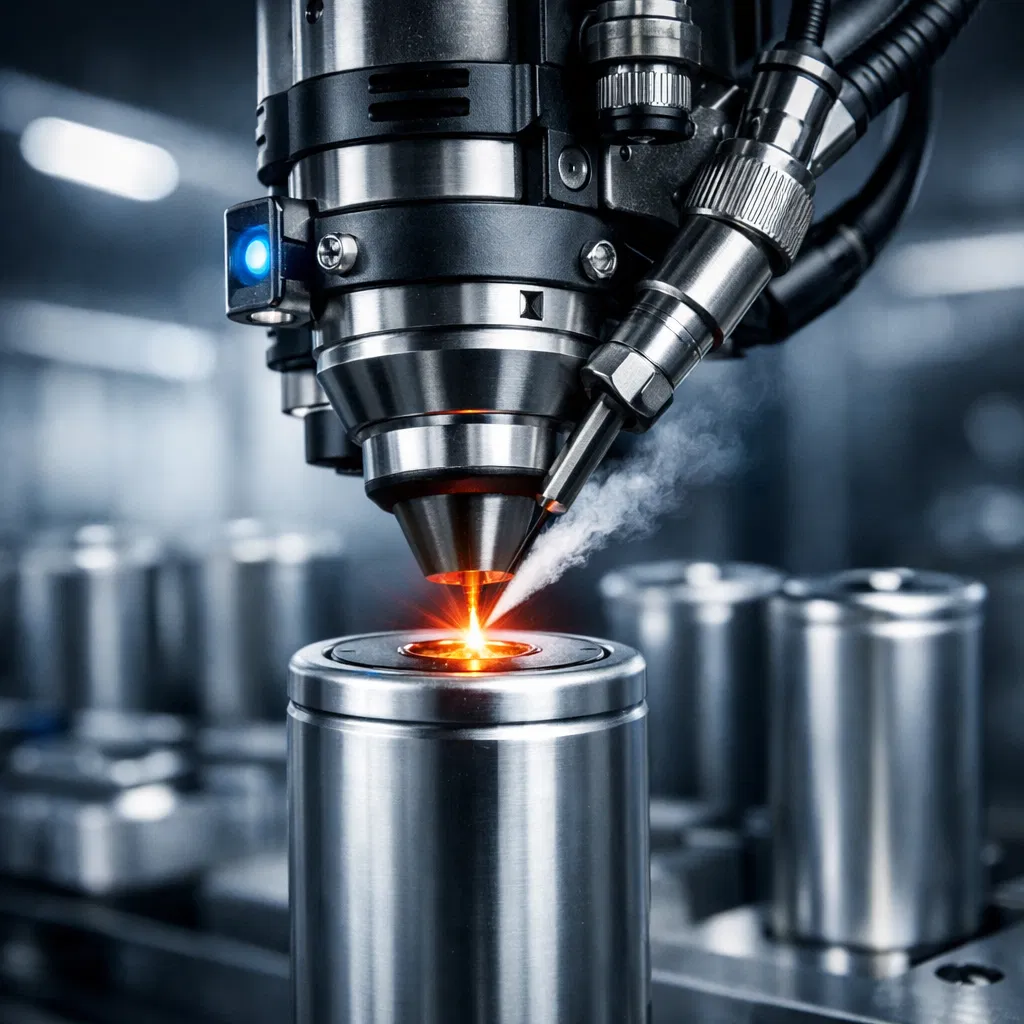
Why 21700 Cells Demand Specialized EV Battery Laser Welding
Cylindrical geometry constraints: 21 mm diameter, 70 mm height, and seam accessibility challenges
With their small size of just 21 mm in diameter and 70 mm tall, these 21700 cells create serious challenges for anyone trying to do laser welding work. The problem is keeping the laser focused properly on those rounded surfaces when using standard equipment designed for flat materials. And don't forget about those incredibly tight tolerances either; we're talking about seams that need to be within 0.1 mm accuracy, so positioning has to be spot on at the micron level. Regular continuous wave welding methods just aren't cutting it here. They tend to create uneven penetration around the entire circumference while also causing unwanted warping effects. This kind of distortion weakens the structure and can lead to dangerous electrolyte leaks if not controlled properly. To get past these issues, manufacturers actually need specialized beam shaping lenses along with advanced focal tracking systems that adjust the Z axis dynamically during rotation. Getting all this working together correctly remains one of the biggest hurdles facing production facilities today.
Material system complexity: Aluminum can, nickel-plated steel cap, and intermetallic brittleness risks
When connecting aluminum cell casings to those nickel-plated steel terminals, manufacturers face some serious metallurgy hurdles. The problem comes from those brittle intermetallic compounds forming at the weld spot. If these layers get thicker than about 5 microns, they can actually cut down the joint strength by nearly half according to recent studies in materials processing tech. Good laser welding for EV batteries tackles this issue by carefully controlling heat. The trick is keeping melt pool temps under 1200 degrees Celsius without sacrificing complete penetration. Another big challenge? Those pesky oxides. Aluminum naturally forms a 4 nanometer oxide layer that needs at least 2.5 kW of power to break through during welding. But be careful - too much energy will just melt away the already thin 0.2 mm casing material. That's why most shops rely on inert gas shielding with oxygen content below 50 parts per million. Argon flowing at around 15 to 25 liters per minute does the job nicely, helping prevent both porosity issues and unwanted aluminum nitride formation in the final product.
| Challenge | Consequence | Mitigation Strategy |
|---|---|---|
| Dissimilar metals | Intermetallic brittleness | Pulse shaping with 0.5ms dwells |
| Curved surface access | Inconsistent penetration | Dynamic Z-axis focal adjustment |
| Oxide contamination | Porosity & weak seams | Argon shielding at 15L/min flow |
These interdependent constraints render off-the-shelf welding platforms inadequate—reliable hermetic sealing in high-energy-density 21700 cells requires integrated hardware, control logic, and process knowledge calibrated specifically for cylindrical lithium-ion battery architecture.
Core Technical Challenges in EV Battery Laser Welding for Hermetic Sealing
Thermal distortion and micro-crack formation during high-speed sealing
When using high speed lasers to seal 21700 battery cells, all that heat gets focused into a tiny spot which creates really intense temperature differences. We're talking about as much as 800 degrees Celsius difference between the copper tabs and aluminum housing parts. And when you combine this with how these materials expand at different rates (about 15 parts per million per Kelvin), it causes stress buildup inside the cell material. These stresses lead to tiny cracks forming right at the grain boundaries of the metal structures. If nobody pays attention to this problem, those little cracks will grow three times faster after only fifty heating and cooling cycles according to accelerated testing results. To fix this issue, manufacturers need to control the laser pulses carefully so they don't put in more than 35 joules per millimeter of energy total. At the same time, they must keep the laser penetration depth around 0.1 mm throughout the process. Finding this sweet spot means balancing production speed against making sure the seals hold up over time and remain mechanically stable under normal operating conditions.
Oxide layer interference and contamination sensitivity in confined cylindrical weld zones
The tight space inside 21700 cells makes them particularly vulnerable to contamination problems. When welding these cells, the limited area around the weld zone blocks proper gas movement and traps tiny particles from the air. Even small amounts of airborne contaminants at just 0.5 mg per cubic meter can cause porosity issues that jump up by about 70%. Manufacturers tackle the stubborn oxide layer on aluminum and prevent damage to the cell casing by using intense bursts of power around 2.5 kW, carefully timed pulses, and protective inert gases during welding. Keeping humidity below 5% relative humidity is critical, along with maintaining steady argon flow rates of approximately 25 liters per minute. These conditions help stop the formation of aluminum nitride. At the same time, real time plasma analysis keeps track of oxygen levels throughout the process. If oxygen readings go above 500 parts per million, the welding system shuts down automatically. This kind of responsive control system stops the creation of brittle intermetallic compounds that could weaken seals over time when cells experience regular vibrations and temperature changes during operation.
Advanced Process Control for Stable EV Battery Laser Welding
Real-time melt pool monitoring via high-speed pyrometry and back-reflection sensing
Getting stable seals on 21700 batteries requires catching those tiny problems that happen in fractions of a millisecond before they turn into actual defects. Thermal cameras running over 10 thousand times per second spot those fleeting micro voids and uneven cooling patterns as they occur. At the same time, sensors measuring reflected light pick up when absorption drops below normal levels, which usually means there's some contamination or oxide layer breaking through on the aluminum nickel connection points. These sensor readings work together to adjust power delivery within milliseconds, stopping unwanted spatter and preventing those tiny cracks from forming. Real world tests show manufacturers achieving around 99.2% perfect seals with this system, way better than traditional methods without feedback controls according to research published in the Journal of Laser Applications last year.
Precision pulse shaping to balance penetration, HAZ control, and intermetallic suppression
Effective pulse shaping orchestrates thermal delivery in three distinct phases to manage competing weld requirements:
- Ramp-up phase (0.5–2 ms): Gradual energy increase minimizes spatter and avoids shock-induced cracking
- Plateau phase (3–5 ms): Sustained peak power ensures full 0.8–1.2 mm penetration required for cylindrical cell sealing
- Ramp-down phase (4–8 ms): Controlled cooling limits heat-affected zone (HAZ) width to under 50 µm and suppresses Al-Ni intermetallic growth
By constraining melt pool temperature below 1200°C, this strategy reduces brittle fracture incidents by 73% compared to constant-power welding (Materials & Design, 2023), directly enhancing both initial seal quality and long-term mechanical reliability.
Validating Seal Integrity: From Leak Rate Targets to Long-Term Battery Performance
Testing hermetic seals on 21700 battery cells typically involves two main checks: finding leaks right away and predicting how long they'll hold up over time. The industry relies heavily on helium mass spectrometry as the benchmark method. For these tests, cells need to show leak rates under 1×10⁻¹⁰ mbar·L/s to stop moisture getting in and losing electrolyte, which can cause batteries to lose up to 30% capacity each year when there's a problem. After basic testing is done, engineers simulate what happens in real conditions too. They subject cells to extreme temperature swings between minus 40 degrees Celsius and 85 degrees, plus various vibrations similar to what happens during normal operation. These stress tests help identify tiny cracks before they become bigger issues. Studies looking at accelerated aging have found a clear link between good initial helium test results and how well batteries perform after many years of use. So measuring leak rates accurately isn't just about passing or failing quality control anymore—it actually predicts whether these batteries will work reliably in vehicles. This whole testing process makes sure that laser welded 21700 modules stand up to automotive standards, reducing both warranty claims and dangerous failures down the road.
FAQs
Why are 21700 cells challenging for laser welding?
The small cylindrical geometry of 21700 cells presents challenges such as seam accessibility and maintaining precise focus on rounded surfaces.
How does laser welding tackle intermetallic brittleness in EV batteries?
Laser welding carefully controls heat within the melt pool to prevent thick intermetallic layers that can cut down joint strength.
What role does argon play in the welding process?
Argon shielding provides an inert environment, preventing oxide contamination and aiding in the smooth welding of aluminum casings.
How is pulse shaping used in the laser welding process?
Pulse shaping involves orchestrated thermal delivery phases to manage penetration and suppress intermetallic growth, improving weld quality.