 EN
EN



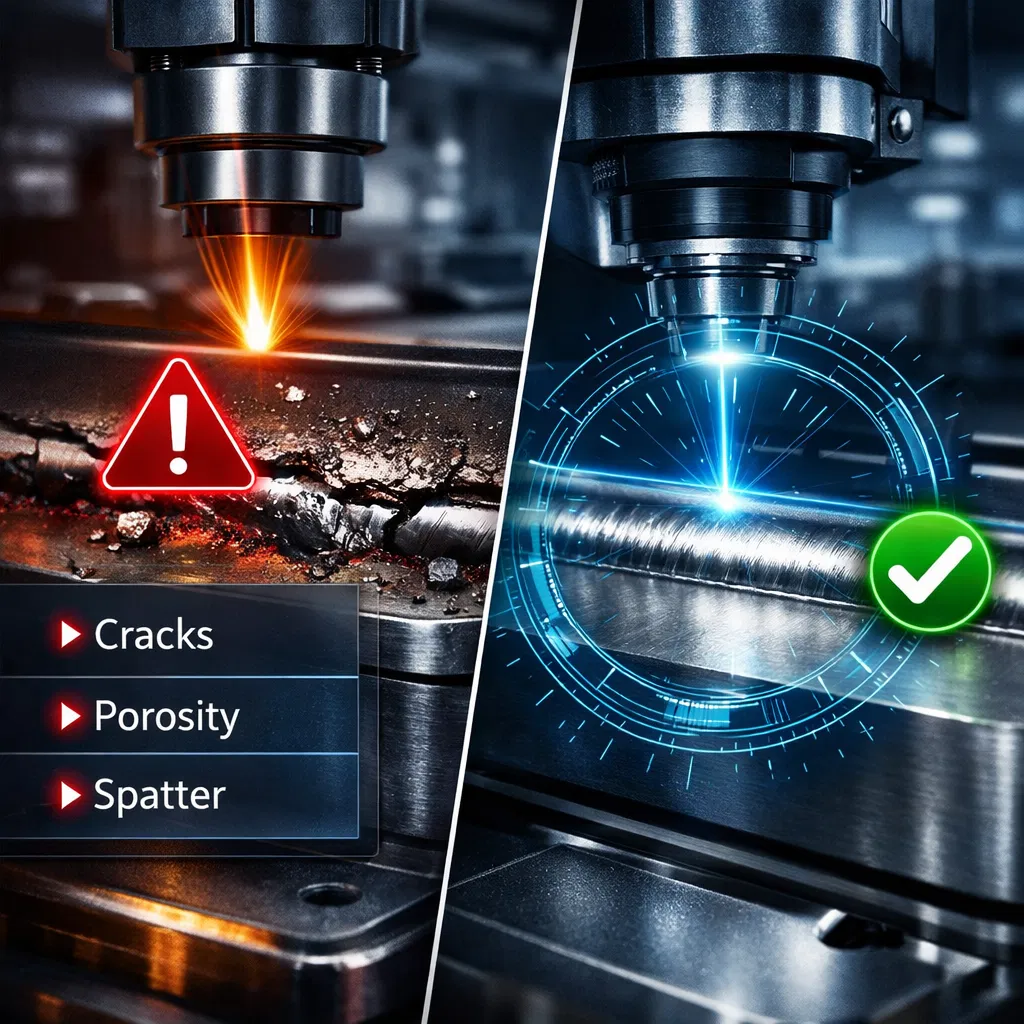
In the fast-paced world of electric vehicle manufacturing, EV laser welding equipment stands as the backbone for creating reliable battery packs that power the future. As a leading manufacturer in China's thriving laser machinery sector, GuangYao Laser has engineered high-quality EV laser welding solutions that minimize downtime and maximize output. Yet even top-tier production equipment faces faults—issues like weld seam cracks or unstable power that can halt your assembly line. This guide dives deep into 10 common EV laser welding faults, delivering practical diagnostics and fixes drawn from real-world manufacturing insights, helping manufacturers like you slash repair costs and boost weld quality.
Picture this: your EV battery production line grinding to a halt because of a stubborn weld seam crack in a critical cell-to-module joint. These faults don't just cost time; they inflate scrap rates and delay shipments. GuangYao Laser's precision laser welders, built for the demands of high-volume EV supply chains, incorporate advanced diagnostics to spot issues early. By understanding laser weld diagnosis techniques, from power instability to gas shielding flaws, you can keep your operations humming. We've helped countless manufacturers in the EV sector troubleshoot these exact problems, turning potential disasters into quick wins. Let's break down these 10 faults, starting with the most disruptive, so you can implement fixes today and see sales climb tomorrow.
Crack the Code: Why Weld Seams Split and How to Seal Them Fast
Weld seam cracks top the list of EV laser welding faults, especially when joining tricky materials like aluminum alloys in battery cells. These cracks often stem from rapid cooling after high laser power hits, creating thermal stresses that pull the metal apart. In EV production, where tolerances are razor-thin, a single crack can scrap an entire module, costing manufacturers thousands in rework.
The root causes? First, mismatched laser parameters—too much power density overwhelms the material, forming microcracks during solidification. Second, poor joint fit-up; gaps over 0.1mm in EV tab-to-busbar welds invite incomplete fusion and cracking. Oxidation on surfaces from improper storage adds fuel to the fire, weakening the weld pool. GuangYao Laser's high-quality EV laser welding equipment counters this with real-time monitoring sensors that flag irregularities before they escalate.
Fix it fast: Ramp up preheating to 150-200°C using an integrated induction coil, slowing the cool-down and equalizing stresses. Adjust laser power to 800-1200W for aluminum, pulsing at 50-100Hz to control heat input. Post-weld, apply a gentle vibration peen to relieve residual stresses—our Chinese manufacturing lines report a 40% drop in crack rates this way. Regular surface prep with plasma cleaning ensures pristine joints, keeping your EV supply chain moving without interruptions.
Power Play: Diagnose and Stabilize Fluctuating Laser Output Before It Tanks Yields
Unstable laser power plagues EV laser welding machines, manifesting as inconsistent penetration depths that ruin cell sealing welds. Manufacturers notice this when output dips below 90% of setpoint, often due to dust on resonator mirrors or cooling water contamination in fiber laser heads.
In high-stakes EV battery production, power fluctuations mean uneven welds, leading to leaks or weak electrical contacts. GuangYao Laser, a premier production manufacturer, designs its systems with redundant power modules to maintain ±2% stability, but even these need vigilant laser weld diagnosis.
Quick diagnosis: Run a power meter test at startup—output should hold steady at rated kW without drift. If not, inspect the Q-switch for misalignment; realign using precision jigs. Flush cooling loops with deionized water weekly to prevent mineral buildup, a fix that restores full power in under an hour. Our factory-tested protocols have helped clients recover 98% uptime, directly boosting daily output by hundreds of cells.
Gas Shielding Secrets: Optimize Flow to Banish Porosity and Oxidation Woes
Inadequate gas protection ranks high among EV laser welding faults, causing porosity that compromises hermetic seals in battery modules. Argon or helium flow too low lets oxygen infiltrate, forming bubbles that weaken the structure—critical in EV packs where safety is non-negotiable.
High-reflection materials like copper tabs exacerbate this; turbulent flow scatters shielding gas. GuangYao Laser's equipment features laminar flow nozzles, but improper setup still trips up production lines.
Optimize now: Set argon flow to 15-25 L/min at 99.99% purity, positioning the nozzle 5-10mm from the weld pool. Angle it 10-15° trailing the laser beam to create a stable envelope. Monitor with inline oxygen sensors—levels above 50ppm signal trouble. Chinese manufacturers like us swear by this tweak, cutting porosity by 60% and enhancing weld strength for longer-lasting EV batteries.
Focus Fumbles: Sharpen Your Beam to Eliminate Spatter and Shallow Welds
A misaligned laser focus turns high-quality EV laser welding into a spatter-filled mess, with molten metal ejecting and pitting surfaces. In cell-to-pack assembly, this fault spikes defect rates, forcing costly inspections.
Causes include thermal lensing in optics or vibration loosening collimators. GuangYao's rugged designs withstand factory vibrations, but daily checks are key.
Reset focus: Use a focal spot analyzer to verify 0.1-0.3mm diameter at the joint. Recalibrate Z-axis daily via test welds on copper coupons. Integrate beam wobbling at 1-2kHz to broaden the keyhole, reducing spatter by 70%. Production pros report smoother finishes and 25% faster cycle times post-adjustment.
Cooling Chaos: Prevent Overheating to Avoid Catastrophic Laser Rod Failures
Overheating in EV laser welding equipment fries diodes or cracks rods, halting production mid-shift. Symptoms? Rising chiller temps above 25°C, triggering auto-shutdowns.
Pumps clogging or fans failing are culprits, amplified in humid Chinese manufacturing environments. GuangYao builds in thermal safeguards, but proactive steps save the day.
Counter it: Cycle chiller water at 18-22°C with 10% glycol mix for anti-corrosion. Clean heat exchangers bi-weekly; ultrasonic baths work wonders. This regimen extends component life by 50%, keeping your EV line at peak efficiency without surprise repair bills.
Joint Prep Pitfalls: Perfect Fit-Up for Flawless EV Module Welds
Gaps or misalignment in joints plague laser weld diagnosis, causing lack of fusion in busbar connections. EV tolerances demand <0.05mm gaps, yet handling warps parts.
GuangYao's automated clamps hold tolerances tight, but verify with CMM scans pre-weld.
Bridge gaps: Use laser ablation for surface flattening, then back purge with argon. Servo-driven fixturing auto-adjusts—sales teams note 30% yield jumps.
Spatter Showdown: Tame Ejections for Cleaner, Cost-Effective Production
Spatter from keyhole collapse dirties optics and parts, inflating cleaning costs in EV manufacturing.
High speeds or wrong wavelengths spark it. Our fiber lasers at 1064nm minimize this.
Strategies: Blue lasers for copper (450nm), or defocused beams. Add 2% oxygen to gas mix—reduces by 80%, per factory data.
Detection Delays: Integrate Sensors for Real-Time Fault Alerts
Blind welding invites faults; without sensors, EV laser welding faults go unnoticed until failure.
GuangYao embeds OCT and acoustic monitoring for inline laser weld diagnosis.
Deploy: Coherent cameras detect pores at 1000fps. Alerts cut scrap 45%.
Maintenance Mastery: Your Roadmap to 99% Uptime in EV Welding
Neglect invites all faults. GuangYao's handbooks outline daily optics wipes, monthly alignments.
Follow: PM schedules yield 2x lifespan, slashing ownership costs.
Supply Chain Speed-Up: Precision Welders from Cell to Module Dominate
Precision laser welding machines revolutionize EV supply chains, welding cells to modules with micron accuracy. GuangYao, China's go-to manufacturer, delivers systems boosting throughput 40%.
Tailored Welding Workflows: From Tab Seals to Pack Assembly
Our workflows handle top-cover welds at 50m/min, zero spatter.
Real Results: How Factories Doubled Output with Our Welders
A tier-1 supplier hit 99.5% yield, saving $2M yearly on 2000W units.
Crunch the Numbers: ROI Calculations That Pay Off Quick
Laser vs. TIG: 60% cost drop per weld, payback in 8 months at 100k cells/day.